Your winter skincare routine doesn't need a full overhaul. Here's exactly what to change for dry skin, and what you can safely leave alone.
We may earn a commission when you buy through links on this page. This never changes what we recommend. As an Amazon Associate I earn from qualifying purchases.
By the time the air actually turns dry and cool, most skincare routines have quietly stopped working. The cleanser that felt fine all through the monsoon starts leaving your skin tight. The moisturizer that used to be enough doesn’t sink in the same way, or it does, and you’re flaky again by evening.
It’s tempting to throw out your whole routine and start over with a separate “winter” line. You don’t need to. Only a few specific parts of a routine actually need to change once the air turns dry, and the rest can stay exactly as they are. This guide walks through what to change, what to leave alone, and how to tell which one applies to you.
Quick answer: You don’t need a full routine overhaul for winter. Four things usually need attention: switch to a gentler, non-foaming cleanser, layer a richer moisturizer over your usual one instead of replacing it, cut back how often you use exfoliants or retinol, and add a separate protective layer for lips, hands and heels, since those areas dry out first and get skipped most often.
Why Dry Skin Actually Gets Worse in Winter
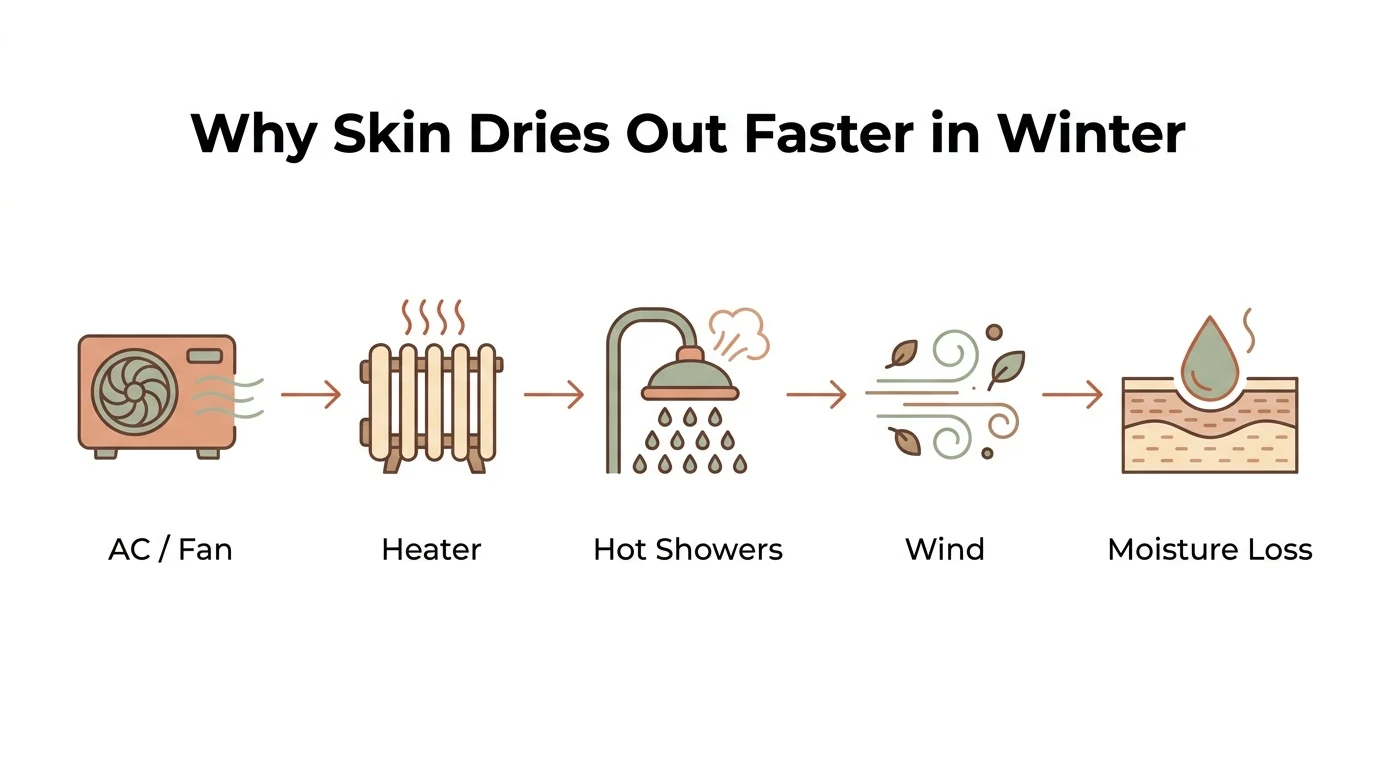
In most of India, winter doesn’t mean freezing temperatures. It usually means lower humidity, more time indoors under a fan, AC or heater, hotter showers, and more wind exposure on the commute. Every one of these pulls water out of your skin’s outer layer faster than your skin can replace it on its own.
The effect is stronger in genuinely cold, dry regions like Delhi, Punjab and the hill states, and milder but still real in coastal and southern cities, where the swing between AC-cooled indoors and warm, dry air outside does most of the damage. Either way, a routine that kept your skin comfortable in September can start falling behind by November, not because the products got worse, but because the air around you did.
AC, heaters, hot showers and wind all pull moisture out of skin faster than usual.
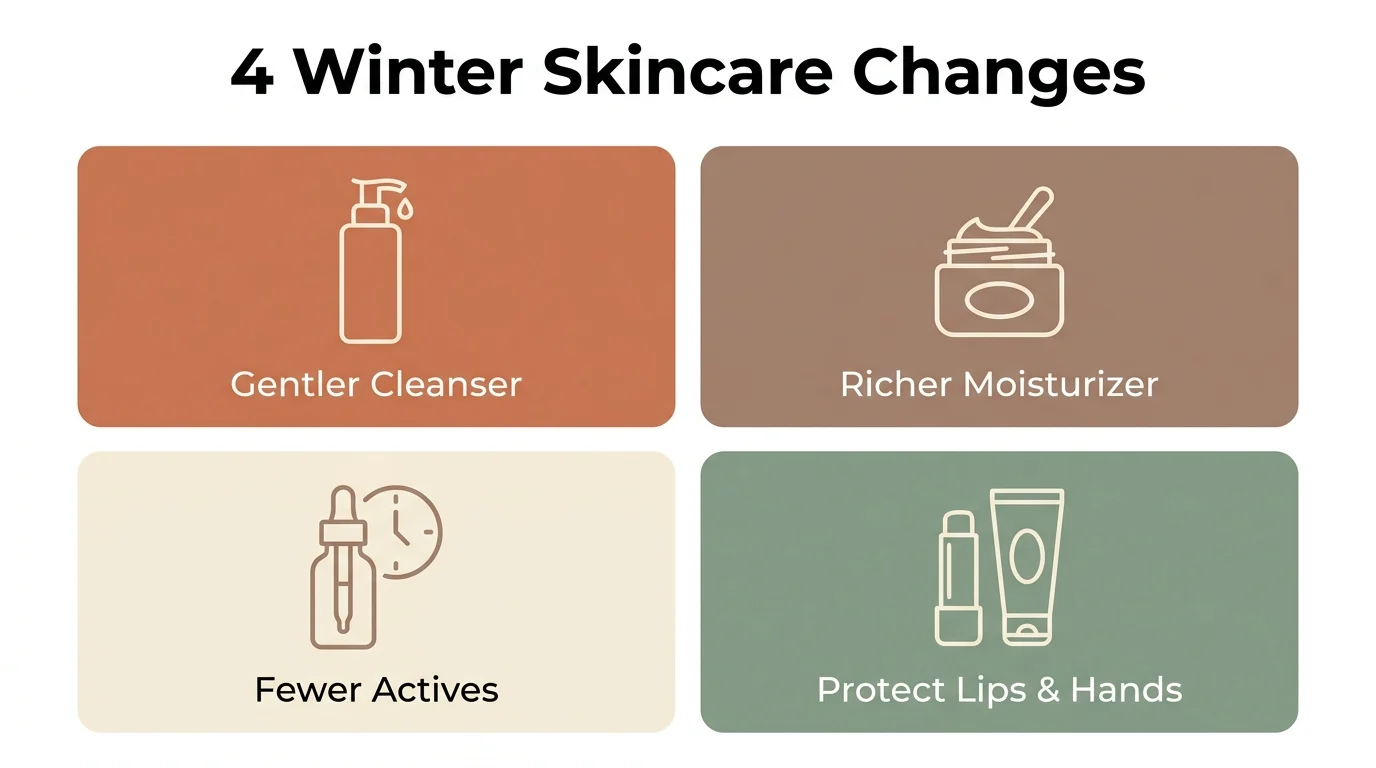
The Four Changes Worth Making
Not every part of a routine needs to change for winter. These four usually do.
Switch to a gentler cleanser. A foaming, sulfate-heavy face wash strips surface oil, which is exactly the oil your skin is already short on once the air dries out. A cream, gel-to-milk or low-foam cleanser cleans just as well without pulling out what little moisture barrier you have left.
Layer a richer moisturizer, don’t necessarily replace your usual one. Keep your regular lightweight moisturizer for daytime if it still works fine under makeup or sunscreen. Add a heavier barrier cream, look for ceramides, glycerin or hyaluronic acid combined with an occlusive ingredient like shea butter, at night or whenever your skin feels tight.
Cut back on actives, don’t necessarily stop. Retinol and AHA/BHA exfoliants speed up skin turnover, which is harder on a barrier that’s already under stress from dry air. Most people do fine dropping from daily or alternate-day use to twice a week through the driest months, then building back up in spring.
Protect lips, hands and heels specifically. These areas have far fewer oil glands than the rest of your face and body, so they dry out and crack first, and a face-only routine skips them completely. A basic protective balm applied a few times a day, especially before bed, prevents most of the cracking before it starts.
The four changes worth making, at a glance.
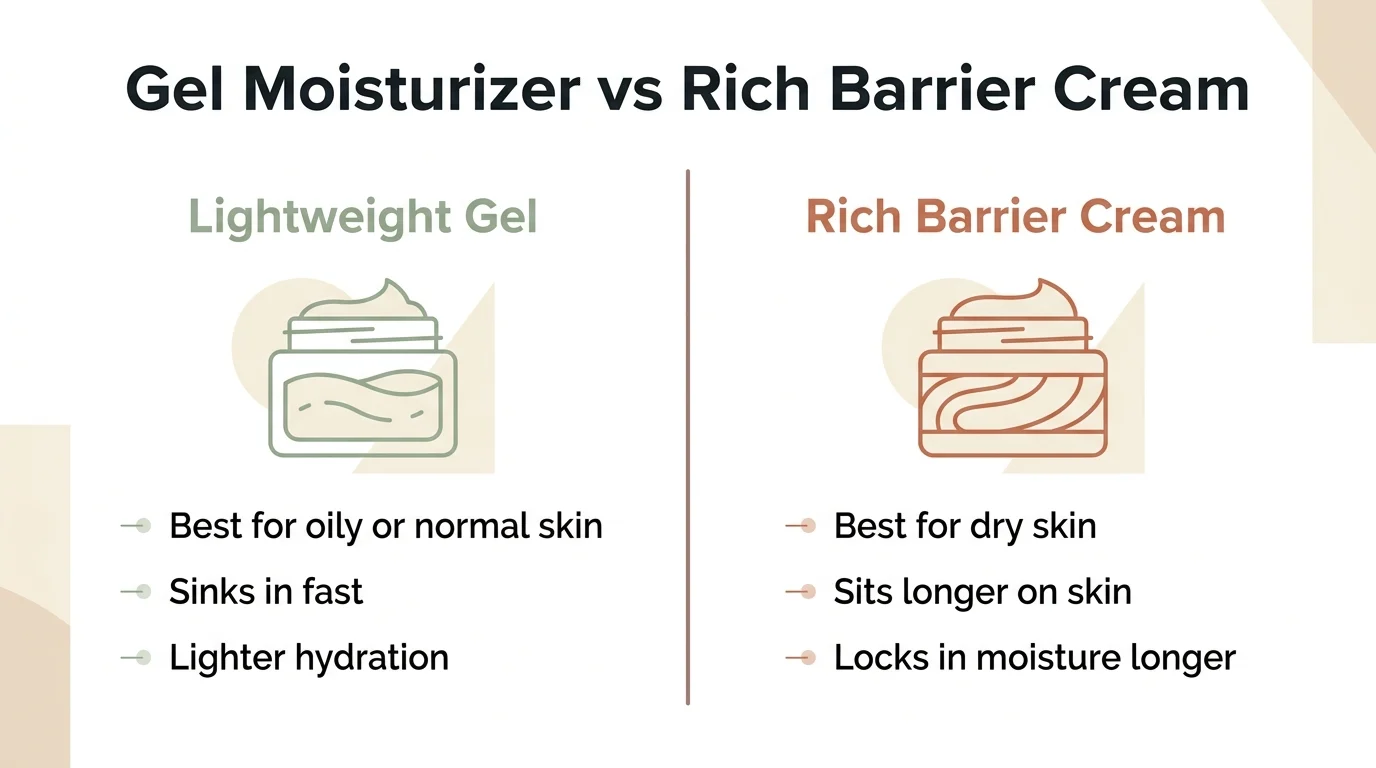
Lightweight Gel or Rich Barrier Cream: Which One Do You Need?
Both have a place in a winter routine. The difference is when to reach for each one.
Best for: a lightweight gel suits normal-to-oily skin or daytime wear under makeup. A rich barrier cream suits dry or very dry skin, or nighttime use when there’s no makeup to layer under.
How it feels: gel formulas sink in fast with no residue. Cream formulas sit on the skin longer and can feel heavy under makeup.
How long it locks in moisture: gels offer lighter, shorter-lasting hydration. Creams with occlusive ingredients hold water in the skin for longer, which matters more as the air gets drier.
Where each one falls short: a gel alone often stops being enough once humidity really drops. A rich cream alone can feel too heavy for daytime wear under sunscreen or makeup.
Gel and cream solve different problems. Most people need both, just at different times.
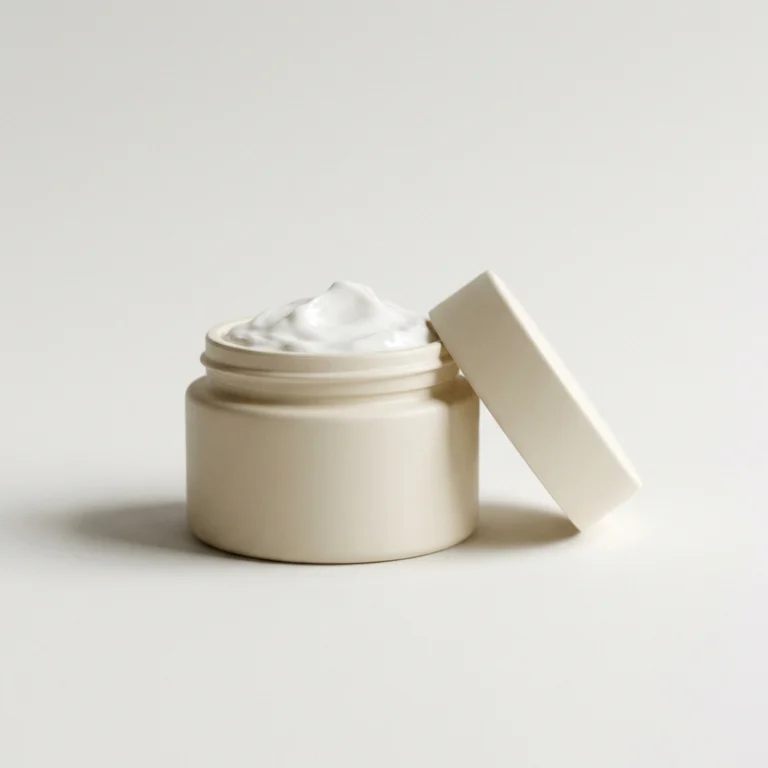
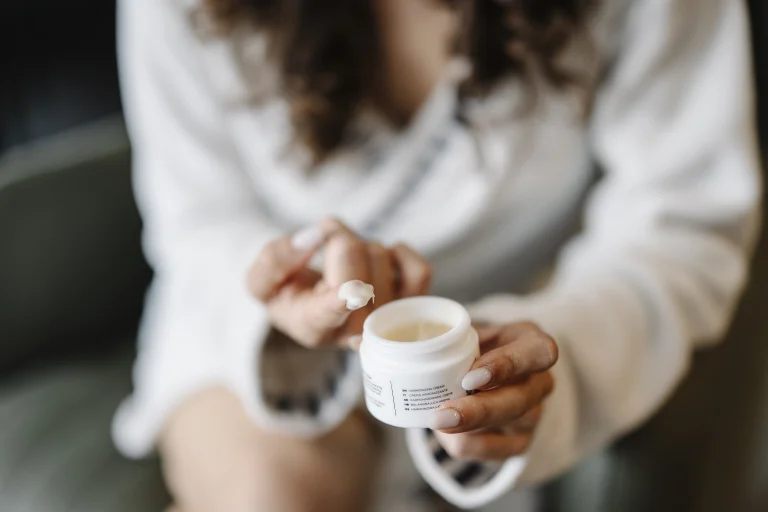
Representative editorial image, not official Amazon product photography.
Research-based evaluation
Ceramide Barrier Repair Cream
Why we picked it: A dedicated barrier cream gives dry or stressed skin a stronger moisture seal than a daily lightweight moisturizer can provide on its own, without needing to replace the lighter product you already use.
Best for
Someone whose usual moisturizer stops feeling like enough once the weather turns dry.
Strength
Stronger, longer-lasting moisture seal than a typical daytime moisturizer
Watch out for
Can feel heavy under makeup or sunscreen, so better suited to nighttime use
If you already have a lightweight daily moisturizer you like, our guide to choosing a daily moisturizer covers what to look for. There’s usually no need to replace it. Keep using it during the day and add a richer layer only when your skin actually needs it.
Representative editorial image, not official Amazon product photography.
Research-based evaluation
Daily Hydrating Face Moisturizer
Why we picked it: A basic, well-formulated daily moisturizer is the foundation of most skincare routines before anything more targeted is added.
Best for
Someone building or simplifying a daily skincare routine.
Strength
Simple enough for sensitive or reactive skin to trial
Watch out for
Not a substitute for a dedicated night cream or treatment product
Who Needs to Adjust More, and Who Can Get Away With Less
Not everyone needs the full set of changes above.
If you have naturally oily or combination skin, or you live somewhere with milder winters, a slightly richer night moisturizer and a lip balm may be all you need.
If your skin is already dry or sensitive, if you live somewhere with genuinely cold, dry winters, or if you rely on AC or a heater most of the day, all four changes are worth making.
If you already use a rich night cream year-round, you may only need to add lip, hand and heel protection and dial back actives slightly.
A Few More Things That Help
Apply moisturizer within a couple of minutes of stepping out of the shower, while skin is still slightly damp. It locks in more water than applying it to fully dry skin.
Shorter, cooler showers help more than any product change. Hot water strips oil from skin the same way a harsh cleanser does.
A humidifier is worth considering if you run an AC or heater most of the day and notice your skin, throat or lips drying out indoors, not just outside.
You don’t need a separate winter skincare collection. You need four specific adjustments: a gentler cleanser, a richer moisturizer layered in when your skin asks for it, fewer active ingredients while your barrier is under stress, and dedicated protection for lips, hands and heels. Make the changes that match your own skin and climate, not every tip you come across, and patch-test anything new before using it on your full face.
Don't Miss the Next Guide
Get seasonal skincare tips, honest product guides and comparisons from FIND N FORM, sent straight to your inbox.
This guide is based on general dermatological understanding of skin barrier function, ingredient research and comparative analysis of skincare guidance. It is not based on personal testing of any single product.
Yes, though usually a lighter version. Oily skin still loses surface hydration in dry air, even if it doesn’t feel dry the way normal or dry skin does. A slightly richer moisturizer at night and a basic lip balm are often enough, without changing your daytime products at all.
Is petroleum jelly bad for skin?
Not based on current dermatological understanding. Petroleum jelly is occlusive, meaning it seals in moisture rather than adding it, which is why it works well on already-damp skin, lips and cracked heels. It doesn’t clog pores for most people the way some assume, though anyone with active acne in the treated area may prefer a lighter alternative.
How do you know your moisturizer isn’t rich enough anymore?
The clearest sign is skin feeling tight, flaky or uncomfortable within a few hours of applying it, especially if the same product worked fine a month or two earlier. That’s usually a reason to layer something richer rather than switch products entirely.
Do you need a humidifier if you don’t use a heater?
Not necessarily. Humidifiers help most when indoor air is being actively dried out, by a heater, constant AC use, or both. If your main dry-skin trigger is outdoor wind and cooler temperatures rather than indoor air, the routine changes above will likely matter more than a humidifier.
This article may contain Amazon affiliate links. As an Amazon Associate, FIND N FORM earns from qualifying purchases, at no extra cost to you. Our recommendations are never determined by commission.
6 responses to “Winter Skincare for Dry Skin: What to Change in Your Routine”
[…] you live somewhere the air turns noticeably drier for part of the year, our guide to winter skincare for dry skin covers why this happens, you may only need the richer cream seasonally, not all […]
[…] under a fan or heater pull moisture out of skin faster than usual, the same effect covered in our guide to winter skincare for dry skin. Add hard water in many cities, sandals or open slippers worn through most of the year, and […]
[…] you’re layering a richer barrier cream over your usual moisturizer for winter, our guide on what to change in a winter skincare routine covers when that extra layer is actually worth […]
[…] the rest of your winter routine, see our guide to winter skincare for dry skin, which covers the changes worth making to your face routine too, or browse the wider beauty […]
[…] your usual moisturizer has already stopped feeling like enough this season, our winter skincare guide for dry skin covers the other routine changes worth making before reaching for something […]






[…] you live somewhere the air turns noticeably drier for part of the year, our guide to winter skincare for dry skin covers why this happens, you may only need the richer cream seasonally, not all […]
[…] under a fan or heater pull moisture out of skin faster than usual, the same effect covered in our guide to winter skincare for dry skin. Add hard water in many cities, sandals or open slippers worn through most of the year, and […]
[…] you’re layering a richer barrier cream over your usual moisturizer for winter, our guide on what to change in a winter skincare routine covers when that extra layer is actually worth […]
[…] the rest of your winter routine, see our guide to winter skincare for dry skin, which covers the changes worth making to your face routine too, or browse the wider beauty […]
[…] your usual moisturizer has already stopped feeling like enough this season, our winter skincare guide for dry skin covers the other routine changes worth making before reaching for something […]
[…] gel-cream at night, can ease tightness. If your skin turns properly dry in winter, our guide to winter skincare for dry skin covers that […]