FIND N FORM may earn a commission if you buy through links on this page, at no extra cost to you. As an Amazon Associate, we earn from qualifying purchases.
Applying skincare in the wrong order wastes product and cuts down what actually works. Here is the order that works, how long to wait between steps, and the mistakes that waste it.
You’ve probably done this: applied a rich moisturizer first, then a lightweight serum on top, and wondered why your skin still feels dry by evening. Or you’ve layered five products in a rush, only to notice half of it ended up on your fingers and the towel instead of your face.
The order you apply skincare in isn’t just a ritual you read about online. It decides how much of each product your skin can actually absorb, and how much gets blocked before it has a real chance to work. Get the order wrong and you’re not just wasting product, you’re also making the more expensive steps in your routine less effective. This guide walks through the order that actually works, how long you need to wait between steps, and the specific mistakes that waste the most product.
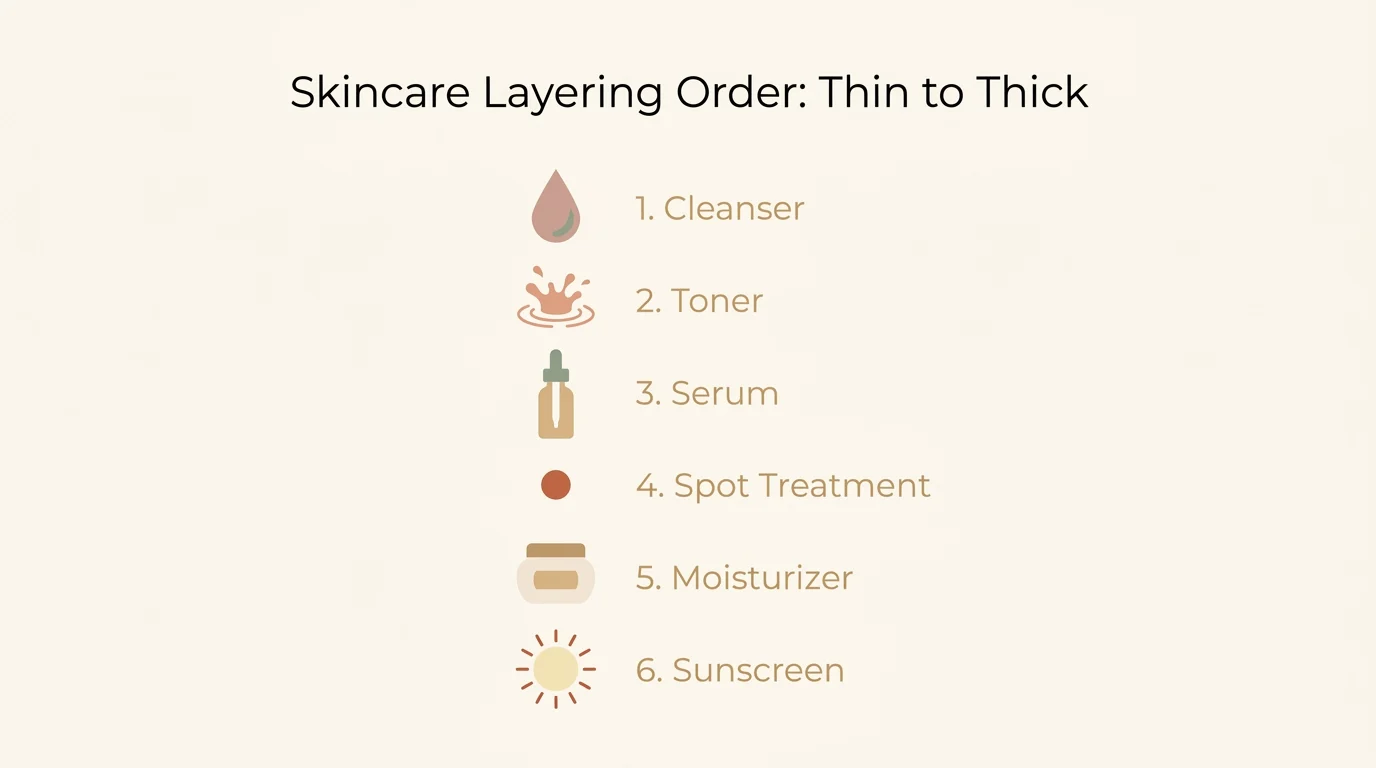
Quick answer: Apply skincare from thinnest to thickest. Cleanser first, then a water-based toner or essence if you use one, then serums (lightest to heaviest if you use more than one), then spot treatments, then moisturizer, and sunscreen last in the morning. Wait about 30 to 60 seconds after a watery layer like toner or serum so it can absorb, but you don’t need to wait after a cream-based moisturizer. Most wasted product comes from applying a heavy cream before a lightweight serum, not from skipping a wait time.
Why the Order You Apply Products In Actually Matters
Thinner, more liquid formulas like toners and serums are designed to be absorbed into the skin. Thicker, cream-based products like moisturizers and facial oils are designed to sit closer to the surface and seal moisture in. If you apply the thick layer first, it acts like a barrier, and the thinner product underneath simply can’t get through the same way.
This matters more for the products you’re actually paying a premium for, like a targeted serum or a treatment with active ingredients. If most of it stays on top of your moisturizer instead of reaching your skin, you’re paying full price for a fraction of the benefit.
The general rule: thinnest formulas go on first, thickest go on last.
The Correct Order for a Morning Routine
Cleanser. A gentle, non-foaming cleanser is usually enough in the morning since you’re washing off overnight oil, not makeup or sunscreen.
Antioxidant serum, if you use one. A vitamin C or similar antioxidant serum works best on clean skin in the morning, since it’s meant to help protect against the day’s sun and pollution exposure.
Moisturizer. Your regular daily moisturizer goes on after the serum has settled for a minute.
Sunscreen, always last. Sunscreen needs to sit on top to form an even protective film. If you bury it under a heavy moisturizer or apply it before your serum, it doesn’t protect your skin the way it’s meant to. If your skin runs oily, our comparison of sunscreens for oily skin by finish and budget can help you choose that last layer.
If you already have a lightweight daily moisturizer you like, our guide to choosing a daily moisturizer covers what to actually look for on the label.
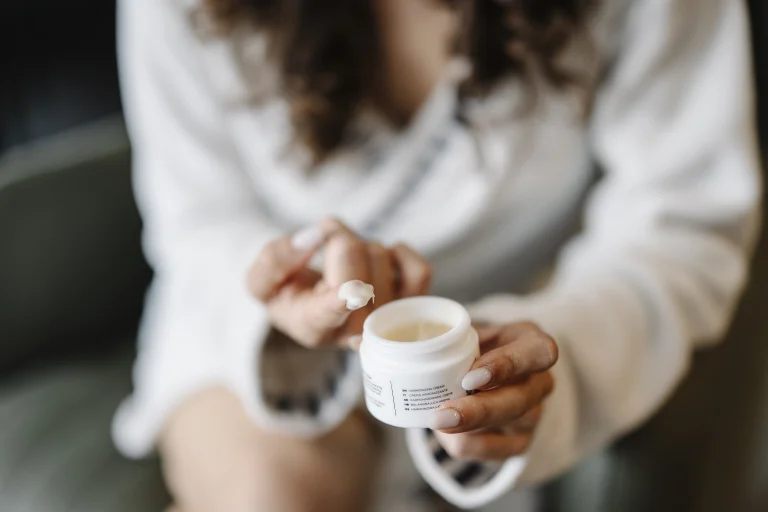
Representative editorial image, not official Amazon product photography.
Research-based evaluation
Daily Hydrating Face Moisturizer
Why we picked it: A basic, well-formulated daily moisturizer is the foundation of most skincare routines before anything more targeted is added.
Best for
Someone building or simplifying a daily skincare routine.
Strength
Simple enough for sensitive or reactive skin to trial
Watch out for
Not a substitute for a dedicated night cream or treatment product
Cleanser, or a double cleanse. If you wore sunscreen or makeup during the day, an oil-based cleanser followed by your regular one removes it more completely than a single wash.
Treatment or active ingredient, on alternate nights if needed. Retinol, AHA or BHA exfoliants go on clean, dry skin, before moisturizer, so they reach the skin directly.
Moisturizer. This helps buffer stronger actives and keeps the skin barrier from drying out overnight, which matters even more in a dry or air-conditioned bedroom.
Facial oil, if you use one, always last. Oils are the heaviest, most occlusive step, so they belong on top of everything else, sealing the layers underneath rather than blocking them.
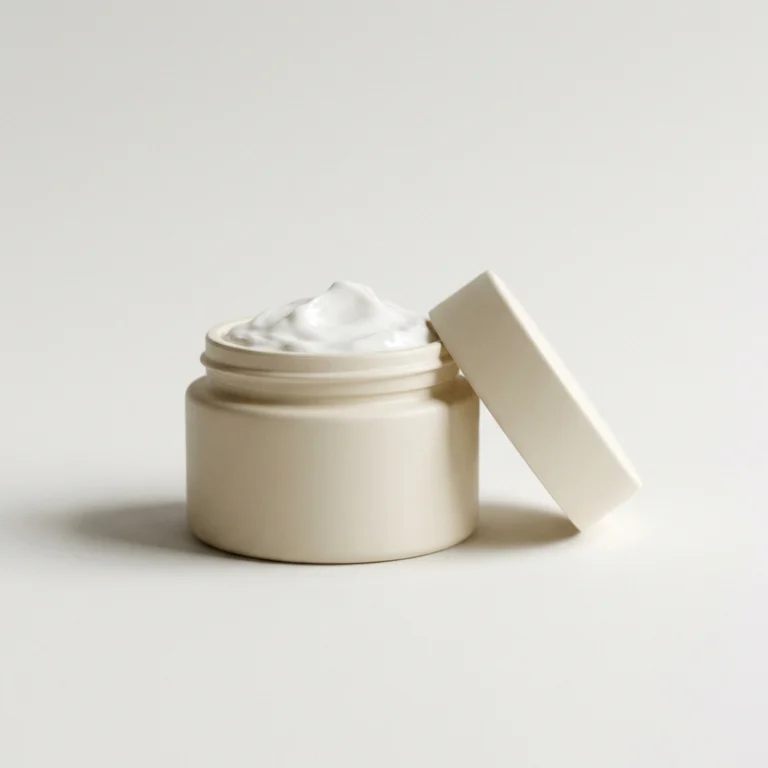
Representative editorial image, not official Amazon product photography.
Research-based evaluation
Ceramide Barrier Repair Cream
Why we picked it: A dedicated barrier cream gives dry or stressed skin a stronger moisture seal than a daily lightweight moisturizer can provide on its own, without needing to replace the lighter product you already use.
Best for
Someone whose usual moisturizer stops feeling like enough once the weather turns dry.
Strength
Stronger, longer-lasting moisture seal than a typical daytime moisturizer
Watch out for
Can feel heavy under makeup or sunscreen, so better suited to nighttime use
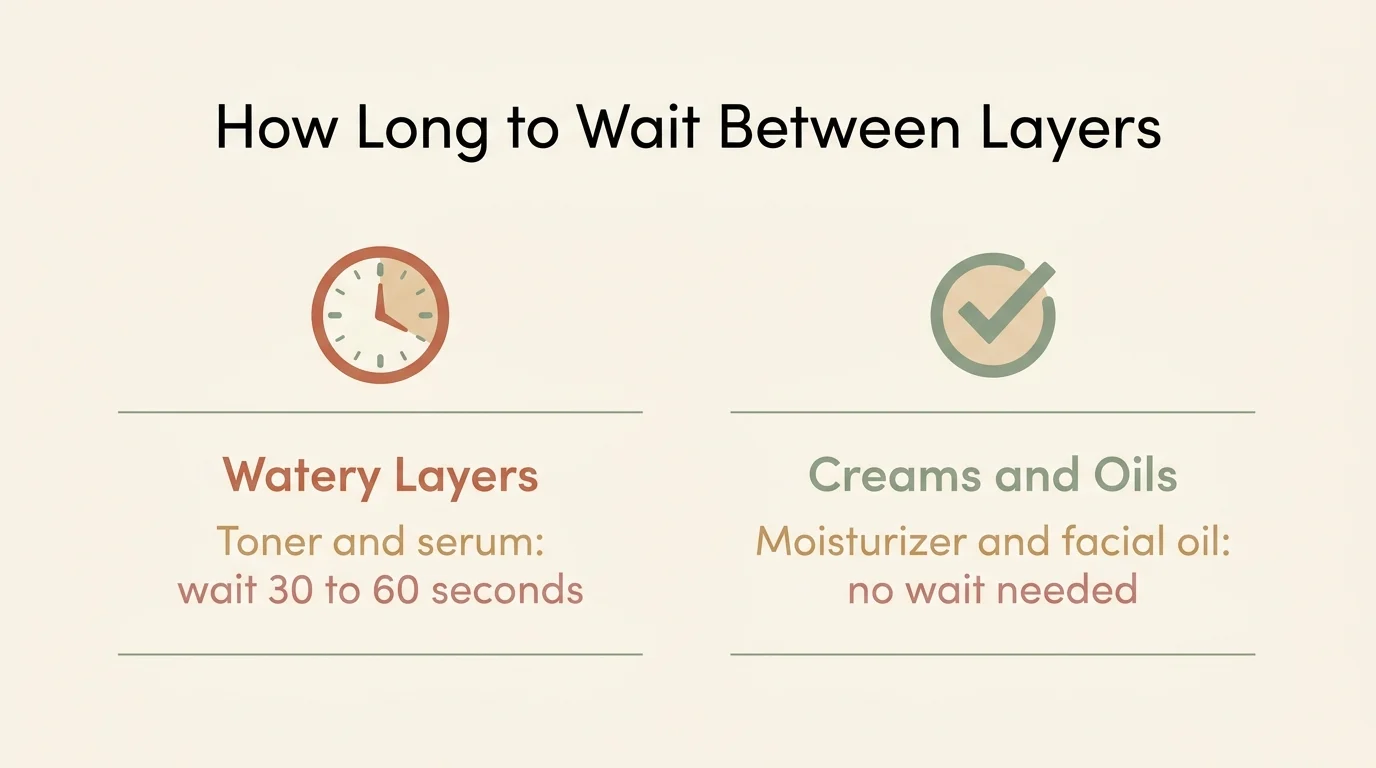
You don’t need to time every step with a stopwatch. A rough 30 to 60 second pause after a watery layer, like a toner or a lightweight serum, is usually enough for it to absorb before the next step. Thicker products like moisturizer and facial oil don’t need a wait time since they’re meant to sit on the surface anyway.
If a product still feels wet or tacky after a minute, that’s usually a sign you applied more than your skin can absorb, not that you need to wait longer.
Watery layers need a short pause. Creams and oils don’t.
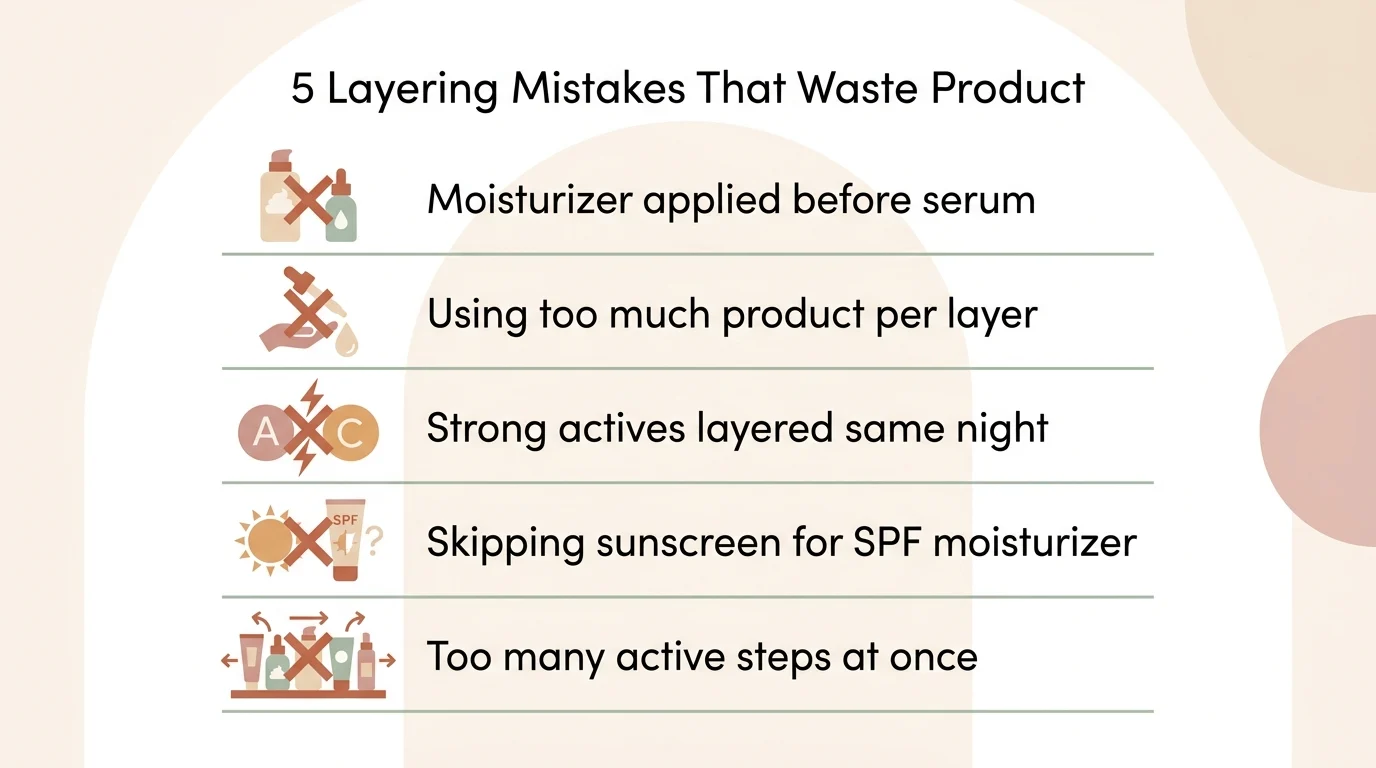
Layering Mistakes That Waste the Most Product
Applying moisturizer before serum. This is the single biggest reason a serum feels like it’s “not doing anything.” It’s usually blocked before it reaches the skin.
Using more product than the step needs. A few drops of serum or a pea-sized amount of moisturizer is usually enough. Doubling the amount doesn’t double the benefit, it just means more sits unabsorbed on the surface.
Layering strong actives on the same night. Retinol and an AHA or BHA exfoliant on the same night increases irritation risk for most skin types without adding much benefit. Alternating nights usually works better.
Skipping sunscreen because moisturizer has SPF. Most moisturizers with SPF don’t apply the same even film as a dedicated sunscreen, since people rarely use enough moisturizer to hit the tested SPF amount.
Adding too many active steps at once. A vitamin C serum, a retinol, an acid exfoliant and a new “brightening” cream in the same week makes it hard to tell what’s actually helping, and harder to tell what’s causing irritation if something goes wrong.
These five habits waste the most product and money over time.
Who Needs to Slow Down, and Who Can Keep It Simple
If your routine is just a cleanser, a moisturizer and sunscreen, you don’t need to overthink the order. Cleanser, moisturizer, sunscreen is already correct.
If you use one or two active ingredients, like a vitamin C serum in the morning or a retinol at night, the thin-to-thick order and a short wait time matter more, since these products are meant to reach the skin directly.
If you have sensitive skin, introduce one new active at a time and keep the rest of the routine simple, so you can tell what’s actually causing irritation if it happens.
A Few More Things That Help
Applying a hyaluronic acid or other water-based serum to slightly damp skin, right after cleansing, usually helps it absorb better than applying it to fully dry skin.
The order is simple once you know the rule: thinnest to thickest, cleanser to sunscreen or oil. Wait roughly 30 to 60 seconds after a watery layer, skip the wait for creams, and be careful about combining strong actives on the same night. Getting this right doesn’t cost anything extra, it just means the products you’ve already bought actually get to do their job.
Don't Miss the Next Guide
Get seasonal skincare tips, honest product guides and comparisons from FIND N FORM, sent straight to your inbox.
This guide is based on general dermatological understanding of skin absorption and ingredient interaction, brand and ingredient information, and comparative analysis of skincare guidance. It is not based on personal testing of any single product.
Do I need to wait between every single skincare step?
Not for every step. A short 30 to 60 second pause helps after a watery toner or serum, so it has time to absorb. You don’t need to wait after a cream-based moisturizer or a facial oil, since those are meant to sit on the surface.
Can I use vitamin C and retinol together?
Most dermatological guidance suggests keeping them apart rather than layering them in the same routine, since both can be irritating on their own for some skin types. A common approach is vitamin C in the morning and retinol at night, so you get the benefit of both without combining them directly.
Does sunscreen really need to go last in the morning?
Yes. Sunscreen works by forming an even film on top of the skin. If it’s applied before moisturizer or serum, or mixed in with another product, that film gets broken up and the protection becomes less reliable.
What if my routine only has two or three products?
A simple cleanser, moisturizer and sunscreen routine is already in the right order by default. The thin-to-thick rule matters most once you add serums, treatments or actives, since those are the products most likely to get blocked if applied in the wrong order.
This article may contain Amazon affiliate links. As an Amazon Associate, FIND N FORM earns from qualifying purchases, at no extra cost to you. Our recommendations are never determined by commission.
3 responses to “How to Layer Skincare Products Without Wasting Half of Them”
[…] called slugging, seals in the moisturizer’s actives and water content for longer. Our guide to layering skincare products covers this kind of layering order in more […]
[…] for oily skin work well together if both are light gels. Sunscreen goes on last, as our guide on how to layer skincare products explains. To choose a moisturizer, see what to consider before buying a daily […]






[…] called slugging, seals in the moisturizer’s actives and water content for longer. Our guide to layering skincare products covers this kind of layering order in more […]
[…] How to layer skincare products without wasting half of them, if you are adding a richer moisturizer on top of what you already use. […]
[…] for oily skin work well together if both are light gels. Sunscreen goes on last, as our guide on how to layer skincare products explains. To choose a moisturizer, see what to consider before buying a daily […]