Face creams get all the attention in winter, but body skin dries out just as fast. Here's what actually matters in a body lotion for dry skin, and how to use it right.
You probably already changed your face routine for winter. Maybe a richer night cream, maybe a gentler cleanser. But by the time you are pulling socks on over ashy ankles, or your arms look chalky the moment you put on a t-shirt, it is clear your body needs its own plan too.
Most body lotions look interchangeable on a store shelf, and a label that says “24 hour hydration” does not really tell you anything. This guide explains what actually keeps body skin from drying out in winter, which ingredients and textures matter, and how to apply what you already own so it works better.
Quick answer: For dry skin in winter, look for a lotion or cream that combines a humectant like glycerin or hyaluronic acid with an occlusive like petrolatum, mineral oil or shea butter. In India, Vaseline Intensive Care Deep Restore is the budget pick, CeraVe Moisturising Lotion suits sensitive skin, and Cetaphil Moisturising Cream suits very dry skin in cold cities. For rough elbows, knees or shins, add a 10% urea lotion. Apply within a few minutes of a shower while skin is still damp.
Why Body Skin Dries Out Faster Than Your Face in Winter
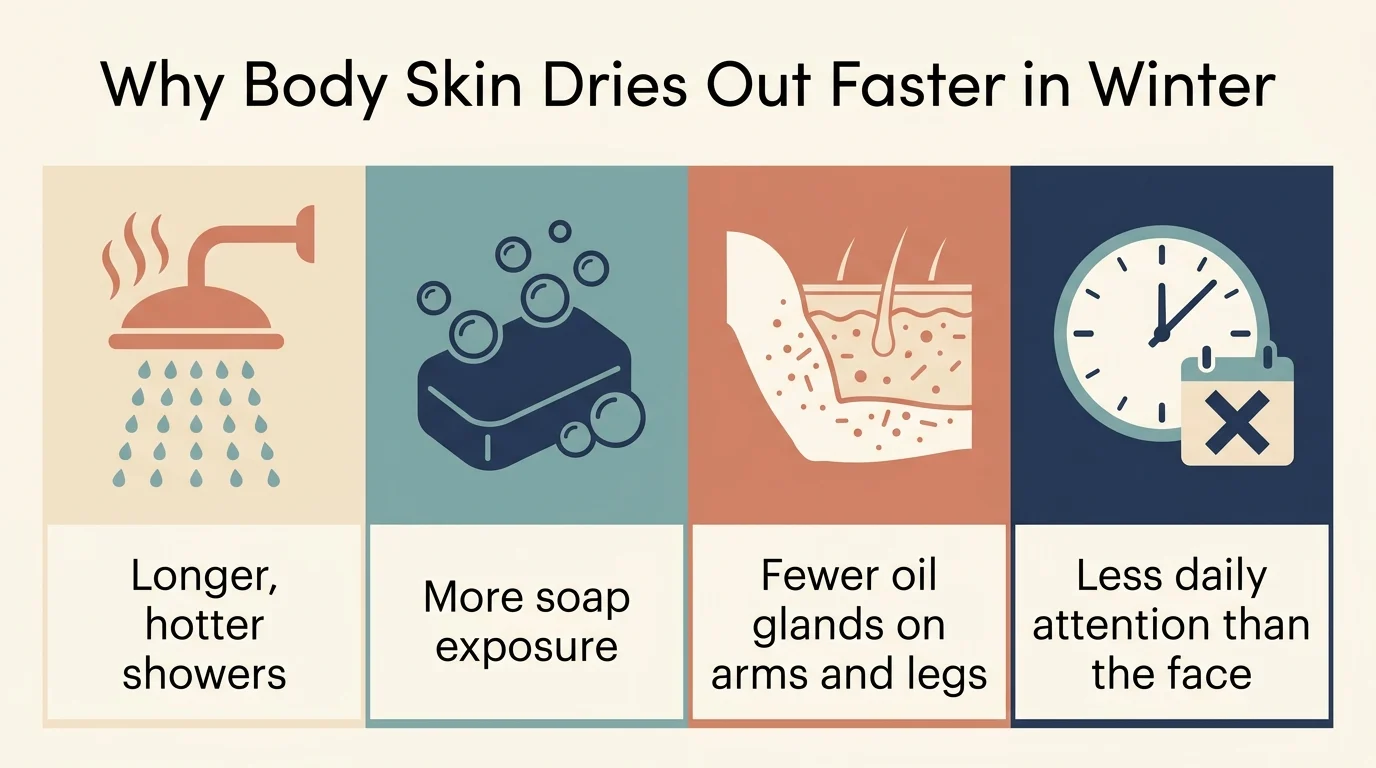
Your face usually gets a moisturizer, sometimes a serum, and sunscreen every single day. Your body often gets soap in the shower and a quick, thin layer of lotion afterward, if any. That gap in attention is one reason body skin falls behind once the air turns dry.
There is also a physical reason. Skin on your arms, legs and torso has fewer oil glands than your face, so it holds onto moisture less easily to begin with. Add a longer, hotter shower, which strips oil off a much larger surface area than a quick face wash does, and body skin loses water faster than it can be replaced. This shows up worse in genuinely cold, dry regions like Delhi, Punjab and the hill states, but even in milder cities, constant AC exposure indoors has a similar drying effect.
Body skin gets less daily care than your face, and dries out faster because of it.
What to Look for in a Winter Body Lotion
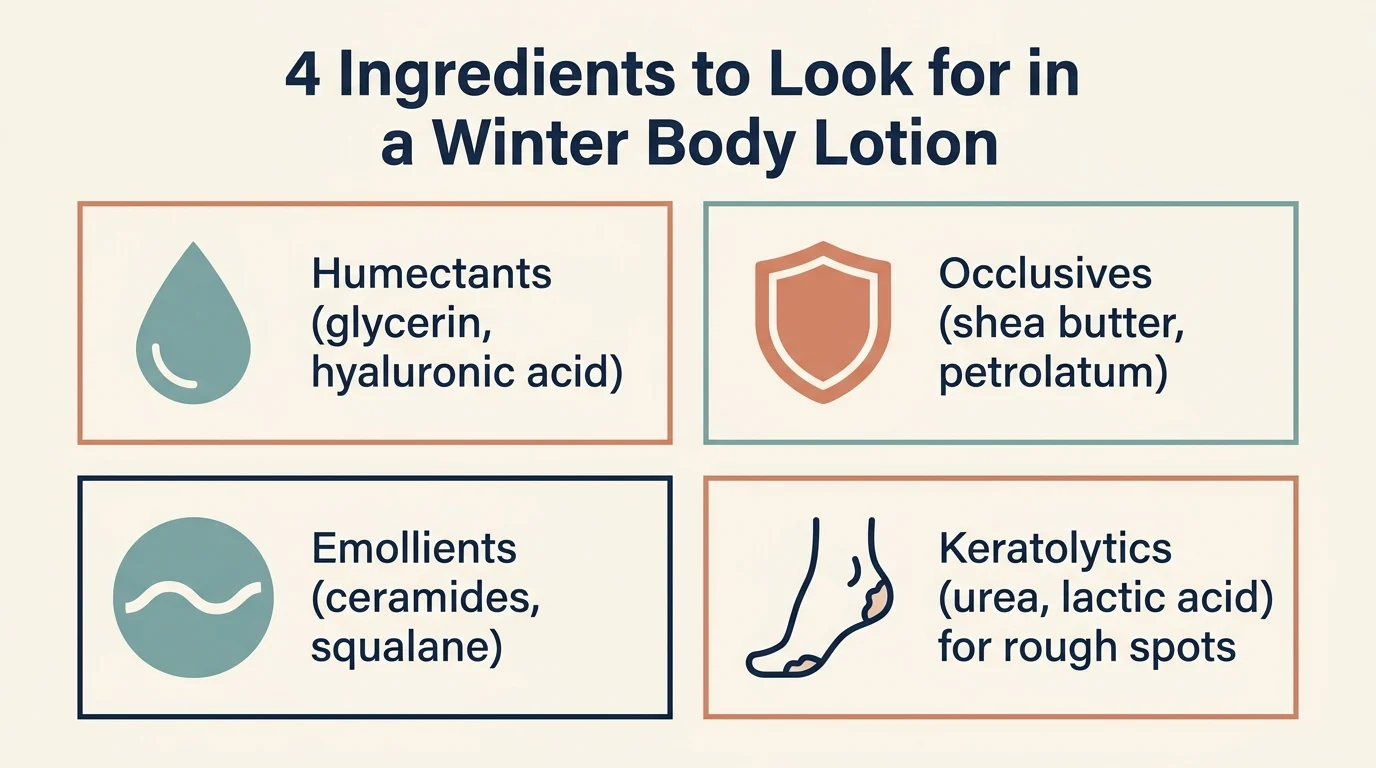
The brand name on the bottle matters less than what is actually inside it. Four ingredient types do most of the real work.
Humectants. Glycerin, hyaluronic acid and small amounts of urea pull water into the surface layer of your skin. They need something to lock that water in, which is where the next ingredient comes in.
Occlusives. Shea butter, petrolatum, mineral oil and dimethicone form a seal on top of skin that slows down water loss. A lotion with a humectant but no occlusive can feel hydrating for an hour, then leave you dry again by afternoon.
Emollients. Ceramides, fatty acids and squalane smooth rough patches and support the skin’s own barrier, the layer that keeps irritants out and moisture in.
Keratolytics, for rough spots specifically. Urea above 10 percent, lactic acid or salicylic acid help soften the thickened, flaky skin that builds up on elbows, knees and heels. Regular lotion often is not strong enough for these areas once they get genuinely rough.
A useful winter body lotion usually combines at least the first two of these.
Lotion, Cream or Body Butter: Which Texture Fits Your Skin?
Texture affects how well a product actually fights winter dryness, not just how it feels going on.
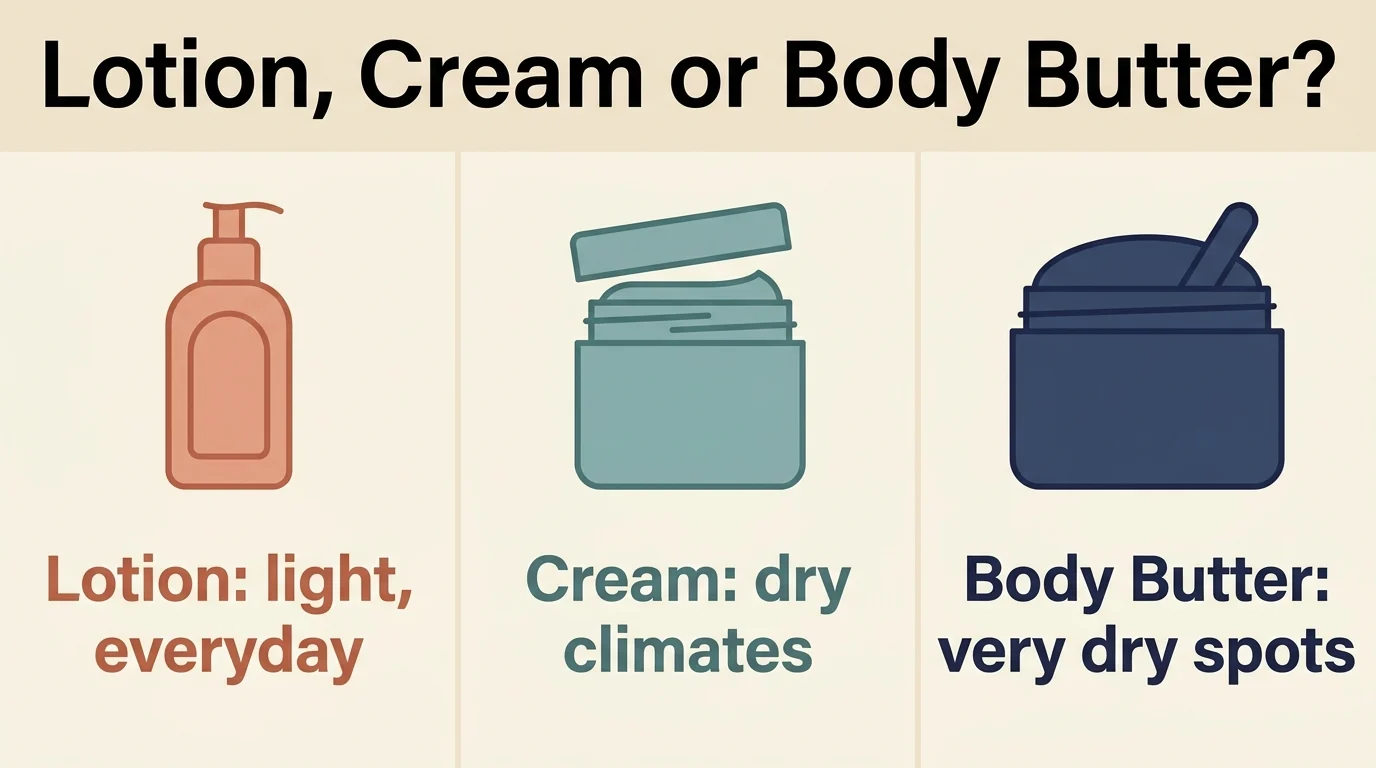
Best for: a standard lotion suits normal-to-mildly dry skin or more humid regions. A thicker cream suits dry skin in genuinely cold, dry climates. A body butter suits very dry skin, rough patches, or overnight use on the driest areas.
How it feels: lotion is light and absorbs quickly. Cream is thicker and takes a minute to sink in. Body butter is the heaviest and can feel greasy right after application.
How long it holds moisture: lotion usually needs reapplying through the day. Cream lasts longer. Body butter holds the longest, but you rarely need that much coverage everywhere.
Where each one falls short: lotion alone often is not enough once the air is genuinely dry. Cream can feel heavy under fitted clothing. Body butter can mark light fabric if it has not fully absorbed before you get dressed.
Most people need a heavier texture only in a few specific spots, not everywhere.
The same humectant-plus-occlusive logic applies to your face too. If you have not settled on a daytime option yet, our guide to choosing a daily moisturizer covers what to check on the label before buying.
Winter Body Lotions in India That Actually Follow These Rules
Disclosure: FindNForm may earn a small commission if you buy through these links, at no extra cost to you. These picks are based on each brand’s published ingredient list and our research, not on paid placement or personal testing of every product.
Most lotions on the shelf look the same, so here are four that are easy to buy in India and match the humectant-plus-occlusive rule above. Each one fits a different skin situation. Prices are MRP checked on 14 October 2026 and may have changed.
1. Vaseline Intensive Care Deep Restore Body Lotion
Best budget lotion for everyday winter use
Why it fits: Glycerin pulls water into the skin, while petrolatum, mineral oil, paraffin and dimethicone seal it in. That is the exact humectant-plus-occlusive pairing this guide recommends, at the lowest price on this list. It also contains oat straw extract.
Best for: Normal to dry skin in most Indian cities, and anyone who wants one affordable bottle for the whole family.
Watch out for: It contains added fragrance. Skip it if your skin is sensitive or eczema-prone.
Why it fits: Glycerin and sodium hyaluronate (a form of hyaluronic acid) hydrate, three ceramides plus cholesterol support the skin barrier, and dimethicone adds a light seal. There is no added fragrance in the ingredient list, which makes it a safer choice for reactive skin.
Best for: Sensitive or eczema-prone skin, and people who dislike a heavy, greasy feel.
Watch out for: It is a light lotion. In genuinely cold, dry places like Delhi or Punjab, you may need a cream on your driest spots as well.
Why it fits: This is a true cream, not a lotion. Glycerin hydrates, petrolatum and dimethicone seal, and niacinamide and panthenol support the skin barrier. Cetaphil describes it as fragrance-free and suitable for face and body.
Best for: Very dry skin, winters in North India, and anyone whose regular lotion stops working by afternoon.
Watch out for: It is thick and takes a minute to sink in. It contains sweet almond oil, so skip it if you react to almond.
Why it fits: Urea at 10 percent hydrates and gently softens the rough, flaky buildup this guide describes. It also has shea, kokum and mango butters plus ceramides, so it seals moisture in too.
Best for: Rough, bumpy or flaky patches, and dry shins that stay ashy even with regular lotion.
Watch out for: Urea can sting on cracked or broken skin, so patch test first and avoid open cracks. If your skin reacts to fragrance, check the label before buying.
How to choose in one line: start with Vaseline Deep Restore if you want value, CeraVe if your skin reacts easily, Cetaphil Moisturising Cream if you live somewhere genuinely cold and dry, and add the urea lotion only for rough patches.
Who Needs a Heavier Lotion, and Who Can Get Away With Something Lighter
Not everyone needs to switch to a thicker cream or body butter.
If you live somewhere with a milder winter, or you have naturally oily or combination body skin, a regular lotion applied once a day is often enough.
If you live somewhere genuinely cold and dry, run an AC or heater indoors most of the day, or already deal with very dry or eczema-prone skin, a cream or body butter with a stronger occlusive is worth the switch.
If only your elbows, knees or heels crack, you may not need to change your all-over lotion at all. Just add a urea or lactic acid cream on those specific spots.
How to Apply It So It Actually Works
Apply within a couple of minutes of stepping out of the shower or bath, while skin is still slightly damp. The same principle that helps face moisturizer work better applies here.
Keep showers shorter and cooler where you can manage it. Hot water strips natural oils off a much bigger surface area on your body than it does on your face.
Reapply on the driest, most exposed spots, hands, elbows, knees and heels, rather than assuming one full-body application in the morning covers the whole day.
Skip the harsh scrub or loofah if skin is already cracked or irritated. Scrubbing damaged skin usually makes flaking worse, not better.
You do not need a completely different body lotion for winter, but you probably need a different texture and ingredient list than whatever thin, watery lotion is already in your bathroom. Look for a humectant paired with an occlusive ingredient, add a urea or lactic acid cream if your elbows, knees or heels get genuinely rough, and apply it while your skin is still damp from the shower. If your regular lotion has felt useless for the past few weeks, that is a real sign to change what you are using, not just how much of it you use.
Don't Miss the Next Guide
Get seasonal skincare tips, honest product guides and comparisons from FIND N FORM, sent straight to your inbox.
This guide is based on general dermatological understanding of skin barrier function, ingredient research and comparative analysis of body-care guidance. It is not based on personal testing of any single product.
Can I just use my face moisturizer on my body instead of a separate lotion?
You can, but it usually is not the most practical choice. Face moisturizer is formulated in smaller amounts and often costs more per use than a body lotion, and it is not always richer than what your body actually needs in winter. A dedicated body lotion or cream with the right ingredients is generally a better value for covering larger areas.
How often should I apply body lotion in winter?
Once a day, right after showering, is enough for most people. If your skin still feels tight or flaky by afternoon, especially on hands, elbows or lower legs, a second, targeted application on those spots usually helps more than reapplying all over again.
Is petroleum jelly good for very dry or cracked skin?
Yes, based on current dermatological understanding. Petroleum jelly is a strong occlusive, meaning it seals in moisture rather than adding it, which is why it works well on already-damp skin and on cracked heels or knuckles. It does not add hydration on its own, so applying it straight after a shower, while skin is still damp, works better than using it on completely dry skin.
Do I need a different lotion if I have eczema-prone skin?
Fragrance-free formulas with ceramides and minimal added ingredients are generally the safer starting point, since fragrance and certain preservatives are common triggers. This guide covers general dry skin, so if you have diagnosed eczema or another skin condition, it is worth checking with a dermatologist before settling on a product.
One response to “Best Body Lotion for Dry Skin in Winter: What to Look For”
[…] Best body lotion for dry skin in winter, for extending this same routine below the neck. […]




[…] Best body lotion for dry skin in winter, for extending this same routine below the neck. […]