What makes a soap handmade or cold-processed, what to check on the label, and 3 handmade soap bars worth buying in India.
You pick up a bar labelled “handmade” at a craft fair or on Amazon, and it costs three times what your usual soap does. Is it actually different, or is “handmade” just a nicer word on the wrapper?
Sometimes it is the real thing, and sometimes it is an ordinary soap base melted down and poured into a pretty mould. The label rarely tells you which, so the ingredient list has to.
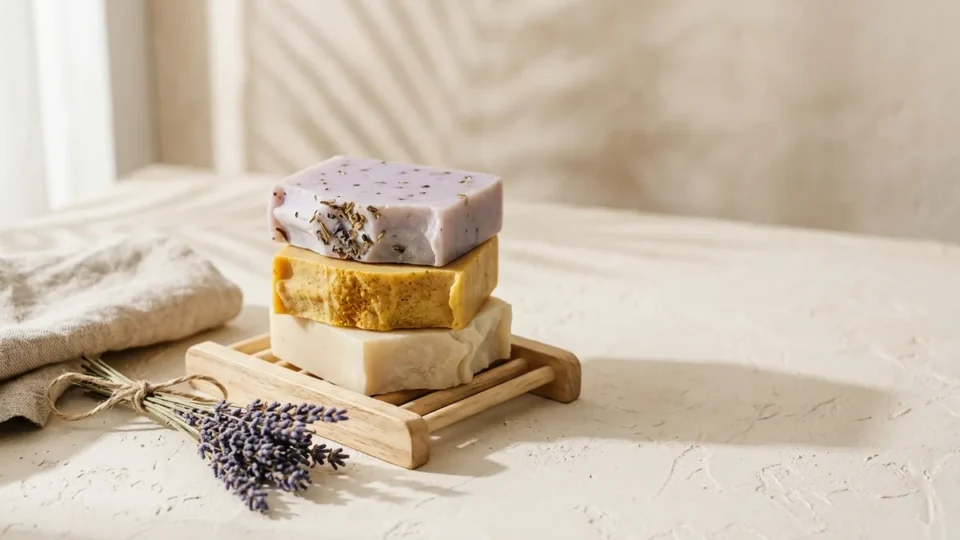
Handmade soap is soap made in small batches by mixing plant oils or fats with lye, usually by the cold process, then left to cure for several weeks. A good bar lists its oils first and has no detergents such as sodium laureth sulphate. Check the ingredient list, the weight and the price per 100 g before you buy.
This is a research-based guide. We explain how soap is made using the US FDA’s guidance on soap, and we checked each pick’s ingredients on the brand’s own website or Amazon.in listing, and its price, size, rating and seller on Amazon.in, on 31 October 2026. We have not tested these soaps on our own skin. Prices change, so check the current price before buying.
Not sure whether you want a bar at all? Read our comparison of body wash vs soap first.
We may earn a commission when you buy through links on this page. This never changes what we recommend. As an Amazon Associate I earn from qualifying purchases.
Quick answer: handmade soap in 30 seconds
Real handmade soap is oils plus lye, made in small batches and cured for weeks. Read the ingredient list, not the label: oils first, no detergents. Scented bars, even with essential oils, can still irritate sensitive skin.
Pick
Best for
Price per 100 g
Nat Habit Himalayan Lavender (2 x 125 g)
Best value, cold processed
about ₹87
Rustic Art Baby Soap (100 g)
Gentle, organic oils
₹213
Forest Essentials Sandalwood & Turmeric (100 g)
A premium treat or gift
₹510
What makes a soap handmade or cold-processed?
All true soap is made the same way chemically: fats or oils react with an alkali such as lye (sodium hydroxide) and turn into soap. The US FDA describes true soap as mostly “alkali salts of fatty acids”, which is what that reaction leaves behind. What changes between bars is how the maker gets there.
Cold process
The maker mixes oils and lye at a low temperature, pours the mix into moulds and lets it harden. The bars then cure, usually for 4 to 6 weeks, while the reaction finishes and the water evaporates. This is what most brands mean by “cold processed”. The slow method keeps the glycerin that forms naturally during the reaction in the bar.
Hot process
Same ingredients, but the maker heats the mix to speed up the reaction. The bars can be used sooner and often look more rustic. It is still genuinely made from scratch.
Melt and pour
Here the maker buys a ready-made soap base, melts it, adds colour or scent and pours it into moulds. It is quick and safe for beginners, which is why most home soap kits use it, but the maker did not make the soap itself. Bases vary a lot, and some contain synthetic detergents and solvents.
Is there lye in handmade soap?
Lye is needed to make any true soap, but it is used up in the reaction. A properly made and cured bar has no free lye left in it. That is why some labels list “saponified oils” instead of lye: it describes the oils after they have become soap.
Handmade soap vs a regular bar vs body wash
What to compare
Handmade bar
Regular supermarket bar
Body wash
How it is made
Oils plus lye, small batches, cured
Factory-made, often blended with synthetic detergents
Mostly water plus synthetic detergents
Ingredient list
Usually short, oils first
Longer, often with fragrance and colour
Longest, with thickeners and preservatives
Glycerin
Kept in the bar
Varies
Often added
Price per 100 g
Highest
Lowest
Middle
How long it lasts
Softer, wears faster if left wet
Harder, lasts longer
Easy to overuse
Handmade is not automatically better for every skin. A well-made bar is gentle and simple, but scent and oil choice still matter, and the price per wash is higher. Our body wash vs soap guide goes deeper on the format question.
What to check before you buy handmade soap
The ingredient list, in order
Ingredients are listed from most to least. In a true handmade bar the first few should be oils or butters (coconut, olive, sesame, shea), or “saponified oils”. If you see sodium laureth sulphate, propylene glycol or a long list of synthetic additives near the top, it is a detergent bar or a melt-and-pour base, whatever the label says.
How it is made
Look for “cold process”, “cold processed” or “hot process” on the brand’s own page. Vague words like “natural” or “herbal” do not tell you anything about how the soap was made.
Fragrance and essential oils
Most handmade bars are scented, usually with essential oils. Natural scent can still irritate dry, sensitive or eczema-prone skin. The American Academy of Dermatology suggests gentle, fragrance-free products for dry skin, so if that is you, patch test first or choose the mildest bar you can find.
Weight and price per 100 g
Handmade bars come in 75 g to 150 g sizes and are often sold in packs. Divide the price by the total weight to compare fairly. On 31 October 2026 our picks ranged from about ₹87 to ₹510 per 100 g.
Who is selling it
Premium soaps are often copied. On Amazon.in, check the “Sold by” line and prefer the brand’s own store or a large, established seller. We checked the seller for every pick below.
3 handmade soap bars worth buying
Each pick is made by the cold process, according to its brand, and has at least 100 ratings and 3.8 stars on Amazon.in. Prices were checked on 31 October 2026.
Nat Habit Cold Processed Himalayan Lavender Soap (2 x 125 g): best value
What it is: A cold-processed bar that the listing says is cured over 6 to 8 weeks. The ingredient list on its Amazon.in listing is short: Himalayan lavender oil, coconut oil, palm oil, mahua oil and natural white musk.
Why we picked it: It is the cheapest true cold-process bar we found per 100 g, and the ingredient list has no detergents. It has 4.2 stars from 437 ratings on Amazon.in and is sold by RK World Infocom, a large established seller.
Limitation: It is scented with lavender oil and musk, so it is not the best choice for fragrance-sensitive skin, and it contains palm oil, which some buyers prefer to avoid.
Best for: Trying a real cold-process soap without paying premium prices. Skip if: Scented products make your skin itch.
Price: ₹218 for 2 x 125 g on Amazon.in, about ₹87 per 100 g (price checked on 31 Oct 2026). Prices change, so check the current price.
What it is: A cold-processed, handmade bar made for babies and sensitive skin. Rustic Art’s own website lists certified organic oils (coconut, sunflower, sesame, olive, castor and almond, among others) plus lavender and turmeric essential oils.
Why we picked it: It is built around plant oils for everyday use from birth, which makes it the mildest-sounding pick here. It has 4.2 stars from 136 ratings on Amazon.in and is sold by Rustic Art itself.
Limitation: It still contains essential oils, so it is not fragrance-free, and it has fewer ratings than the other two picks.
Best for: Dry or sensitive adult skin, and families who want one gentle bar. Skip if: You react even to essential oils.
Price: ₹213 for 100 g on Amazon.in (price checked on 31 Oct 2026). Prices change, so check the current price.
What it is: A clear soap that Forest Essentials says is made by hand using the cold process, with raw cane sugar, sandalwood oil and turmeric oil. The brand describes it as sulphate free.
Why we picked it: It is a well-known Indian Ayurvedic brand with its making method stated on its own product page, and it makes a good gift. It has 4.3 stars from 302 ratings on Amazon.in and is sold by RK World Infocom, a large established seller.
Limitation: At ₹510 per 100 g it costs about six times as much as the Nat Habit bar, and the brand says it leaves a delicate fragrance on the skin.
Best for: A treat for yourself or a festive gift. Skip if: You want an everyday family soap on a budget.
Price: ₹510 for 100 g on Amazon.in (price checked on 31 Oct 2026); the brand’s own site listed it at ₹575 the same day. Prices change, so check the current price.
Handmade soap is worth buying when it is the real thing: oils and lye, made in small batches and cured, with a short ingredient list you can read. Start with the Nat Habit bar if you want value, the Rustic Art bar if your skin is sensitive, and the Forest Essentials bar if you want a gift. Whatever you choose, read the ingredients before the label.
You read all the way to the end, so you clearly care what goes on your skin. Now we want to hear from you.
Tell us in the comments below: what made you look for handmade soap, and what is your skin like, dry, oily or sensitive? Is there a handmade brand you are unsure about, or a soap or body care product you want us to research next? Name it below, so you do not spend your hard-earned money on the wrong bar. We read every comment and use them to decide what we cover next.
Then join the FIND N FORM newsletter. Prices on Amazon.in keep moving, and every week we send one honest product comparison, with the research already done. Skip it, and you are back to scrolling ads and guessing.
Not automatically. A well-made handmade bar has a short ingredient list and keeps its natural glycerin, which many people find gentler than a detergent bar. But scent and oil choice still matter, so read the ingredient list and patch test if your skin is sensitive.
Does handmade soap contain lye?
It is made with lye, because every true soap is, but the lye is used up as the oils turn into soap. A properly made and cured bar has no free lye left. Labels that say “saponified oils” are describing the oils after that reaction.
What is cold process soap?
Cold process soap is made by mixing oils and lye at a low temperature, pouring the mix into moulds and letting the bars cure, usually for 4 to 6 weeks, before use.
Is handmade soap good for sensitive skin?
It can be, if the bar is mild and unscented or lightly scented. Essential oils are still fragrance and can irritate sensitive or eczema-prone skin, so patch test on your inner arm for a few days first.
Can I make handmade soap at home?
Yes. Melt and pour soap is the safest way to start, because you do not handle lye. Cold process soap needs lye, which can burn skin and eyes, so use gloves and eye protection, work in a ventilated room away from children, and follow a tested recipe.
Why does handmade soap cost more?
It is made in small batches with costlier oils and butters, and cold process bars need weeks of curing space before they can be sold. That is why the price per 100 g is often several times that of a supermarket bar.
Is bar soap worse for skin than liquid body wash?
Not inherently. It depends on the specific formulation. A well-formulated bar can be gentler than a detergent-heavy liquid wash; a poorly formulated one can be drying. The ingredient list, not the format, is what matters most.
Sources
US Food and Drug Administration, “Frequently Asked Questions on Soap” (checked 31 Oct 2026): fda.gov
Bramble Berry, “Hot Process vs. Cold Process” (cure time, checked 31 Oct 2026): brambleberry.com
American Academy of Dermatology, “Dermatologists’ top tips for relieving dry skin” (checked 31 Oct 2026): aad.org
Brand product pages: Forest Essentials (Luxury Sugar Soap Sandalwood & Turmeric 100 g) and Rustic Art (Baby Soap 100 g), checked 31 Oct 2026
Amazon.in product listings (ingredients for Nat Habit, prices, sizes, ratings and sellers checked 31 Oct 2026)



Leave a Reply