FIND N FORM may earn a commission if you buy through links on this page, at no extra cost to you. As an Amazon Associate, we earn from qualifying purchases.
Cracked heels are common once winter air turns dry. Here is the home remedy routine that actually works, and the signs that mean it is time to see a doctor.
Cracked heels usually creep up quietly. You notice a rough patch by the shower, ignore it for a week, and then one morning there is a line across your heel that stings every time you step down. By the time it hurts, most people reach for whatever is in the bathroom cabinet, and Google turns up a mix of grandmother remedies, hospital blogs and pharmacy ads that all say something slightly different.
Cracked heels are common in winter because the skin there is already thicker and has far fewer oil glands than the rest of your body, so it dries out and splits faster once the air turns dry. Most cases respond well to a simple, consistent home routine. A smaller number need more than home care. This guide walks through what actually helps, what to avoid, and the specific signs that mean it is time to stop self-treating and see a doctor.
Quick answer: Most mild to moderate cracked heels improve within one to two weeks with a simple soak, gentle exfoliation and a thick, occlusive moisturizer like petroleum jelly applied at night under socks. See a doctor if the cracks are deep enough to bleed, look infected (redness, swelling, discharge or warmth), have not improved after two weeks of consistent care, or if you have diabetes or poor circulation, since foot injuries need closer attention in those cases.
Why Heels Crack in the First Place
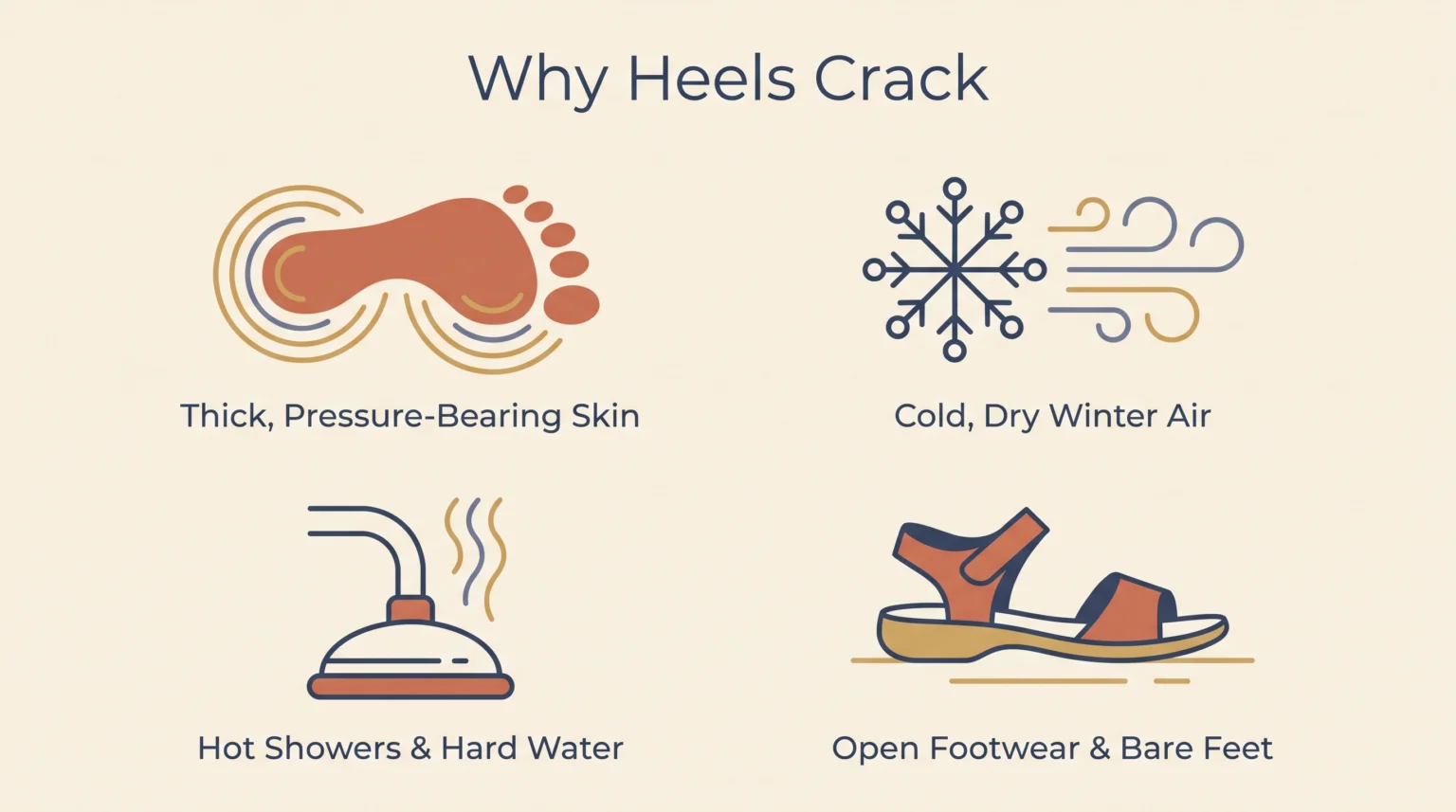
Heel skin is built differently from the rest of your body. It carries your full body weight with every step, so it naturally grows thicker, and it has almost no oil glands to keep it soft on its own. When that already-dry skin loses even more moisture, from cold air, hot showers, standing for long hours or walking around barefoot or in open-back footwear, it hardens, loses flexibility and eventually splits along the edge of the heel where the pressure is highest.
A few things make it worse in the Indian winter specifically. Lower humidity and more time indoors under a fan or heater pull moisture out of skin faster than usual, the same effect covered in our guide to winter skincare for dry skin. Add hard water in many cities, sandals or open slippers worn through most of the year, and standing on hard floors for work, and heels end up drier and under more mechanical stress than almost any other part of the body.
General medical guidance also notes that a few underlying conditions, including diabetes, thyroid disorders and some skin conditions like eczema or psoriasis, can make heels crack more easily or heal more slowly. This does not mean everyone with cracked heels has one of these conditions. It means it is worth mentioning to a doctor if your heels crack often, heal slowly, or if you already manage a condition like diabetes.
Heel skin is already thick and low in oil glands, which is why it cracks faster than skin elsewhere once these factors add up.
Home Remedies That Actually Help
Nearly every reliable source, from dermatology blogs to hospital patient guides, converges on the same basic routine. It is not complicated, but it only works if you do it consistently, not once and then forget about it for a week.
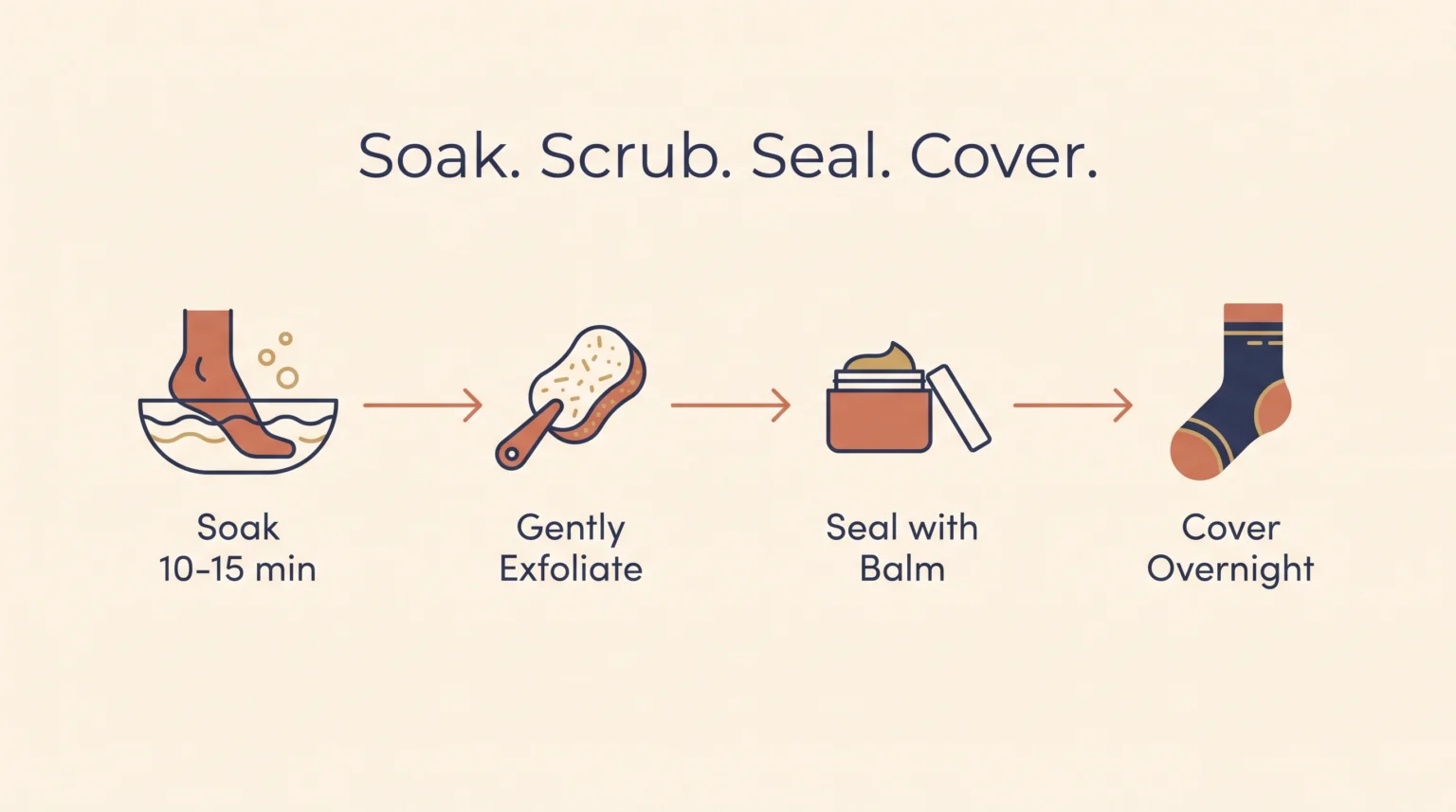
Soak your feet first. Warm, not hot, water for 10 to 15 minutes softens the hardened skin enough for the next steps to actually work. Adding a mild soap or a spoon of salt is fine, but plain water works just as well. Hot water repeated daily can actually dry skin out further, so keep it warm rather than scalding.
Gently exfoliate the thickened skin. While the skin is still soft from soaking, use a pumice stone or foot file in one direction, not a blade or razor, to smooth down the built-up hard skin around the crack. Stop once the skin feels smoother. Over-scrubbing removes healthy skin along with the dead layer and can make cracks worse.
Seal the moisture in immediately after. Pat feet dry, then apply a thick, occlusive layer while skin is still slightly damp. Plain petroleum jelly is one of the most consistently recommended options because it has almost no ingredients that can irritate already-cracked skin and it holds moisture in for hours. Our guide to petroleum jelly for dry skin covers how it works and where it helps most.
Cover with socks overnight. A pair of clean cotton socks worn to bed after applying the balm keeps it in contact with skin for hours instead of rubbing off on sheets, and noticeably speeds up how fast deep cracks close.
Repeat daily, not occasionally. A single soak-and-moisturize session will not undo weeks of dryness. Most people see real improvement after 7 to 14 days of doing this every night, not after one or two tries.
The core routine: soak, gently exfoliate, seal with a thick moisturizer, then cover with socks overnight.
If you want one simple product to keep at hand for this, a plain, unscented petroleum jelly does the sealing step well without adding fragrance or actives that can sting already-cracked skin.
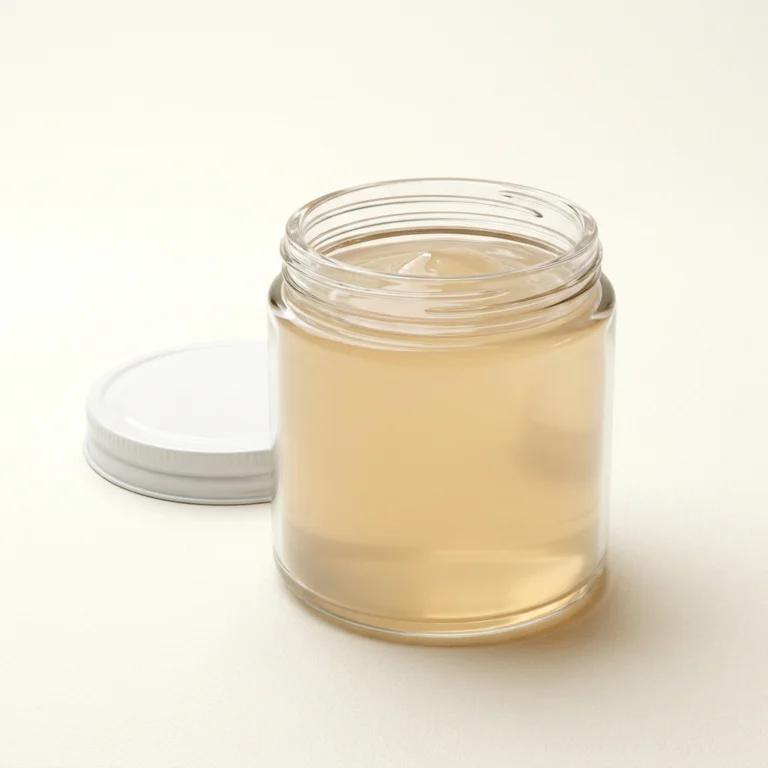
Representative editorial image, not official Amazon product photography.
Research-based evaluation
Pure Petroleum Jelly Skin Protectant
Why we picked it: Petroleum jelly is one of the simplest and cheapest ways to seal moisture into very dry skin, without added fragrance or actives that can irritate already-stressed skin.
Best for
Cracked heels, chapped lips, dry hands and other very dry patches that need a simple, long-lasting seal.
Strength
Very effective at sealing in existing moisture on cracked heels, lips and hands
Watch out for
Adds no water or active ingredients of its own, so it works best over damp skin or a moisturizer rather than alone
A few common habits slow healing down or make cracks worse, even though they feel like they should help.
Cutting dead skin with a blade or razor. It is tempting to slice off the hard edge, but this risks cutting into healthy skin, which can lead to infection, especially if you have diabetes or poor circulation. A pumice stone or foot file is slower but far safer.
Walking barefoot on hard floors. This adds direct pressure right where cracks already exist and can pull them wider while they are trying to close.
Skipping the moisturizer once heels feel better. Heels that look fine again can crack right back within days if the moisturizing step stops. Most people need to keep it up through the whole dry season, not just until the pain goes away.
Relying only on scented lotions. A thin, watery, fragranced lotion can feel nice but usually is not occlusive enough to seal a deep crack, and fragrance can irritate skin that is already broken.
When Home Care Is Enough, and When to See a Doctor
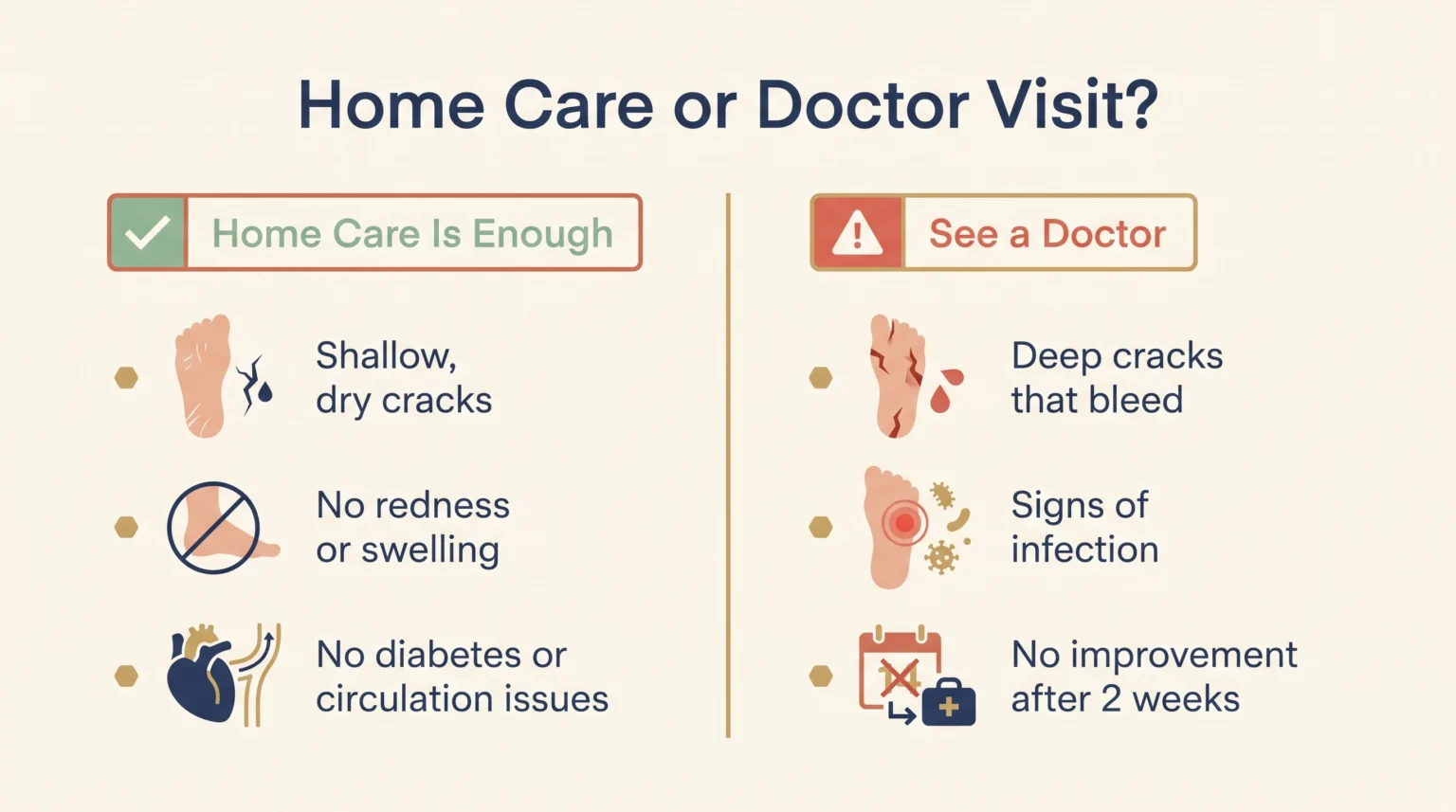
Most cracked heels are a dryness problem, not a medical emergency, and respond to consistent home care within one to two weeks. A smaller number of cases need a doctor or podiatrist instead of more home remedies.
Home care is usually enough if
The cracks are shallow, dry and not bleeding.
There is no sign of infection, no redness spreading outward, swelling, warmth or discharge.
You do not have diabetes, poor circulation or a condition that slows wound healing.
You are able to keep up a daily soak-and-moisturize routine.
See a doctor if
The cracks are deep enough to bleed or to hurt with every step.
You notice redness, swelling, warmth, pus or a bad smell, which can point to infection.
There has been no real improvement after two weeks of consistent home care.
You have diabetes, nerve damage or circulation problems in your feet. According to the Mayo Clinic, cracked heels in people with diabetes need closer attention because minor foot injuries can heal slowly and become serious.
A simple way to decide between continuing home care and getting it checked by a doctor.
Keeping Heels From Cracking Again
Once heels heal, the goal shifts from treating cracks to not getting them back. A short, boring routine beats an occasional intense one.
Moisturize heels daily through the dry months, not only when they already hurt.
Use a pumice stone once or twice a week to stop hard skin building up again, rather than letting it thicken for months.
Choose closed-back shoes or socks over open slippers when you are on your feet for long stretches, especially at work.
Keep showers warm rather than hot, and moisturize within a few minutes of stepping out, while skin is still slightly damp.
Most cracked heels are a simple dryness problem that a consistent soak, exfoliate and seal routine fixes within one to two weeks. Petroleum jelly or another thick, occlusive balm applied at night under socks does most of the work, and a pumice stone used regularly keeps hard skin from building back up. If cracks are deep, bleeding, show signs of infection, or are not improving after two weeks of real effort, especially if you have diabetes or circulation issues, stop self-treating and see a doctor rather than pushing through with more home remedies.
Don't Miss the Next Guide
Get seasonal skincare tips, honest product guides and comparisons from FIND N FORM, sent straight to your inbox.
This guide is based on general dermatological understanding of skin barrier function, publicly available medical guidance on cracked heel care, and comparative research into common home-remedy practices. It is not based on personal testing, and it is not a substitute for medical advice. If you have a condition like diabetes or persistent symptoms, talk to a doctor.
What is the fastest home remedy for cracked heels?
A warm soak followed by gentle exfoliation with a pumice stone and a thick, occlusive moisturizer like petroleum jelly under socks overnight is the routine most consistently recommended. It will not fix deep cracks in one night, but done every night, most mild to moderate cases visibly improve within a week.
Is petroleum jelly good for cracked heels?
Yes, it is one of the most commonly recommended options because it seals in existing moisture without added fragrance or actives that can irritate broken skin. It works best applied over slightly damp skin right after a soak, not on completely dry skin. Our full guide to petroleum jelly for dry skin covers more use cases.
Can cracked heels heal overnight?
Not usually. Mild dryness can look noticeably better after one good soak-and-seal session, but real cracks take days of skin turnover to close properly. Expect steady improvement over one to two weeks of consistent care rather than an overnight fix.
Are cracked heels a sign of a bigger health problem?
Usually not. Most cases are simply caused by dry winter air, hard water, standing for long hours or wearing open footwear. That said, general medical guidance links frequent or slow-healing cracked heels to conditions like diabetes, thyroid disorders and some skin conditions, so it is worth mentioning to a doctor if yours keep coming back or heal slowly.
When should I see a doctor for cracked heels?
See a doctor if the cracks are deep enough to bleed, show signs of infection like redness, swelling or discharge, have not improved after two weeks of consistent home care, or if you have diabetes, nerve damage or circulation problems, since foot injuries need closer monitoring in those cases.
This article may contain Amazon affiliate links. As an Amazon Associate, FIND N FORM earns from qualifying purchases, at no extra cost to you. Our recommendations are never determined by commission.



Leave a Reply