Walking shoes and running shoes look almost the same but are built for different strides. Here is what actually changes, and which one you should be wearing.
We may earn a commission when you buy through links on this page. This never changes what we recommend. As an Amazon Associate I earn from qualifying purchases.
You need a new pair of sneakers, and the shoe aisle (or the online listing page) throws the same question at you every time. Is this a walking shoe or a running shoe? They look almost the same in a product photo, both have thick soles and a mesh upper, and both promise “all-day comfort.” So a lot of people just buy whichever one is cheaper or looks nicer, then wonder later why their feet or knees feel off after a long walk or a slow jog.
The two are not the same shoe with a different label. They are built around two different movements, and wearing the wrong one for what you actually do most is a common, avoidable reason a “comfortable” shoe still ends up hurting. This guide breaks down what actually changes between a walking shoe and a running shoe, when it is fine to use one for the other, and how to pick the right one for how you actually spend your time on your feet.
Quick answer: Running shoes are built for a higher-impact, faster stride, with extra cushioning concentrated under the heel and forefoot, a more flexible forefoot and a lighter build. Walking shoes are built for a slower, steadier stride, with cushioning spread more evenly, a stiffer sole for all-day stability, and a heavier, sturdier build. If you mostly walk, choose a walking shoe. If you jog or run regularly, choose a running shoe. Using one occasionally for the other’s activity will not hurt you, but relying on the wrong type every day can leave you with tired feet, sore knees or shin discomfort over time.
Why Walking Shoes and Running Shoes Are Not Built the Same
Walking and running are different movements, not just different speeds of the same thing. When you walk, one foot is on the ground at all times, and your foot lands more evenly, rolling from heel to toe in a smooth, steady motion. When you run, there is a moment where both feet are off the ground, and you land with much more force, usually on the heel or midfoot, before pushing off hard through the toes.
That difference in impact is the whole reason the two shoes are built differently. A running shoe needs to absorb a sudden, heavier landing force many times over a run. A walking shoe needs to support a steadier, more even stride for a longer period of time, often for hours rather than minutes. A shoe optimized for one movement usually does the other job worse, not better.
The Real Differences, Side by Side
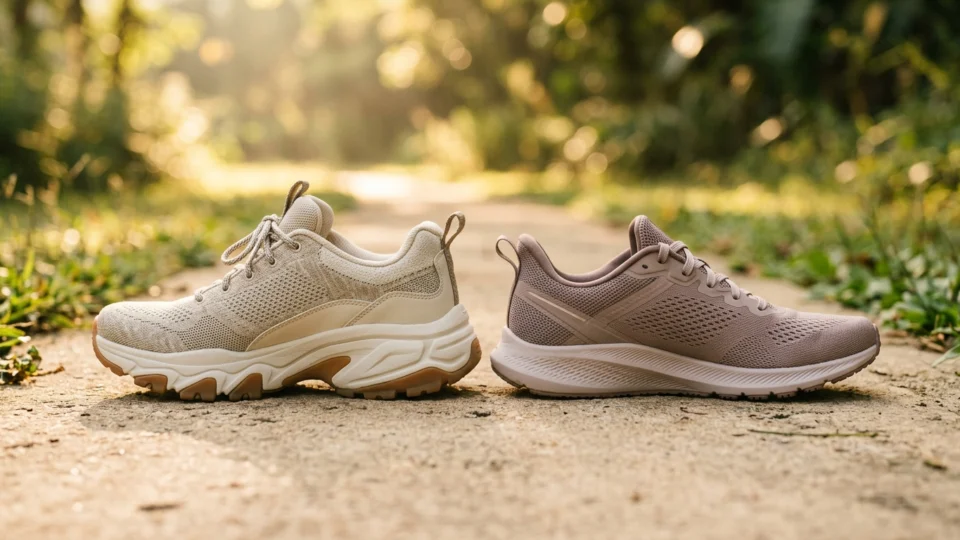
Here is what actually changes between the two, beyond the marketing language on a product listing.
Feature
Running shoe
Walking shoe
Cushioning placement
Concentrated under the heel and forefoot, where impact is highest
Spread more evenly across the whole sole
Heel-to-toe drop
Usually higher, to help absorb a harder heel strike
Usually lower and flatter, matching a steadier, rolling stride
Sole flexibility
More flexible at the forefoot, to help with push-off
Stiffer overall, for stability over a longer stride
Weight
Lighter, built for speed and shorter bursts
Heavier and sturdier, built for sustained wear
Best for
Jogging, running, interval training
Long walks, standing most of the day, everyday wear
None of these differences are dramatic to look at in a photo, which is exactly why so many listings blur the line between the two. The real test is not how the shoe looks, but how it responds when your foot lands, and that only shows up when you actually walk or run in it.
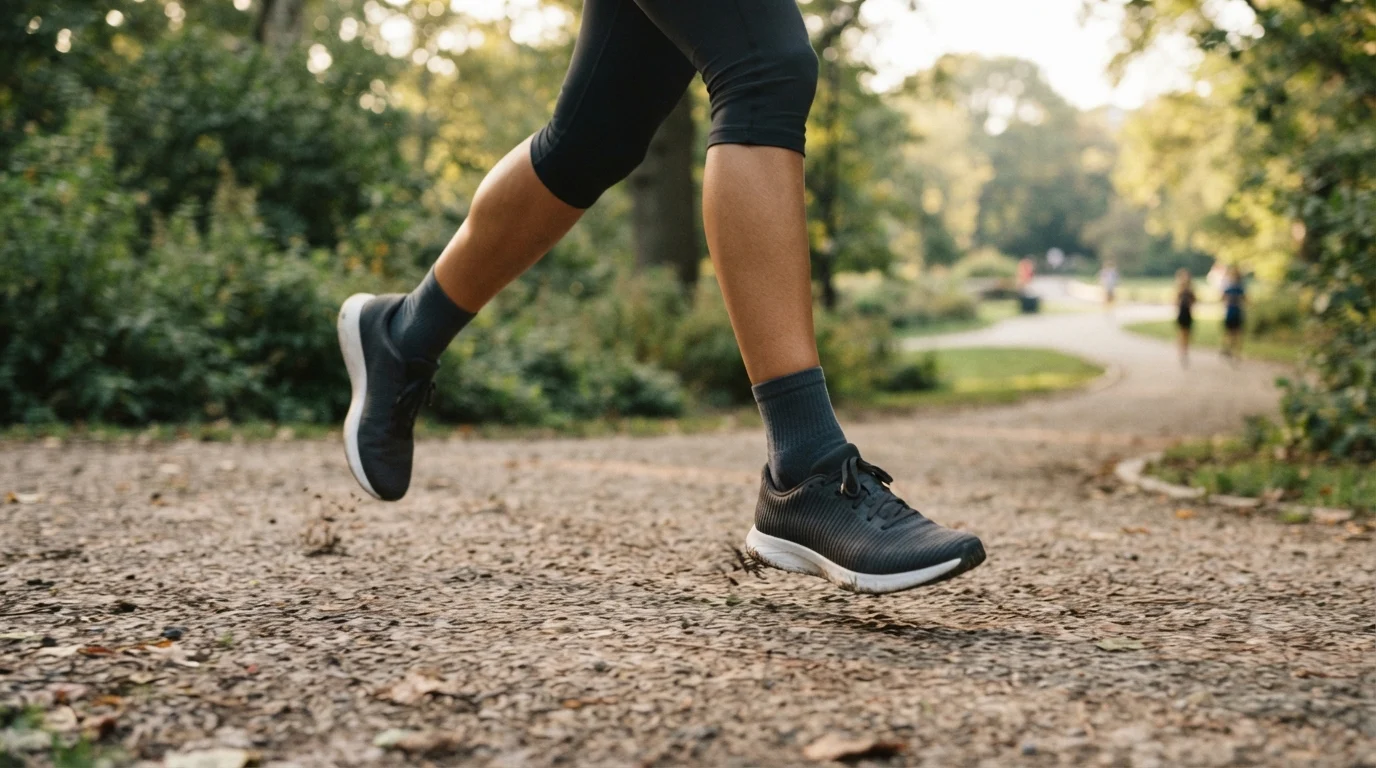
A running shoe’s cushioning and flex are built around a faster, higher-impact stride, not an all-day walking pace.
Readers who jog, run or do interval-style workouts rather than mostly walking at a steady pace.
Better shock absorption for the higher-impact landing of running
Less stable underfoot for a full day of standing or slow walking
A sensible choice specifically for running or jogging. It is not the better everyday walking shoe, since its cushioning and flex are built around a different stride.
We recommend based on fit for a specific reader, not a single universal winner.
Can You Use Running Shoes for Walking?
For an occasional walk, yes, a running shoe will not hurt you. Where it gets uncomfortable is over a long walk or a full day on your feet. A running shoe’s cushioning is placed for a running stride, not a steady walking one, so parts of your foot that need support during a long walk may not get it. The lighter build that helps during a run can also feel less stable and less supportive once you are on your feet for hours rather than minutes.
If most of your movement is walking, standing at work, or being on your feet all day, a dedicated walking shoe is the better everyday choice, even if you already own a good pair of running shoes.
Can You Use Walking Shoes for Running?
This direction is less forgiving. A walking shoe’s stiffer sole and flatter heel-to-toe drop are not built to absorb the sharper impact of a running stride. Running regularly in a walking shoe can leave your shins or knees feeling the strain sooner than usual, since the shoe is not doing the shock-absorbing job a run actually needs. A short jog once in a while in a walking shoe is unlikely to cause a problem, but making it a habit is where the mismatch tends to catch up with you.
Who Should Choose Which
Mostly walking, standing all day, or occasional light exercise: a walking shoe is the better everyday choice. It gives you steadier support over long periods without the extra cost of running-specific cushioning you are not using.
Regular jogging, running or interval training: a running shoe is worth the investment. The extra impact absorption is doing real work every time you run, not just sitting unused.
A mix of both, a few walks a week and the occasional run: a running shoe is usually the safer default of the two, since walking in a running shoe occasionally is more forgiving than running in a walking shoe. If walking is still your main activity, a dedicated walking shoe used for that purpose specifically is still worth having.
New to exercise and not sure yet: start with whichever activity you actually plan to do most, and choose the shoe built for that. It is easier and cheaper to add a second pair later than to guess wrong now.
Signs You Are Wearing the Wrong Type
Your feet feel unusually tired or achy after a walk that did not used to bother you, even though the shoe looked “supportive” on the listing.
Your shins, knees or lower back feel sore after a jog, even at a pace and distance you have handled comfortably before.
The sole feels like it is fighting your natural stride instead of moving with it, whether that is stiffness during a run or excess bounce during a long walk.
You notice uneven wear on the sole that does not match how the shoe was actually designed to flex.
One uncomfortable session on its own does not always mean the shoe is wrong for you. If the same discomfort keeps showing up in the same activity, it is worth checking whether the shoe actually matches what you are using it for.
A Few Practical Tips for Buying Online in India
Read the listing’s stated use case, not just the photos. Many general “sports shoe” listings do not clarify whether the shoe is built for walking or running. If it is not stated, the product description’s material and sole details usually give it away.
Check the return window before ordering. A shoe that feels fine standing in your room can feel very different after a real walk or run, and a workable return policy matters more here than for a casual shoe.
Look for reviews that mention the actual activity, not just overall comfort. A shoe with a high rating for “everyday wear” is not automatically a good running shoe, and the reverse is also true.
Break a new pair in gradually, especially a running shoe, before relying on it for a longer session. A shoe that feels fine for ten minutes does not always feel the same after thirty.
Final Verdict
Walking shoes and running shoes are built around different movements, not just different marketing labels, and the difference matters most once you are using the shoe for hours or on a regular schedule. If most of your time on your feet is walking or standing, a dedicated walking shoe, like the one covered in our general walking shoes guide, is the better everyday choice. If you jog or run regularly, invest in a proper running shoe instead of stretching a walking shoe to cover both jobs. Using either shoe occasionally for the other’s activity is not a problem, but relying on the wrong one every day is where discomfort tends to build up.
Don't Miss the Next Guide
Get honest buying guides and comparisons from FIND N FORM, sent straight to your inbox.
This guide is a research-based evaluation using product specifications, brand information, general footwear-fit guidance and comparative research. It is not based on personal testing of any single shoe model, and it is not medical advice. For ongoing foot, knee or shin pain, consult a doctor or podiatrist.
What is the main difference between walking shoes and running shoes?
Running shoes concentrate cushioning under the heel and forefoot to absorb a harder, faster landing, and have a more flexible forefoot and lighter build. Walking shoes spread cushioning more evenly, have a stiffer sole for stability, and are built to support a slower, steadier stride over longer periods.
Can I use running shoes for walking?
Yes, for occasional walks this is generally fine. For long walks or standing most of the day, a dedicated walking shoe usually feels more stable and supportive, since a running shoe’s cushioning is placed for a different stride.
Can I use walking shoes for running?
Occasionally, without much issue. Making it a regular habit is where problems tend to show up, since a walking shoe’s stiffer sole and flatter heel-to-toe drop are not built to absorb the sharper impact of a running stride.
Do walking shoes and running shoes really need different soles?
Yes, because the two movements land on the foot differently. A running stride creates a harder, more sudden impact that benefits from targeted cushioning and forefoot flexibility. A walking stride is steadier and more even, which is better served by a stiffer, more evenly cushioned sole.
How do I know if my shoes are actually made for running or walking?
Check the product description for the stated activity, not just the category name. Running shoes are usually described with terms like “impact absorption,” “responsive cushioning” or “flexible forefoot.” Walking shoes are more often described with terms like “all-day comfort,” “stability” or “everyday support.” If the listing does not say, a stiffer sole with even cushioning suggests a walking shoe, while a lighter shoe with more give at the forefoot suggests a running shoe.
This article may contain Amazon affiliate links. As an Amazon Associate, FIND N FORM earns from qualifying purchases, at no extra cost to you. Our recommendations are never determined by commission.
One response to “Walking Shoes vs Running Shoes: What’s the Real Difference?”
[…] feet, or check how a standing-friendly shoe differs from one built for jogging in our comparison of walking shoes vs running shoes. For a lighter, more casual option on days that need less structure, see canvas sneakers vs […]






[…] feet, or check how a standing-friendly shoe differs from one built for jogging in our comparison of walking shoes vs running shoes. For a lighter, more casual option on days that need less structure, see canvas sneakers vs […]