A simple 3-step morning and night skin care routine for oily skin, built for Indian heat, humidity and winter, with what to use and what to skip.
We may earn a commission when you buy through links on this page. This never changes what we recommend. As an Amazon Associate I earn from qualifying purchases.
It is 8 AM and your face feels clean. By noon it is shiny. After the commute home, it is shinier still. You have tried products that promised a matte finish, and some of them seemed to make the oil worse.
Search for a skin care routine for oily skin and you will find 8, 10, even 12 steps. Most of those lists come from brands selling their own range. That is a lot of money, and a lot of layers, for skin that already feels heavy.
This guide keeps it simple. You get a 3-step core routine built for Indian heat, humidity and dust, a few optional add-ons for specific concerns, and honest notes on what to skip.
This is a research-based guide. We have not clinically tested products. Where we give an opinion, we say why.
Quick answer: your morning and night routine
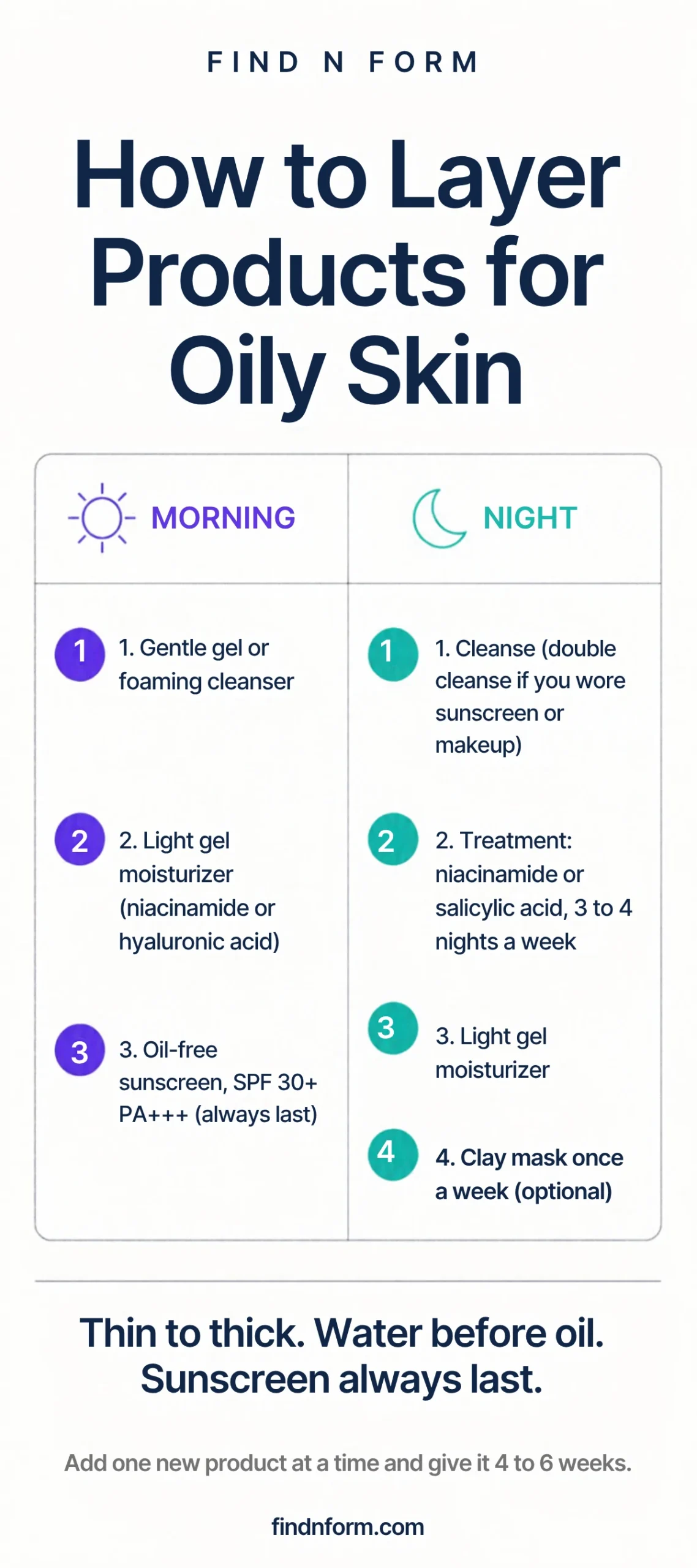
A simple skin care routine for oily skin has three steps, morning and night. Morning: a gentle gel or foaming cleanser, a light gel moisturizer, then an oil-free sunscreen. Night: cleanse (double cleanse if you wore sunscreen or makeup), use niacinamide or salicylic acid 3 to 4 nights a week, then a light moisturizer. Everything else is optional.
What Makes Your Face Oily in the First Place?
Your face gets oily because small glands in your skin, called sebaceous glands, make an oil called sebum. Your genes and hormones decide how much they make. Heat and humidity make the shine worse, because sweat mixes with the oil. Over-washing, harsh products and skipping moisturizer can also push your skin to make more.
You cannot change your genes or hormone shifts. You can control the rest:
Heat and humidity. In cities like Mumbai or Chennai, sweat mixes with oil, so the shine shows sooner.
Over-washing and harsh products. Strong cleansers and scrubs strip your skin, and many people find the oil comes back faster.
Skipping moisturizer. Skin that feels dry underneath may make more oil.
Diet. Research on diet and oily skin is mixed, so do not cut out whole food groups for this alone.
To reduce oily skin, work on what you control: gentle cleansing, a light moisturizer and daily sunscreen.
Is oily skin good or bad?
It is neither. Oily skin is a skin type, not a disease. The natural oil can help skin look plumper, and fine lines are often said to show later. The downside is that pores clog more easily, so oily skin can be more prone to blackheads and breakouts.
Oily or dehydrated? The 2-minute check
Wash with a gentle cleanser, pat dry, and wait 2 minutes with nothing on. Then check:
Your skin feels tight or flaky, but still looks shiny later in the day.
Your sunscreen or makeup pills, rolling into tiny bits.
Oil comes back very quickly after you wash.
Two or more of these mean your skin may be oily and dehydrated, which means low on water, not oil. The fix is water-based hydration, like a gel moisturizer with hyaluronic acid or glycerin, not more stripping.
The 3-Step Core Routine for Oily Skin (Morning and Night)
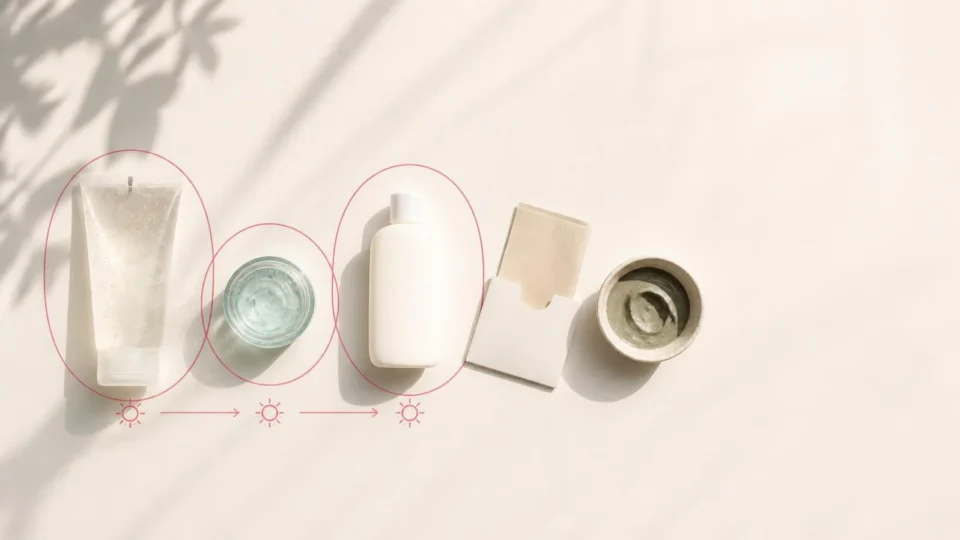
The core oily skin care routine has three steps: cleanse, moisturize and protect. In the morning, that means a cleanser, a gel moisturizer and sunscreen. At night, sunscreen makes way for an optional treatment. Three steps are easier to stick to than twelve, and in humid weather, fewer layers mean less to sweat through.
More layers can mean more clogging, more pilling and more money spent. A short skin care routine for oily face is also easier to keep up on busy mornings.
Step 1: Cleanse, but only twice a day
Wash your face twice a day, morning and night, and once more after heavy sweating, like after a workout or a hot commute. This is what the American Academy of Dermatology recommends for oily skin. Washing more often can strip your skin, and many people find it brings the oil back faster.
Use: a gentle gel or foaming face wash. If your pores clog easily, a face wash with salicylic acid (0.5 to 2 percent) a few times a week can help.
Avoid: alcohol-heavy cleansers, oil-based cleansers and soap bars that leave your skin feeling squeaky.
You can compare cleanser types and other basics in our skincare guides.
Step 2: Moisturize, yes, even oily skin
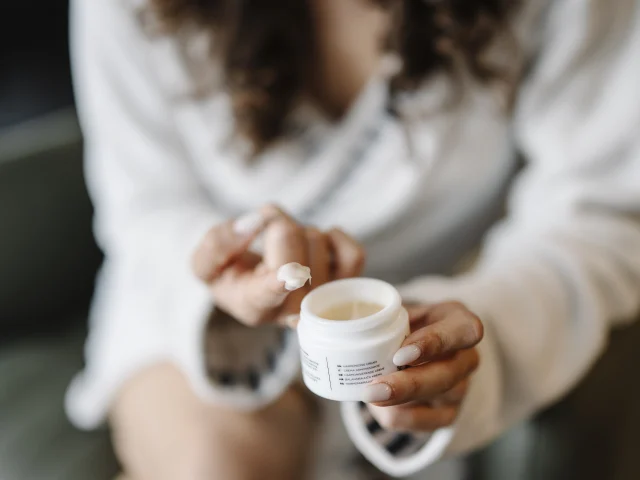
Yes, oily skin needs moisturizer. Oil and water are not the same thing. Your skin can make plenty of oil and still be low on water. A light moisturizer after cleansing keeps it comfortable, so it is less likely to feel tight.
Look for: gel or gel-cream textures, water-based formulas, and “oil-free” or “non-comedogenic” on the label. Helpful ingredients include niacinamide, hyaluronic acid and glycerin.
Skip on your face: heavy creams, cocoa butter, shea butter and petroleum jelly.
Wear sunscreen every morning, even at home, because UV rays can reach you through windows. In a sunscreen for oily face skin, look for a gel, fluid or matte texture, SPF 30 or higher, and PA+++ or higher, which shows UVA protection.
Reapply if you are outdoors for more than 2 hours. If you break out easily, the American Academy of Dermatology suggests zinc oxide or titanium dioxide. Specific picks are in our guide to the best sunscreen for oily skin in India.
Night routine for oily skin: what changes after sunset
At night, you do not need sun protection, so the night routine for oily skin changes a little:
Cleanse. If you wore sunscreen or makeup, double cleanse: micellar water on a cotton pad, then your gel face wash. Otherwise, one cleanse is enough.
Treat, 3 to 4 nights a week. Niacinamide or salicylic acid goes here. Start with one, not both.
Moisturize. Use your morning gel moisturizer. Oily skin rarely needs a separate night cream, and our comparison of night cream vs daily moisturizer explains why.
That is the whole routine. Everything after this point is optional.
Optional Add-Ons: Only If You Have These Concerns
Add-ons are for specific concerns, not for everyone. If you deal with acne, open pores, blackheads or tanning, one targeted product can help. Add only one at a time and give it 4 to 6 weeks before you judge it. If you add several at once, you cannot tell what is working or what is irritating your skin.
For acne-prone oily skin: salicylic acid or benzoyl peroxide, but not both at once
Oily skin is more prone to acne, because extra oil and dead skin block pores. For acne prone oily skin care, dermatology guidance commonly points to two ingredients: salicylic acid, which helps clear pores, and benzoyl peroxide, which targets acne-causing bacteria.
Using both together can dry out and irritate your skin, so pick one. Benzoyl peroxide can bleach fabric, so use white towels and pillowcases. If acne is painful, deep or leaving marks, see a dermatologist.
For open pores and blackheads: niacinamide daily, clay mask once a week, BHA 2 to 3 nights a week
You cannot shrink pores for good, but you can keep them clear so they look smaller:
Niacinamide daily, in your moisturizer or a serum. It may help with oil and the look of pores.
A clay mask once a week to soak up extra oil.
Salicylic acid (BHA) 2 to 3 nights a week. BHA works inside the pore, which is why it is often suggested for blackheads. If your skin stays comfortable, build up to 3 to 4 nights.
Do not squeeze blackheads with nails or metal tools. It can damage skin and leave marks.
For tanning and dark spots: sunscreen first, then vitamin C or niacinamide
Sunscreen comes first, every day, because sun exposure keeps tanning and dark spots going. Once that is a habit, add one brightening step: vitamin C in the morning, or niacinamide at night. If you are a beginner, start with one, not both.
Is toner necessary for oily skin?
No, toner is not a required step. It only helps if it carries an active you want, like niacinamide or salicylic acid. Avoid alcohol-heavy toners. They feel cool at first, but they can dry out your skin and may make the oil worse.
Can I use niacinamide and salicylic acid together?
Yes, most people can. Use them at different times: niacinamide in the morning and salicylic acid at night, or on alternate nights. Start slowly and cut back if you see redness, stinging or peeling.
Want the Product Picks for Each Step?
We are publishing the sunscreen and moisturizer picks for oily skin this week. Get them in your inbox, one useful guide at a time, no spam.
How to Layer These Products the Right Way
Layer your products from thinnest to thickest. Watery products like serums go first, then your gel moisturizer, and sunscreen always goes last in the morning. Water-based products go before oil-based ones. With a 3-step routine the order is easy, and you only need to think about it once you add a serum.
Morning and night order for oily skin. Thin to thick, sunscreen last.
In short, the steps for oily skin care run in this order: cleanser, then treatment or serum, then moisturizer, then sunscreen in the morning.
Oily Skin Routine for Indian Weather: Summer, Monsoon and Winter
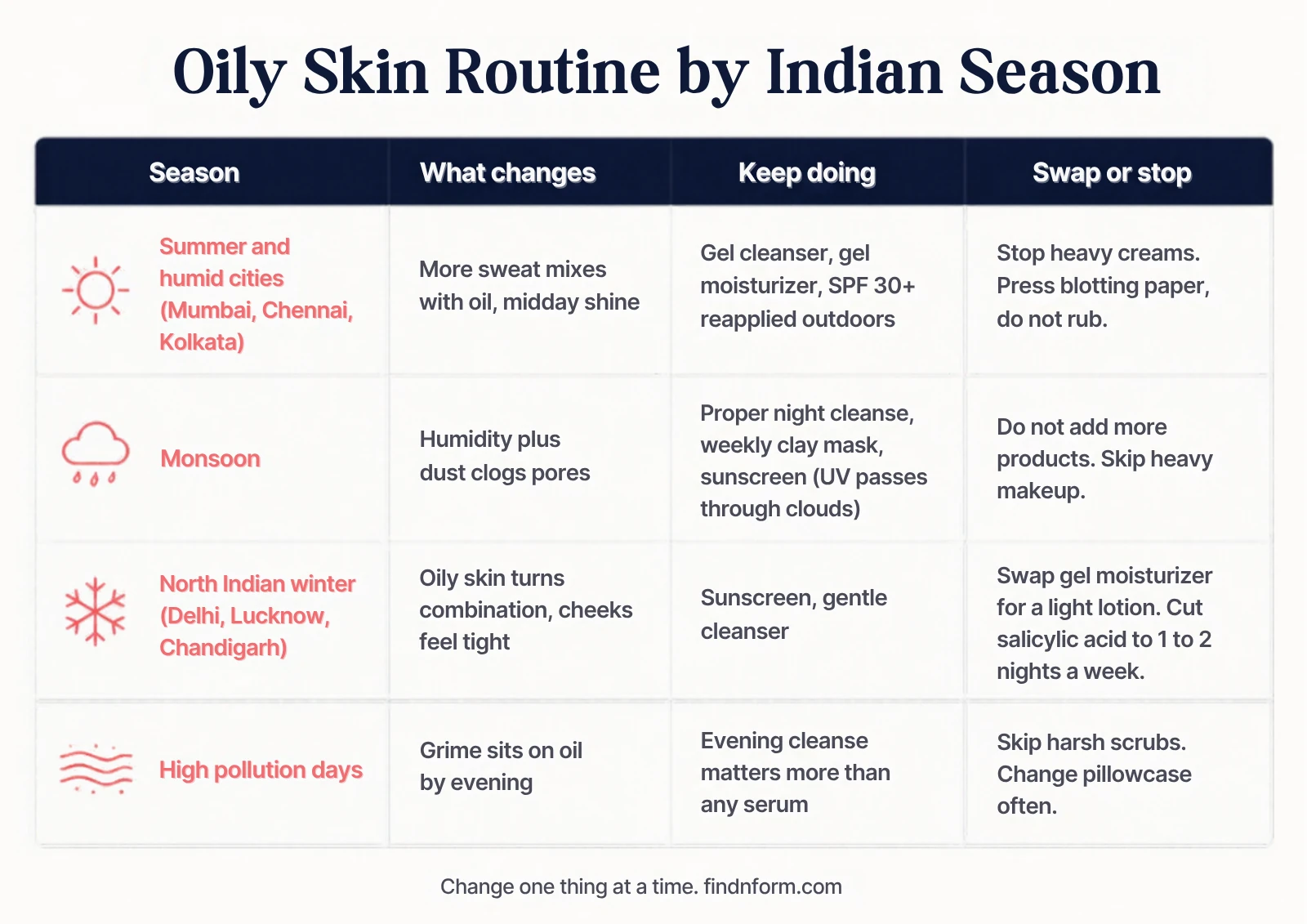
Indian weather changes a lot through the year, and oily skin changes with it. In summer and monsoon, keep everything light and cleanse well at night. In a North Indian winter, oily skin often turns combination, so switch to a light lotion and use salicylic acid less often. Sunscreen stays in every season.
What changes in an oily skin routine across Indian seasons.
Summer and humid cities (Mumbai, Chennai, Kolkata)
An oily skin care routine in summer is about staying light. Use gel textures for everything, and wash your face after a sweaty commute. Press blotting paper on shiny areas instead of rubbing, which spreads the oil. Keep sunscreen in your bag and reapply outdoors.
Monsoon
An oily skin care routine in monsoon deals with humidity, sweat and dust together. Do not add more products. Cleanse properly every night, use a clay mask once a week, and keep wearing sunscreen, because UV rays pass through clouds. Skip heavy makeup on very humid days.
North Indian winter (Delhi, Lucknow, Chandigarh)
An oily skin care routine in winter needs a few small changes, especially in the north. Dry air can make your cheeks feel tight while your forehead, nose and chin stay oily. Swap your gel moisturizer for a light lotion, cut salicylic acid to 1 to 2 nights a week, and keep your sunscreen.
On high pollution days, dust and grime sit on top of the oil on your face. Your evening cleanse matters more than any serum. Double cleanse if you wore sunscreen, skip harsh scrubs, and change your pillowcase often.
Oily Skin Care Routine for Men
A men’s oily skin care routine uses the same three steps: cleanse, moisturize and protect. Men do not need a separate product range. The main differences are shaving, beard care and sweat from helmets or long commutes. With a few small habits, the same gentle routine works well.
Before shaving: wash your face first, so skin and hair are clean and soft.
After shaving: skip alcohol-based aftershave, which can sting and dry skin. Use your gel moisturizer.
Helmet and commute acne: trapped sweat can cause breakouts on the forehead and jawline. Wash your face after a long ride and clean the helmet lining often.
Beard: work your cleanser through to the skin underneath.
An Oily Skin Care Routine on a Budget (Under ₹500 and Under ₹1,000 a Month)
An oily skin care routine does not need to be expensive. A basic cleanser, gel moisturizer and sunscreen can usually be built for roughly ₹500 to ₹1,000 a month depending on brand. Serums are the optional spend. If money is tight, spend on sunscreen first, because it protects your skin every single day.
Close to ₹500 a month: the three core products, simple formulas, and sizes that last more than a month.
Up to about ₹1,000 a month: the same three, plus one niacinamide or salicylic acid serum.
Skip to save money: toner, a separate night cream and 10-step kits.
If you are buying during the Amazon Great Indian Festival, check the current price before you decide; sale prices change daily.
Do Home Remedies Work for Oily Skin?
Some home remedies are fine for oily skin, and some can do real harm. A weekly multani mitti or clay mask, cool water rinses and blotting paper are low-risk options. Lemon, baking soda, toothpaste and rough scrubs can irritate your skin. No home remedy can replace a cleanser or sunscreen.
Low-risk options:
Multani mitti or clay mask, once a week. Mix with plain water, apply a thin layer, and rinse before it dries hard.
A cool water rinse when your face feels sweaty.
Blotting paper, pressed, not rubbed.
What to avoid, and why:
Lemon juice. It is acidic, can irritate skin and can make it more sensitive to the sun.
Baking soda. It is far more alkaline than skin and can upset its natural pH.
Toothpaste on pimples. It can burn and irritate the skin.
Sugar or walnut scrubs. The rough bits can scratch your skin.
Over-steaming. Too much heat can leave skin red and irritated.
A natural remedy for oily face can be a nice extra, but never a replacement for sunscreen or a cleanser.
Common Mistakes That Make Oily Skin Worse
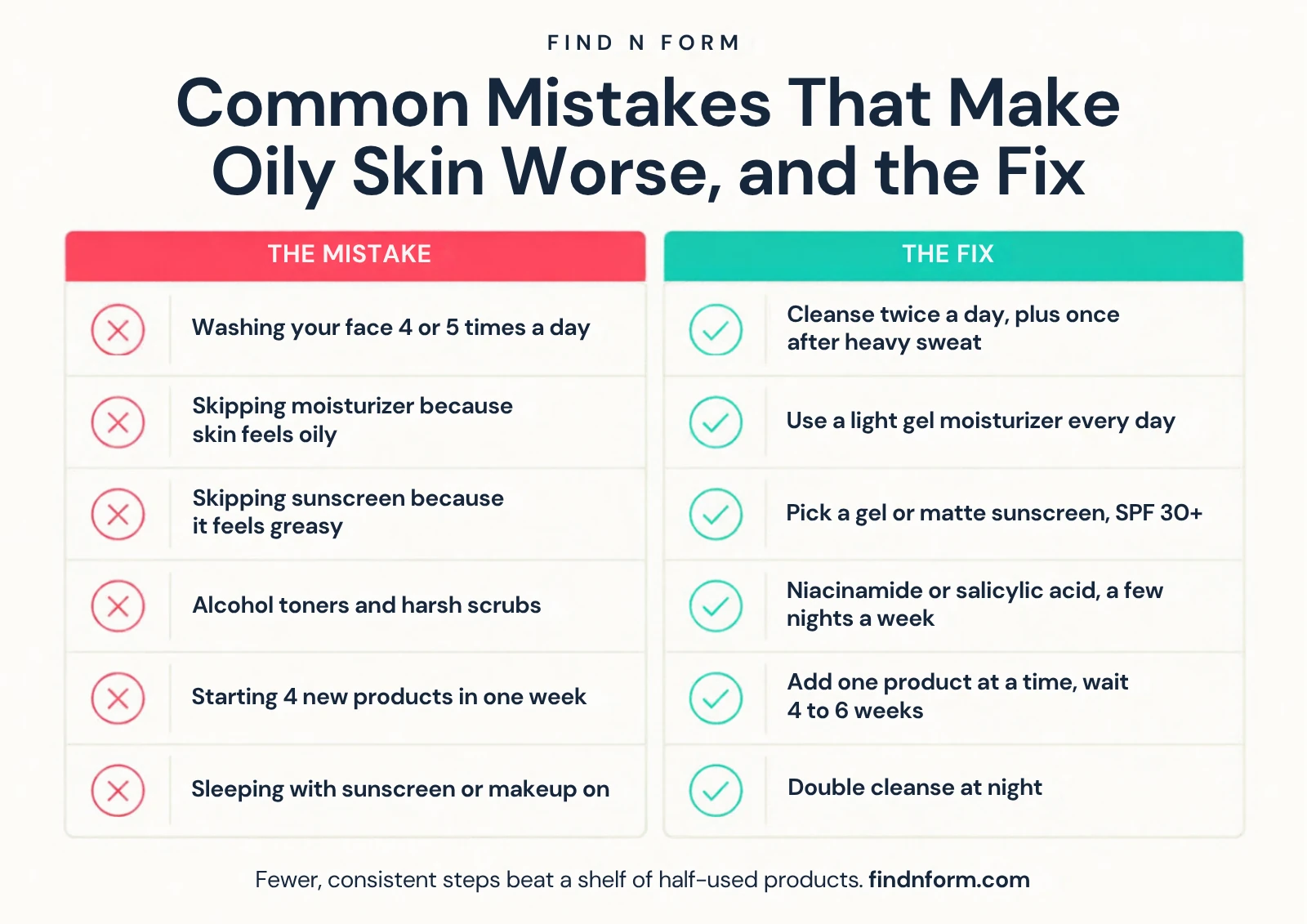
Most oily skin gets worse because of habits, not missing products. Washing too often, skipping moisturizer or sunscreen, alcohol toners, harsh scrubs and starting many products at once are the common ones. The good news is that each mistake has a simple fix, and most of these fixes cost nothing.
The mistake on the left, the fix on the right.
Washing 4 or 5 times a day. Fix: cleanse twice a day, plus once after heavy sweat.
Skipping moisturizer. Fix: a light gel moisturizer every day.
Skipping sunscreen because it feels greasy. Fix: a gel or matte sunscreen, SPF 30 or higher.
Alcohol toners. Fix: skip toner, or pick an alcohol-free one with an active you want.
Harsh scrubs. Fix: niacinamide or salicylic acid a few nights a week.
Too many actives at once. Fix: add one product at a time and wait 4 to 6 weeks.
Sleeping in makeup or sunscreen. Fix: double cleanse at night.
Touching your face. Fix: hands off, and blotting paper instead of fingers.
Unwashed pillowcases. Fix: change your pillowcase often.
Changing products every week. Fix: give each one 4 to 6 weeks.
How Do You Know the Routine Is Working?
A working routine shows small changes over weeks, not overnight. Many people notice less midday shine in about 2 weeks, fewer clogged pores in 4 to 6 weeks, and smoother texture by 8 to 12 weeks. Results vary from person to person, so judge the overall trend, not one bad day.
Signs it is not working: more breakouts after the first few weeks, stinging, burning, lasting redness, or tight, flaky skin. Stop the newest product first, and change one thing at a time so you know what caused it.
When to see a dermatologist
See a dermatologist if you notice any of these:
Painful, deep or cystic acne.
A sudden increase in oil along with hair fall or irregular periods, which can be linked to hormones.
Acne that leaves scars or dark marks.
No change after 3 months of a steady routine.
A doctor can find the cause and suggest treatment. This guide cannot diagnose a skin condition.
Final Verdict: The Simplest Skin Care Routine for Oily Skin That Actually Fits Indian Life
The simplest plan is three steps. In the morning, use a gentle gel cleanser, a light gel moisturizer and an oil-free sunscreen. At night, cleanse, add a treatment a few nights a week, and moisturize. For most people with oily skin in India, that is enough to keep the shine and clogged pores in check.
If you want one add-on, start with niacinamide, which dermatology guidance commonly suggests for oil and pores. Make one seasonal swap: light gels in summer and monsoon, a light lotion and less salicylic acid in a North Indian winter.
Fewer, consistent steps beat a long shelf of half-used products. Pick your three, use them daily, and give them time.
The best skin care routine for oily skin is a simple one you can follow every day. In the morning, use a gentle gel cleanser, a light gel moisturizer and an oil-free sunscreen. At night, cleanse, use niacinamide or salicylic acid a few nights a week, and moisturize. Add other steps only if you need them.
How many times a day should I wash my face if I have oily skin?
Twice a day is enough for most people with oily skin. Wash in the morning and at night, and once more after heavy sweating. Washing more often can strip your skin and may leave it tight and oilier later.
Does oily skin need moisturizer in summer?
Yes, oily skin needs moisturizer in summer too. A light, water-based gel keeps your skin hydrated without adding grease.
Should oily skin use only oil-free products?
Not always, but oil-free and non-comedogenic products are the safer choice for most oily skin, because they are made to avoid clogging pores. Skip heavy oils and butters on your face, especially in humid weather.
Which ingredients are good for oily skin?
Niacinamide, salicylic acid, hyaluronic acid and glycerin are good choices for oily skin. Niacinamide and salicylic acid help with oil and pores, while hyaluronic acid and glycerin hydrate without heaviness.
Can I use niacinamide and salicylic acid together?
Yes, most people can use both. To start, use them at different times of day or on alternate nights. Go slowly, and cut back if you notice redness, stinging or peeling.
Which sunscreen type is best for an oily face: gel, matte or cream?
Gel or matte sunscreens usually suit an oily face best. They feel lighter and leave less shine than creams. Choose SPF 30 or higher with PA+++, and if you break out easily, look for zinc oxide or titanium dioxide.
What is a simple oily skin care routine for men?
Men can use the same three steps: a gel face wash, a light gel moisturizer and an oil-free sunscreen. Skip alcohol-based aftershave, and wash your face after long helmet rides.
Does oily skin need a different routine in winter?
Yes, a few small changes help in winter. Oily skin often turns combination in dry North Indian winters. Swap your gel moisturizer for a light lotion, use salicylic acid only 1 to 2 nights a week, and keep wearing sunscreen.
Is oily skin good or bad for ageing?
Oily skin is neither good nor bad, but it may have a small advantage with ageing. The natural oil can help skin look plumper, and fine lines are often said to show later. Pores clog more easily, though, so cleansing and sunscreen still matter.
2 responses to “Skin Care Routine for Oily Skin: A Simple Morning and Night Plan for Indian Weather”
[…] Sunscreen is Step 3 of a skin care routine for oily skin. […]





[…] Sunscreen is Step 3 of a skin care routine for oily skin. […]
[…] Moisturizer is Step 2 of our skin care routine for oily skin. […]