Standing eight-plus hours a day works your feet differently than walking. Here is what actually helps, who needs to be careful, and what to check before you buy.
We may earn a commission when you buy through links on this page. This never changes what we recommend. As an Amazon Associate I earn from qualifying purchases.
Eight hours on a shop floor. A ten-hour hospital shift. A full day at a teaching desk that somehow never involves sitting down. If your day looks like this, you already know that a shoe that feels fine walking to the bus stop can feel completely different by hour six of standing mostly still. Your feet ache, your lower back tightens, and by evening even a short walk home feels harder than it should.
Most people shop for these shoes the same way they shop for any sneaker: look for cushioning, check the price, done. But standing still for hours works your feet differently than walking does, and a shoe built mainly for walking or running does not always solve the problem. This guide breaks down what actually helps when you are on your feet without moving much, who needs to be most careful about the choice, and how to tell a shoe that is genuinely built for this from one that just looks supportive in a photo.
Quick answer: The best shoes for standing all day combine a stable, wider base, a contoured footbed with real arch support, and cushioning that is firm enough to hold you up, not just soft. A roomy toe box matters too, since feet swell over a long shift and a tight fit gets worse, not better, as the day goes on. Skip anything marketed as “extra plush,” since a sole that is too soft makes your feet work harder to stay stable when you are not moving around to shift your weight the way a walker naturally does. If you are choosing between a walking shoe and a standing-specific one, a well-built cushioned walking shoe with a stable base and decent arch support usually covers both needs well.
Why Standing Still Is Harder on Your Feet Than Walking
It seems like standing should be easier on your body than walking, since you are not covering distance or absorbing repeated impact. In practice, it is often harder on your feet specifically. When you walk, your weight keeps shifting: heel, then arch, then toe, over and over, which moves blood around and spreads pressure across different parts of your foot. When you stand mostly still, your weight sits in the same spots for long stretches, which is what causes the aching, swelling and stiffness that build up by the end of a shift.
This is also why a shoe built purely for running or fast walking is not automatically the right answer. Those shoes are optimized to absorb a moving, repeated impact. A shoe for standing needs to do a different job: hold your foot in a stable, supported position for hours without that stability breaking down.
What Actually Matters in a Shoe for All-Day Standing
A few features make a real difference here, more than a thick sole or a well-known brand name ever will.
A wide, stable base. A narrower or more tapered sole can feel fine for a quick walk but forces small stabilizing muscles in your feet to work overtime when you are standing still for hours. A wider platform keeps you steadier with less effort.
Real arch support, not just a soft footbed. Cushioning absorbs shock, arch support holds your foot’s natural shape in place. Standing shoes need more of the second than the first, since there is little shock to absorb when you are not moving much.
Firm, supportive cushioning over “extra plush.” A sole that is too soft gives way slightly with every shift in weight, which makes your feet and ankles work harder to stay balanced. Firmer, structured cushioning holds up better over a full shift.
Room in the toe box. Feet genuinely swell over the course of a long day, especially in warm weather or on hard flooring. A shoe that fits snugly at 9am can feel tight and uncomfortable by 5pm if there is no room to allow for that.
Breathable materials. Feet that are not moving much build up more heat and moisture than feet that keep circulating through a normal walking stride. A breathable mesh or knit upper matters more here than it does for a shoe you mostly sit in.
A removable insole, where possible. If you already use custom orthotics or a specific insert for foot pain, a shoe with a removable factory insole lets you swap it in without losing space or fit.
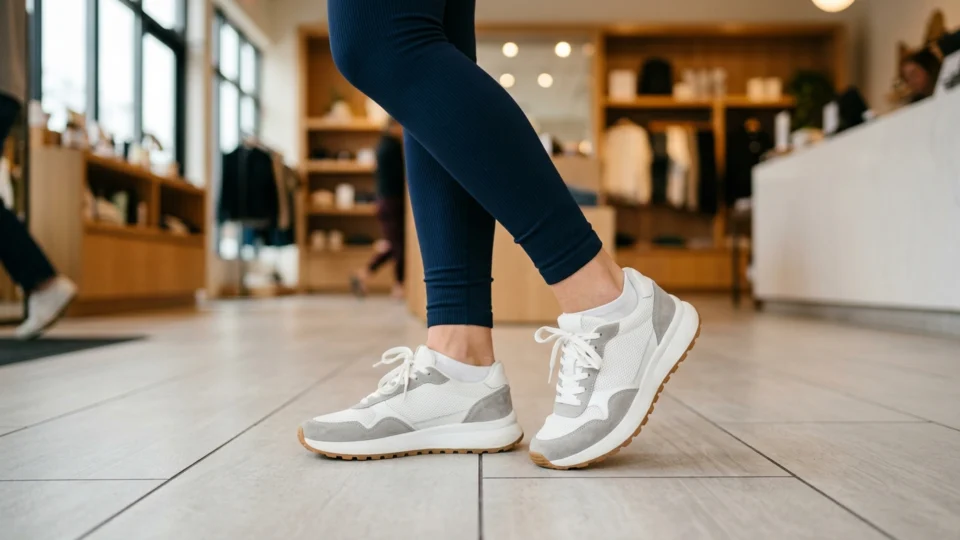
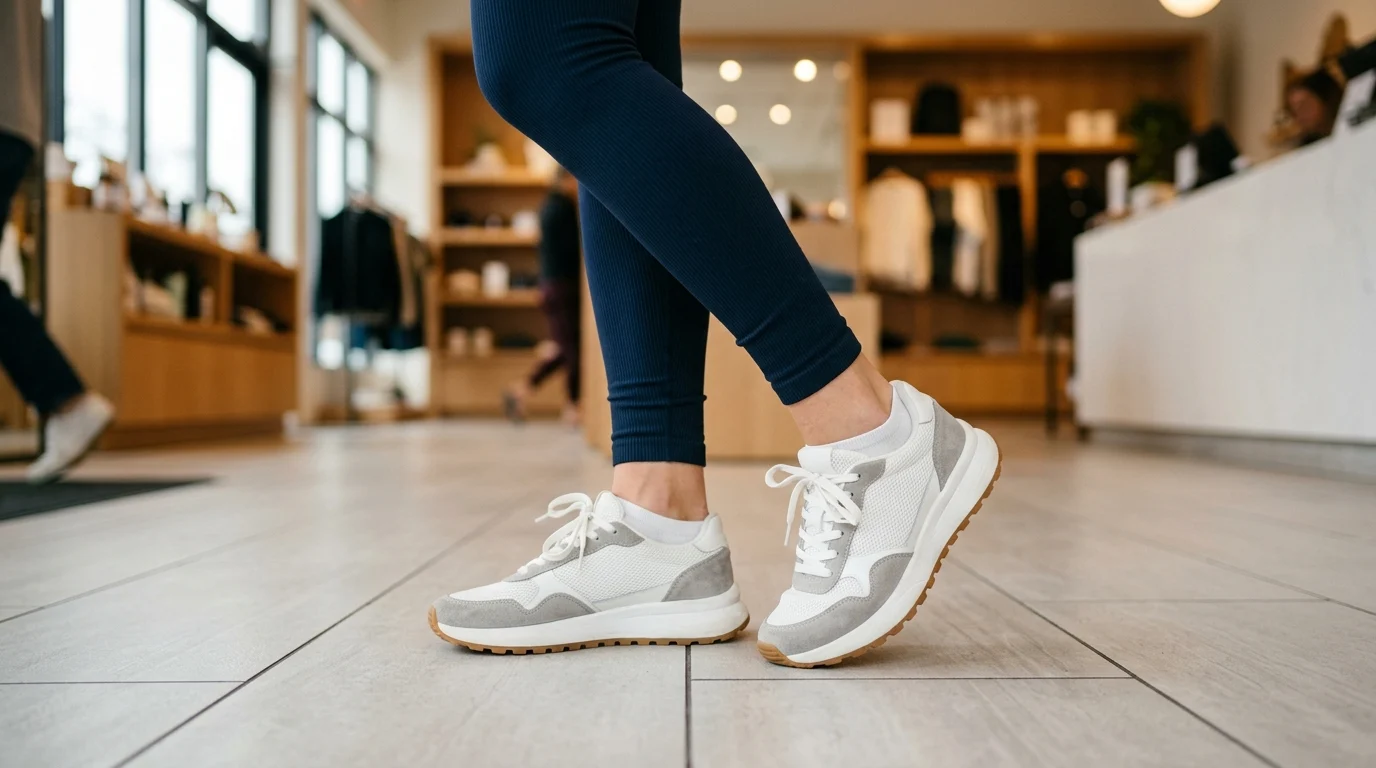
Illustrative editorial image, not real product photography. The right shoe for standing all day is about structure and stability, not just visible cushioning.
Standing Shoes vs a Regular Walking Shoe: What’s Different
A good walking shoe and a shoe built for standing overlap more than they differ, but the emphasis shifts. Here is the practical difference.
Feature
Built mainly for standing
Built mainly for walking
Base width
Wider, for steady stability while stationary
Moderate, built to move naturally through a stride
Cushioning feel
Firmer and more structured
Softer, absorbing repeated heel-to-toe impact
Arch support priority
High, since the foot holds one position for long periods
Moderate to high, but shares the job with the shoe’s natural flex
Sole flexibility
Less flexible, prioritizing stability over movement
More flexible at the forefoot, to support a rolling stride
Best for
Retail, healthcare, teaching, hospitality and similar shifts
Daily walks, errands, general everyday wear
In practice, most people do not need a shoe purpose-built for standing versus one for walking. A well-made cushioned walking shoe with a wide base and firm arch support, rather than an ultra-soft one, does a genuinely good job of covering both. Where it matters more is at the extremes: a running shoe optimized for speed and shock absorption, or a fashion sneaker with a thin, flat sole, tends to fall short for a full shift of standing.
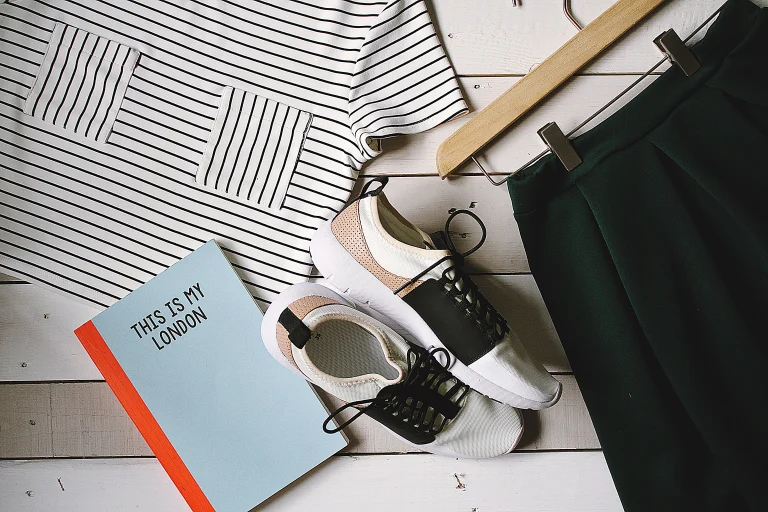
Representative editorial image, not official Amazon product photography.
Research-based evaluation
Cushioned Everyday Walking Shoes
Why we picked it: For readers whose priority is comfort on their feet for hours, a dedicated walking shoe genuinely outperforms a fashion sneaker.
Best for
Readers who are on their feet most of the day and prioritise comfort over a minimal look.
Strength
Noticeably more comfortable for extended wear
Watch out for
Bulkier, sportier look than a minimal canvas sneaker
Anyone can end up on their feet for a long stretch occasionally, but some routines make the right shoe choice matter far more.
Retail and salon staff, who often stand on hard flooring for most of a shift with only brief breaks.
Teachers, who spend a full school day on their feet, often on the same hard classroom floors day after day.
Nurses and healthcare workers, whose shifts combine long standing periods with sudden bursts of fast movement, both of which need to be supported.
Kitchen and hospitality staff, who deal with hard, often slightly wet flooring in addition to standing for hours at a time.
Warehouse and factory workers, who may stand in one spot for a task or walk short repeated distances on concrete, both of which are harder on the feet than a casual walk.
If your routine matches any of these, the shoe you wear is not a small detail. It is one of the few things you have direct control over that affects how your feet and back feel by the end of every shift.
Illustrative editorial image. Retail, teaching, nursing and hospitality shifts share the same demand: hours of standing with little movement to redistribute pressure.
Signs Your Current Shoes Aren’t Handling Standing Well
Arch or heel pain that shows up partway through a shift, not just at the very end of the day.
Noticeable swelling in your feet by the evening, more than feels normal for the amount you actually walked.
Lower back or hip discomfort that tends to ease up once you sit down and take your shoes off.
Numbness or tingling in your toes, which can point to a toe box that is too tight once your feet swell.
Uneven wear on the outsole that does not match how a stable, well-fitted shoe should flatten over time.
One tiring day does not necessarily mean the shoe is wrong. If the same discomfort shows up on a regular basis with the same pair, it is worth treating that as a real signal rather than something to push through.
A Few Practical Tips for Buying Online in India
Look for reviews that mention long shifts, not just general comfort. A review that says “wore these on my feet all day at work” is far more useful than a generic five-star rating.
Size up slightly if you are between sizes, since a shoe that fits snugly in the morning can feel tight once your feet swell later in a shift.
Check the return window before ordering, since a shoe that felt fine standing in your room can feel different after several real shifts in it.
Check whether the insole is removable if you plan to use it with a custom orthotic or a separate insert later.
Break a new pair in gradually, wearing it for shorter shifts first rather than committing to a full long shift on day one.
There is no single shoe that works for everyone standing all day, but the features that matter most stay consistent: a wide, stable base, real arch support, firm rather than overly soft cushioning, and enough toe box room for your feet to swell without the fit turning uncomfortable. A well-built cushioned walking shoe, like the one covered in our general walking shoes guide, usually covers this job well, without needing a separate “standing shoe” category. What matters more than the label on the box is whether the shoe you choose actually has these features, not just a comfortable-looking design in a product photo.
Don't Miss the Next Guide
Get honest buying guides and comparisons from FIND N FORM, sent straight to your inbox.
This guide is a research-based evaluation using product specifications, general footwear-fit guidance and comparative research. It is not based on personal testing of any single shoe model, and it is not medical advice. For ongoing foot, knee or back pain, consult a doctor or podiatrist.
What is the best type of shoe for standing all day?
A shoe with a wide, stable base, real arch support, firm rather than overly soft cushioning, and enough room in the toe box for your feet to swell over a long shift. A well-built cushioned walking shoe usually covers all of these without needing a separate “standing shoe” category.
Are cushioned shoes always the best choice for standing all day?
Not automatically. Cushioning that is too soft can make your feet work harder to stay stable when you are not moving around much. Firmer, more structured cushioning combined with real arch support tends to hold up better over a full shift than an “extra plush” sole.
How do I know if my shoes aren’t supportive enough for standing all day?
Watch for arch or heel pain partway through a shift, noticeable swelling by evening, lower back discomfort that eases once you sit down, or numbness in your toes. If these show up regularly with the same pair, it is a real sign the shoe is not doing its job, not just a bad day.
Do I need a different shoe for standing versus walking?
Usually not. A well-made cushioned walking shoe with a wide base and firm arch support covers both needs well. The exception is at the extremes: a running shoe built for speed and shock absorption, or a thin-soled fashion sneaker, tends to fall short for a full shift of mostly standing still.
How often should shoes be replaced if worn for standing all day?
Shoes used for long daily shifts wear out faster than casual footwear, since the cushioning and arch support break down under sustained pressure. If you notice the support that made the shoe comfortable in the first place has faded, or the outsole shows uneven wear, that is a better signal to replace it than a fixed number of months.
This article may contain Amazon affiliate links. As an Amazon Associate, FIND N FORM earns from qualifying purchases, at no extra cost to you. Our recommendations are never determined by commission.
One response to “Best Shoes for Standing All Day: What Actually Helps”
[…] fabric is fine in AC. If you stand all day, a cushioned footbed matters most, as our guide to the best shoes for standing all day […]





[…] fabric is fine in AC. If you stand all day, a cushioned footbed matters most, as our guide to the best shoes for standing all day […]