FIND N FORM may earn a commission if you buy through links on this page, at no extra cost to you. As an Amazon Associate, we earn from qualifying purchases.
Flat feet need more than a cushioned walking shoe. Here is what to actually check, the warning signs your current shoes are not helping, and when to see a doctor instead.
You already know your feet are flat. What nobody explains is why that changes what you should actually be looking for in a walking shoe. Most listings for “sneakers for women with flat feet” just show the same cushioned shoes as every other walking shoe search, with a few extra words like “supportive” and “orthopedic” added to the title. That is not the same as a shoe genuinely built around a collapsed or low arch, and buying the wrong one can leave you with the same tired, achy feet you were trying to fix.
This guide explains what flat feet actually change about shoe fit, which features matter more than they do for an average foot, the signs that your current shoes are not doing their job, and when a shoe alone is not enough and it is worth seeing a doctor instead.
Quick answer: Flat feet usually need more structure than a standard walking shoe, not just more cushioning. Look for a firmer arch-support midsole, a stable heel counter that resists rolling inward, a wide and stable base, and a removable insole in case you need to add an orthotic later. Extra-plush, very soft cushioning can actually feel worse on a flat foot because it offers little to push back against as your arch collapses further with each step.
Why Flat Feet Change What You Should Look For in a Shoe
A flat foot has little to no visible arch, which means the foot tends to roll inward more than usual with each step, a movement called overpronation. On a foot with a normal arch, the arch itself absorbs some of that impact and helps keep the foot aligned. On a flat foot, that natural shock absorber is mostly missing, so the shoe has to do more of that job instead.
That is the reason a shoe built for an average foot does not automatically work well for a flat one. A shoe with very soft, unstructured cushioning can feel comfortable for the first few minutes but offers little resistance as the foot rolls inward, which is exactly the movement you want the shoe to help control. A shoe with real arch structure and a firmer heel counter gives the foot something to push against, which is usually more useful for flat feet than cushioning alone.
What to Check Before You Buy, Specifically for Flat Feet
Our general walking shoe guide covers the basics that matter for everyone. These five points matter more, or work differently, once flat feet are part of the picture.
Arch support type, not just the word “supportive.” Look for a description that mentions a structured or firm arch, motion control, or stability, rather than just “cushioned” or “soft.” Those are marketing words that do not tell you anything about how the shoe behaves under a collapsing arch.
Heel counter stability. The heel counter is the firm cup around the back of the shoe that holds your heel in place. Press it between your fingers, it should resist squeezing rather than fold in easily. A weak heel counter lets the heel roll inward more, which works against what a flat foot needs.
A wider, more stable base. A shoe with a slightly wider platform under the midfoot gives a flat, overpronating foot more surface to stay balanced on, compared to a narrow, curved sneaker built for a higher arch.
A removable insole. Even a good stock insole may not be enough if your flat feet cause real discomfort. A removable insole means you can add a custom or over-the-counter orthotic later without buying a new pair of shoes.
Firm, not mushy, cushioning. Cushioning still matters, but softer is not automatically better for a flat foot. A firmer midsole that still absorbs some shock, without collapsing under the arch, usually works better than a very plush, marshmallow-soft sole.
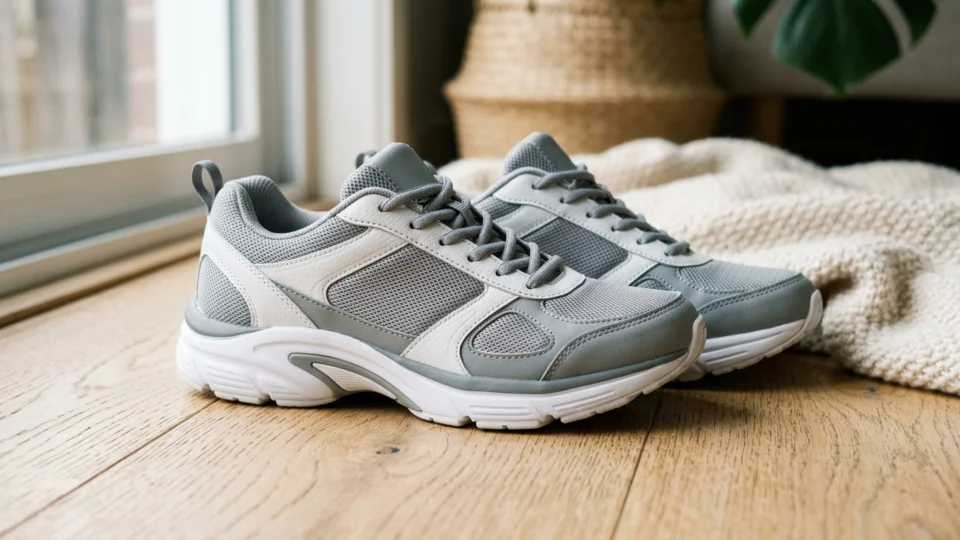
The arch profile and heel structure matter more for flat feet than cushioning alone.
Representative editorial image, not official Amazon product photography.
Research-based evaluation
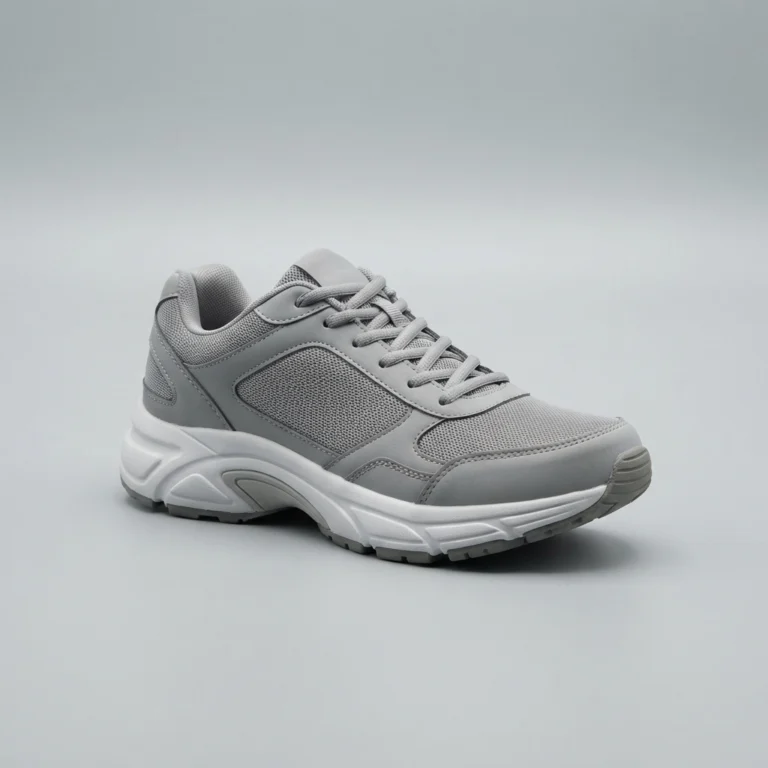
Arch Support Walking Shoes for Flat Feet
Why we picked it: For a reader who already knows they have flat feet, a shoe built around dedicated arch structure addresses the actual problem more directly than a general cushioned walking shoe.
Best for
Readers who already know they have flat feet and want a shoe built around that specific need, not a general comfort shoe.
Strength
Dedicated arch support instead of general-purpose cushioning
Watch out for
Arch support that is too rigid can feel uncomfortable for a foot that is not actually flat
Arch-Support Shoes vs a General Cushioned Walking Shoe
Our general walking shoe guide covers what matters for most people. Here is where a shoe built specifically around flat feet actually differs from that general recommendation.
Criterion
Arch-support shoe for flat feet
General cushioned walking shoe
Arch structure
Firm, shaped support under the arch
Little to no dedicated arch structure
Heel counter
Firmer, resists inward roll
Usually softer and more flexible
Cushioning feel
Firmer, more supportive underfoot
Softer, plusher underfoot
Best for
Confirmed flat feet or overpronation
An average arch with no specific foot concern
Main trade-off
Can feel too rigid for a normal arch
Can feel unsupportive for a flat arch
Neither option is universally better. The right choice depends on whether your arch actually needs that extra structure or whether a standard walking shoe already feels fine.
Signs Your Current Shoes Are Not Doing Their Job
Your feet, ankles or shins feel noticeably tired or achy after a walk that did not used to bother you.
The inner edge of your shoe’s sole wears down faster than the rest, a common sign of overpronation.
You notice your ankle rolling inward while walking, especially visible in worn shoes when you look at them from behind.
Arch or heel pain that is worse first thing in the morning or after standing for a while.
One or two of these on their own are not necessarily a problem. If several show up together and do not improve with a better shoe, that is worth mentioning to a doctor or podiatrist rather than trying to solve it with another pair of sneakers.
Who Should Buy an Arch-Support Shoe, and Who Can Skip It
If you have been told by a doctor or podiatrist that you have flat feet or overpronation, a shoe built around arch structure is a sensible starting point, alongside any insole they may have recommended.
If you suspect you have flat feet but have not had it checked, a moderate-support shoe is a reasonable place to start, and a proper assessment is worth getting if discomfort continues.
If you have a normal or high arch and no history of foot pain, a very structured, firm arch-support shoe is not necessary and may actually feel uncomfortable. A standard cushioned walking shoe is usually the better fit.
A Few Practical Tips for Buying Online in India
Check the return window before ordering. Arch support that feels fine standing in your living room can feel different after a real walk, and a workable return policy matters more here than for a standard shoe.
Look for reviews that mention arch support directly, not just overall comfort. A shoe can have a high average rating and still not suit a flat foot specifically.
Break it in gradually. A firmer arch-support shoe can feel noticeably different from what you are used to. Wear it for shorter walks first before committing to a full day in it.
Keep any existing custom orthotic in mind. If a podiatrist has already fitted you with an orthotic insole, check that the shoe has a removable stock insole so the orthotic actually fits.
Flat feet usually benefit more from a shoe with real arch structure, a firm heel counter and a stable base than from extra cushioning alone. If you already know your arch is flat or you are noticing the warning signs above, look specifically for those features rather than trusting the word “supportive” on a product listing. If your arch is normal and nothing hurts, a standard cushioned walking shoe, like the one covered in our general walking shoes guide, is still the simpler and usually cheaper choice.
Don't Miss the Next Guide
Get honest buying guides and comparisons from FIND N FORM, sent straight to your inbox.
This guide is a research-based evaluation using product specifications, brand information, general footwear-fit guidance and comparative research. It is not based on personal testing of any single shoe model, and it is not medical advice. For ongoing foot or ankle pain, consult a doctor or podiatrist.
What should you look for in sneakers for women with flat feet?
Look for a firm, structured arch-support midsole, a stable heel counter that resists rolling inward, a wider and more stable base, and a removable insole in case you need to add an orthotic later. Very soft, plush cushioning is not automatically better for flat feet, since it offers little resistance as the arch collapses with each step.
Do flat feet need motion control shoes?
Often, yes, especially if overpronation is noticeable, meaning the foot and ankle roll inward visibly with each step. Motion control shoes are built with extra structure specifically to limit that inward roll. Not every flat foot overpronates severely, though, so a moderate stability shoe is a reasonable starting point if you are not sure how significant yours is.
Can wearing the wrong shoes make flat feet worse?
The wrong shoes will not change the shape of your arch, but they can make the day-to-day discomfort that comes with flat feet noticeably worse, particularly in the feet, ankles, knees or lower back. Choosing a shoe with real arch structure will not fix the underlying arch, but it can meaningfully reduce that daily strain.
Should you add insoles to walking shoes if you have flat feet?
Many people with flat feet find a supportive shoe alone is enough, but if discomfort continues, an over-the-counter or podiatrist-prescribed orthotic insole can add support the shoe’s stock insole does not provide. This is a common reason to choose a shoe with a removable insole rather than one that is glued or molded in permanently.
How do you know if you actually have flat feet?
A simple at-home check is to wet the sole of your foot and step onto a dry surface, like a piece of cardboard or a dry patch of floor, then look at the footprint. If almost the entire sole of your foot shows up with little to no curve on the inner edge, that suggests a flat or low arch. This is a rough guide, not a diagnosis, a doctor or podiatrist can confirm it properly if you are unsure or experiencing pain.
This article may contain Amazon affiliate links. As an Amazon Associate, FIND N FORM earns from qualifying purchases, at no extra cost to you. Our recommendations are never determined by commission.
3 responses to “Best Walking Shoes for Women with Flat Feet: What to Look For”
[…] our guide to walking shoes for women, see how flat feet change what to look for in our guide to the best walking shoes for women with flat feet, or compare a lighter everyday option in our piece on canvas sneakers vs cushioned walking […]
[…] inward with every step. If you have flat feet or a high arch, this matters even more. Our guide to walking shoes for women with flat feet covers that fit question in […]
[…] our guide to walking shoes for women, see how flat feet change what to look for in our guide to the best walking shoes for women with flat feet, or check how a standing-friendly shoe differs from one built for jogging in our comparison of […]






[…] our guide to walking shoes for women, see how flat feet change what to look for in our guide to the best walking shoes for women with flat feet, or compare a lighter everyday option in our piece on canvas sneakers vs cushioned walking […]
[…] inward with every step. If you have flat feet or a high arch, this matters even more. Our guide to walking shoes for women with flat feet covers that fit question in […]
[…] our guide to walking shoes for women, see how flat feet change what to look for in our guide to the best walking shoes for women with flat feet, or check how a standing-friendly shoe differs from one built for jogging in our comparison of […]