FIND N FORM may earn a commission if you buy through links on this page, at no extra cost to you. As an Amazon Associate, we earn from qualifying purchases.
Sore feet after a long walk? What actually makes walking shoes comfortable, what to check before you buy, and a step-by-step checklist for buying online in India.
Your feet ache by the evening, even though your shoes say “comfortable” on the box. You search for walking shoes for women online and get hundreds of lookalike pairs: white or grey, chunky soles, and words like “ultra comfort” and “premium cushioning” that do not really tell you anything.
Then comes the worry about fit. Order the wrong size, and you are stuck with a pair that hurts, or a return that turns out to be “exchange only”.
This guide skips the marketing words. It covers what actually makes a walking shoe comfortable, what to check before you buy, how walking shoes differ from regular sneakers, and a step-by-step checklist for buying shoes online in India without a painful return.
Quick answer: Fit comes first: a shoe that matches the shape of your foot beats a softer one that does not. Then look for supportive cushioning and arch support that suit your feet, and a breathable upper for Indian heat. Before ordering online, check the brand’s size chart and whether the return policy allows a refund or only an exchange.
Why a Walking Shoe Is Not Just a Sneaker With a Different Name
Most casual sneakers and walking shoes look similar from the outside, but they are built for different jobs. A casual sneaker is mainly designed to look good with an outfit and handle light use, like a short walk to the market.
A walking shoe is built around repeated impact: the same motion, thousands of times, over a longer stretch. That difference shows up mainly in the midsole (the cushioned layer between your foot and the ground) and in how the shoe bends at the ball of your foot.
A shoe that is not built for this can leave your feet, ankles or lower back tired much sooner, even if it looks almost the same on the shelf.
What Actually Makes a Walking Shoe Comfortable
Almost every walking shoe sold online calls itself comfortable. The word has been used so much that it has stopped telling you anything. Two shoes with the same claim on the box can feel completely different after a few hours.
Real comfort comes from specific things you can check: fit, supportive cushioning, arch support and breathable materials working together. Here is how the usual listing claims compare with what actually matters.
What the Listing Says
What Actually Matters
Why
“Extra cushioned”
Supportive, structured cushioning
Very soft padding can make your foot less stable over a long walk, not more comfortable
“Lightweight design”
Balanced weight with proper support
A very light shoe sometimes cuts structure to save weight, which can cost you support
“Premium upper material”
Breathable, flexible material
A stiff material can look premium in photos but restrict natural foot movement
“One size fits most”
True to size with room to adjust
Foot width and shape vary more than length alone can show
“Trendy design”
A design you actually keep wearing
A shoe you stop wearing after two outings because it hurts was never really comfortable
Fit Matters More Than Softness
Before cushioning or materials even come into it, fit decides most of how comfortable a shoe feels. A shoe that matches your foot’s actual shape will almost always beat a more cushioned shoe that fits poorly.
Length with a little room to spare. Your longest toe should sit roughly a thumb’s width from the front of the shoe, since feet lengthen slightly as the day goes on.
Width that matches your foot, not just your size. If a shoe feels tight across the widest part of your foot, it will not stretch enough to fix that.
Room in the toe box. Toes need space to spread with each step. A narrow, pointed toe box that looks neat in photos is often the first thing that starts to hurt.
A snug heel that does not slip. If your heel lifts out of the shoe with every step, the shoe is working against your foot, even if the front fits well.
This is the biggest reason two people can buy the same shoe and disagree completely about how comfortable it is. Foot shape varies more than shoe size can capture.
Cushioning and Arch Support: Getting the Balance Right
More cushioning does not always mean more comfort. The balance between softness and support matters far more than how thick the sole looks.
A sole that is too soft squashes unevenly with each step, so the small muscles in your foot and ankle work harder to keep you balanced. Over a long walk, that extra effort is what leads to tired feet. Firmer, structured cushioning that still absorbs some shock usually holds up better.
Arch support does a different job. Cushioning absorbs impact, while arch support holds your foot’s natural shape so it does not roll inward with every step. If you have flat feet or a high arch, this matters even more. Our guide to walking shoes for women with flat feet covers that fit question in detail.
Materials and Upper Design for Indian Heat and Humidity
The upper, the part of the shoe that covers the top of your foot, affects comfort more than most people expect.
Breathable mesh or knit uppers let air move around your foot, which matters a lot in India’s warmer months. A stiff synthetic upper traps heat and moisture, and can make a well-fitted shoe uncomfortable by midday.
A flexible forefoot lets the shoe bend where your foot bends. A sole that is stiff all the way through makes your foot work harder with every step.
Seam placement. A seam that runs over a bony part of the foot, like the outer edge of the little toe, can rub over a long walk.
Overall weight. A heavier shoe is not automatically less comfortable, but extra weight adds up over distance. Balance matters more than chasing the lightest shoe.
What to Check Before You Buy
These are the five things worth checking, in the order they usually matter most.
Cushioning and midsole. Press your thumb into the sole near the heel and the ball of the foot. It should give slightly and spring back, not feel rock hard or collapse flat.
Arch support and fit. If you know your arch type, look for a shoe that mentions arch support, and be ready to add an insole if the stock one is thin. If you are not sure, a moderate-support shoe is a safer start than a very minimal or very structured one.
Breathable upper. A mesh or knit upper matters more in Indian heat, since feet swell slightly over the day. A non-breathable upper can feel fine in an air-conditioned store and uncomfortable an hour into a walk outside.
Outsole grip and flexibility. The sole should bend naturally at the ball of the foot. Check the tread too: a flat, smooth-looking sole grips less on tiled floors or wet roads.
Weight. A heavier shoe is not automatically more supportive. Lighter is usually better for daily wear unless you have a reason to want more structure.
Worth a few minutes of research before you add a pair to your cart.
A shoe that fails one of these checks is not always a bad shoe. It is usually built for a different job, like a fashion sneaker made to look sharp. That is fine if you rarely walk far. It becomes a problem only when you buy a fashion-first shoe and expect walking-shoe comfort.
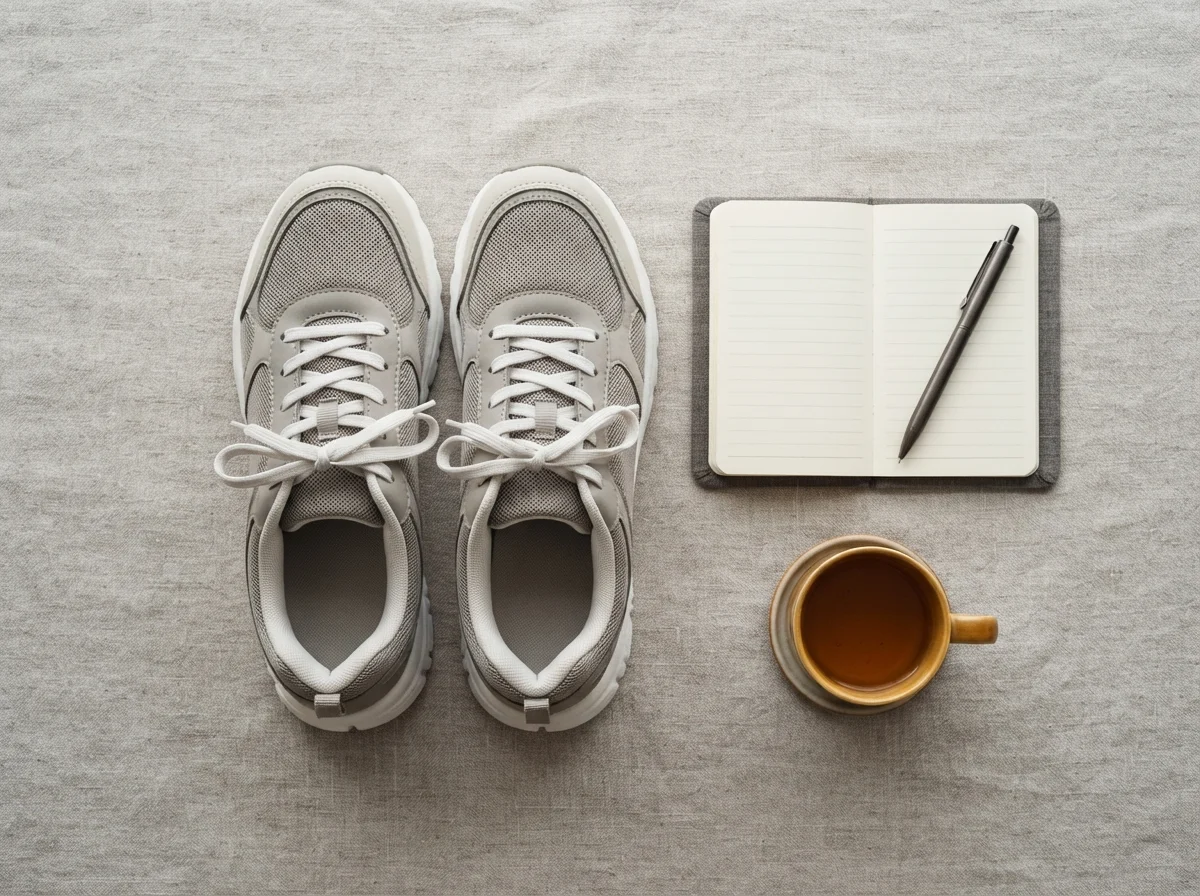
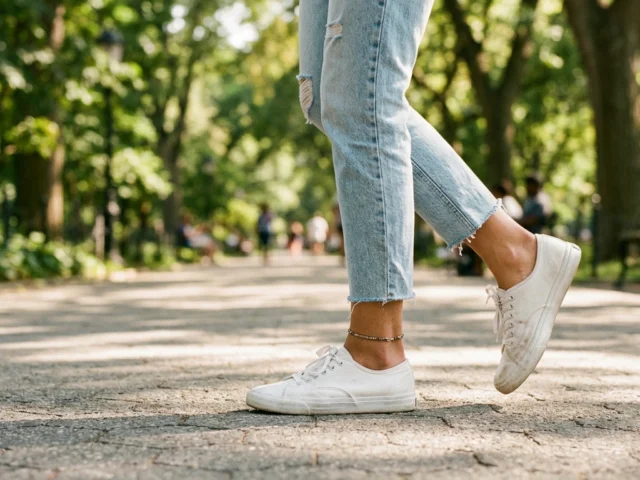
Representative editorial image, not official Amazon product photography.
Research-based evaluation
Cushioned Everyday Walking Shoes
Why we picked it: For readers whose priority is comfort on their feet for hours, a dedicated walking shoe genuinely outperforms a fashion sneaker.
Best for
Readers who are on their feet most of the day and prioritise comfort over a minimal look.
Strength
Noticeably more comfortable for extended wear
Watch out for
Bulkier, sportier look than a minimal canvas sneaker
Walking Shoes vs Regular Sneakers: When the Difference Actually Matters
It depends on how you spend your day. If your time on your feet is short, like a quick errand or a few minutes at a counter, a regular sneaker is usually fine.
If you walk for exercise, commute on foot for a real stretch, or stand for hours, the extra cushioning and support of a proper walking shoe is worth it. Our comparison of canvas sneakers and cushioned walking shoes explains when a lighter, simpler shoe is the better choice, and our guide to walking shoes vs running shoes covers when a running shoe can stand in for a walking shoe.
Who Needs to Be More Careful, and Who Can Get Away With a Basic Pair
Daily walkers and people on their feet at work. If you walk daily for exercise, or your job keeps you standing or moving, like teaching, retail or nursing, put cushioning and arch support ahead of looks. Long hours of standing change what a shoe needs to do, which our guide to the best shoes for standing all day covers.
Flat feet, high arches or ongoing discomfort. A general “comfortable” shoe may not be enough. Look for one that mentions arch support, see our flat feet walking shoe guide, and ask a doctor or podiatrist about insoles if discomfort continues in a well-cushioned pair.
Occasional walks and casual wear. A basic, well-reviewed pair with reasonable cushioning is usually enough. You do not need to pay for features built for daily long-distance wear.
The Break-In Period: What’s Normal and What’s a Warning Sign
Some stiffness in the first few wears is normal, especially around a fresh sole or a structured heel. A well-fitted walking shoe should feel close to comfortable from the first walk, with only small changes after that.
Real pain is not normal. Sharp pinching, blisters or a spot that rubs raw mean the shoe does not fit, not that it needs “breaking in”. If a new pair hurts like this, treat it as a reason to return it, especially while the return window is still open.
The safest way to find out is to wear a new pair around the house or on short walks first, rather than a full day out, in case it needs exchanging.
Buying Walking Shoes Online in India: A Step-by-Step Checklist
Shoes are harder to buy online than most things. You cannot judge fit from a screen, and once you wear a pair outside, many sellers will not take it back. These six steps are built around that problem.
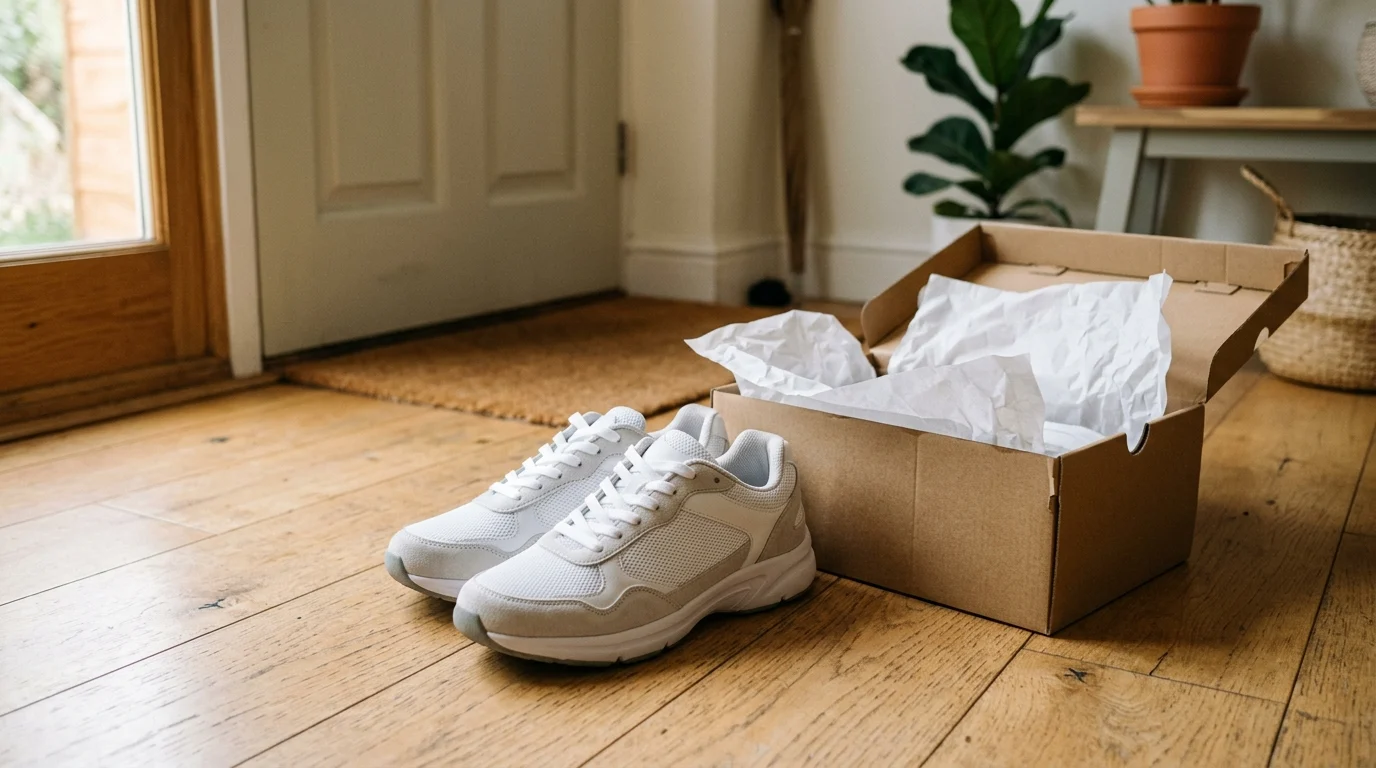
Illustrative editorial image, not real product photography. Check a new pair as soon as it arrives, before deciding whether to keep it.
Step 1: Check the Brand’s Own Size Chart, Not Just Your Usual Number
Shoe sizing is not the same across brands. A size 7 in one brand can fit closer to a 6.5 or a 7.5 in another, depending on how the brand shapes its shoes.
Open the size chart on that specific listing, not a general India shoe size chart, since the two can differ by half a size or more.
Measure your foot length in centimetres if the brand gives a foot-length table, instead of guessing from your current shoes.
If you are between two sizes, sizing up is usually safer for walking shoes, since feet swell slightly during the day.
Trying shoes in a store? Go in the afternoon or evening, when your feet are a little larger than in the morning.
Step 2: Confirm What the Return Policy Allows for Shoes
For footwear, “returns accepted” does not always mean what it sounds like. Many sites offer refunds for most categories but allow only an exchange for shoes, so you can swap sizes but not get your money back.
Look for the word “refund” specifically, not just “returns accepted”, before you order.
Check how many days you get, since this can range from a few days to a couple of weeks depending on the seller and platform.
Read the condition rules. Most policies need the shoes unworn outdoors, with the original box and tags.
Flash-sale and “final sale” items often have a shorter return window or none at all, so check before buying purely for a discount.
Step 3: Check Who You Are Actually Buying From
On most Indian marketplaces, one product listing can be sold by several sellers at different prices. The item is not always sold by the platform or the brand itself.
Check the seller name, not just the product rating. A product can have a good rating while the seller listing it has very few reviews of their own.
Prefer the brand’s official store page or the brand’s own website over an unfamiliar third-party seller, especially for well-known brands, where fake listings are more common.
A price far below every other listing of the same shoe is a reason to slow down and check the seller, not to buy faster.
Step 4: Read Reviews for Fit and Long Wear, Not Just the Star Rating
A star average does not tell you whether a shoe runs small, or whether it stays comfortable after hours of walking. The written reviews usually do, and fit is the biggest reason people return shoes bought online.
Search the reviews for words like “size”, “small”, “tight”, “wide” or “true to size”.
Sort by most recent, since sizing or quality can change between batches.
Look at photos uploaded by buyers, which show the actual shoe in normal lighting.
Value reviews that say “wore all day” or “walked for an hour” over reviews that only confirm the shoe arrived.
Step 5: Choose a Payment Method With Returns in Mind
Cash on delivery, where available, saves you from waiting for a prepaid refund to reach your card or UPI account if the shoe does not fit.
If you pay in advance, check the refund timeline on the return policy page, since it can range from a couple of days to over a week.
Ask for a GST invoice if it is not automatic. It can matter later for a warranty claim on a manufacturing defect.
Step 6: Keep the Box, Tags and Invoice Until You Are Sure
This sounds obvious, but it is one of the most common reasons a valid return gets rejected. Most footwear policies need the original box in good condition, with tags still attached.
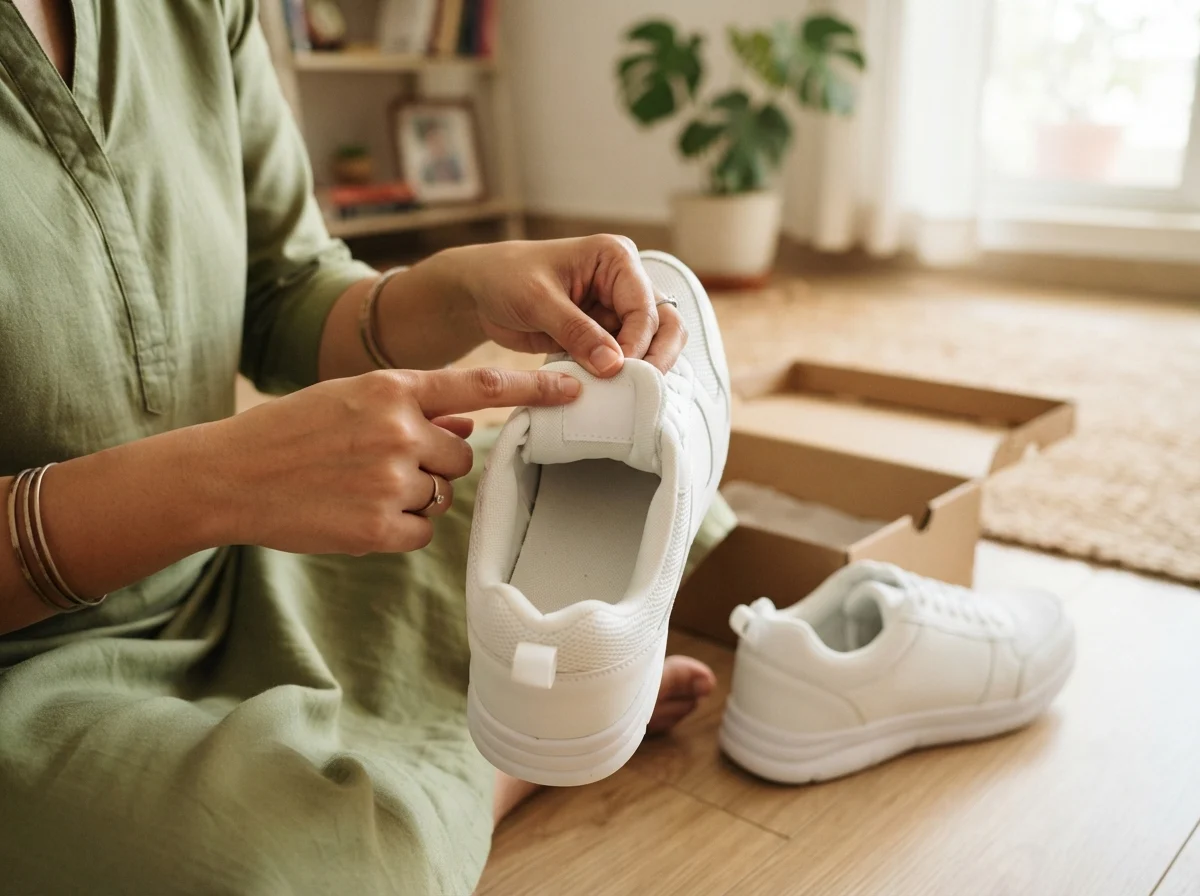
Try the shoes indoors, on a carpet or rug, for short stretches over a day or two before wearing them outside. This shows you the real fit without using up your return eligibility.
Illustrative editorial image, not real product photography. Checking the tag and trying the shoe indoors first helps you decide before the return window closes.
Before You Click Buy: Quick Checklist
Run through these before you order. If most of them are a yes, you are looking at a shoe with a real chance of working out.
Comfort and fit
Seller and returns
About a thumb’s width of room past your longest toe
You checked the brand’s own size chart, not just your usual number
Snug, not tight, across the widest part of your foot
The policy says “refund”, not only “exchange”, or you are fine with exchange only
Heel stays in place when you walk
You know how many days you have to return
Cushioning feels supportive, not just soft, when you press it
The seller has its own good rating, or it is the brand’s official store
Arch support suits your foot type
Reviews mention fit and long wear, not just delivery
Breathable upper and a forefoot that bends
You will keep the box, tags and invoice until you are sure
Common Mistakes When Buying Walking Shoes Online in India
Choosing by photos alone, instead of the fit and material details further down the listing.
Assuming your size is the same in every brand, when sizing genuinely varies between brands.
Ignoring width, since a shoe too narrow for your foot will not become comfortable, however much cushioning it has.
Trusting the star rating, instead of reviews that mention fit and a full day of walking.
Buying from an unfamiliar seller just for a lower price, without checking that seller’s own rating.
Assuming a sale item has the normal return policy, when many “final sale” items do not.
Wearing the shoes outside before deciding to keep them, which can end your return eligibility.
Throwing away the box straight away, then struggling to arrange a return without it.
Final Verdict
A comfortable walking shoe for women is not one feature you can spot in a photo. It is fit first, then supportive cushioning and arch support matched to your feet, and a breathable upper for Indian weather.
If you mostly walk or stand for short stretches, a simpler, lighter shoe is usually enough. If walking or standing is part of your daily routine, the extra cushioning and support are worth paying for.
Buying online adds one more layer: match the brand’s size chart, confirm refund or exchange rules, check the seller, read reviews for fit, and keep the box until you are sure.
Your next step: shortlist two or three pairs, run each through the quick checklist above, and pick the one that passes with a return policy you are comfortable with.
Don't Miss the Next Guide
Get honest buying guides and comparisons from FIND N FORM, sent straight to your inbox.
This guide is a research-based evaluation using product specifications, brand information, general footwear-fit guidance, publicly available return and marketplace policy information, and comparative research. It is not based on personal testing of any single shoe model or seller. Seller and platform policies can change, so confirm the current terms on the listing before you buy. For ongoing foot, knee or back pain, consult a doctor or podiatrist.
Fit, supportive cushioning, arch support and a breathable, flexible upper working together. No single feature, including a thick or soft sole, makes a shoe comfortable on its own, and a shoe that fits your foot well usually beats a softer one that does not.
How do I get the right size when buying walking shoes online in India?
Use the brand’s own size chart, not your usual number. Measure your foot length in centimetres against that chart, since sizing varies between brands. If you are between two sizes, sizing up is usually safer for walking shoes, and reviews that say a shoe runs small or large are worth reading.
Does more cushioning always mean more comfort?
No. Cushioning that is too soft squashes unevenly with each step, so your foot works harder to stay stable. Firmer, structured cushioning that still absorbs some shock tends to feel better over a long walk than an extra-plush sole.
How long should new walking shoes take to feel comfortable?
A well-fitted pair should feel close to comfortable from the first few wears. Some slight stiffness can ease after that, but sharp pain, pinching or blisters mean the shoe does not fit, not that it needs a long break-in.
Why do some shoe listings only offer an exchange, not a refund?
Footwear is a category where many Indian marketplaces and sellers allow only a size or product exchange, even when other categories get refunds. Check the specific listing before you order instead of assuming the platform’s general policy applies.
Are running shoes the same as walking shoes?
No, they overlap but are not identical. Running shoes usually have more forward cushioning and flexibility for a running stride, while walking shoes focus on heel-to-toe support for a slower, flatter motion. A running shoe can work for walking, but a walking shoe is usually more comfortable for long daily walks.
Do walking shoes help with flat feet?
A walking shoe with proper arch support can reduce discomfort for flat feet compared with a flat, unsupportive sneaker, since it gives the foot more structure. It is not a guaranteed fix, and ongoing pain is worth discussing with a doctor or podiatrist, who may suggest an insole as well.
How often should you replace walking shoes?
A commonly cited rough guide is around 500 to 800 kilometres of use, though this varies by shoe, body weight and walking surface. A more practical sign is cushioning that feels flat or tread that has worn smooth, which suggests the shoe no longer supports you as it did when new.
This article may contain Amazon affiliate links. As an Amazon Associate, FIND N FORM earns from qualifying purchases, at no extra cost to you. Our recommendations are never determined by commission.
4 responses to “Walking Shoes for Women in India: How to Choose a Comfortable Pair”
[…] general walking shoe guide covers what matters for most people. Here is where a shoe built specifically around flat feet […]
[…] time on your feet is walking or standing, a dedicated walking shoe, like the one covered in our general walking shoes guide, is the better everyday choice. If you jog or run regularly, invest in a proper running shoe […]
[…] the fit turning uncomfortable. A well-built cushioned walking shoe, like the one covered in our general walking shoes guide, usually covers this job well, without needing a separate “standing shoe” category. […]
[…] the real question is whether to buy a walking-specific shoe instead, our guide on walking shoes for women: what to check before you buy covers the full buying checklist. For a closer side-by-side look at these two shoe types […]



[…] general walking shoe guide covers what matters for most people. Here is where a shoe built specifically around flat feet […]
[…] time on your feet is walking or standing, a dedicated walking shoe, like the one covered in our general walking shoes guide, is the better everyday choice. If you jog or run regularly, invest in a proper running shoe […]
[…] the fit turning uncomfortable. A well-built cushioned walking shoe, like the one covered in our general walking shoes guide, usually covers this job well, without needing a separate “standing shoe” category. […]
[…] the real question is whether to buy a walking-specific shoe instead, our guide on walking shoes for women: what to check before you buy covers the full buying checklist. For a closer side-by-side look at these two shoe types […]