FIND N FORM may earn a commission if you buy through links on this page, at no extra cost to you. As an Amazon Associate, we earn from qualifying purchases.
A night cream and a daily moisturizer are not the same thing. Here's the real difference, and how to tell if you actually need both.
You already have a daily moisturizer that works fine. Then you read somewhere that you also need a separate night cream, and now you are standing in front of two jars wondering if your skin actually needs the second one, or if it is just another product added to a routine that was doing okay without it.
Night creams and daily moisturizers overlap enough that the difference is not always obvious, and some brands do not help by using the two words loosely on the label. This guide breaks down what actually separates a night cream from a daily moisturizer, when adding one genuinely helps, and when your regular moisturizer can keep doing the job on its own.
Quick answer: A daily moisturizer is usually built to be light enough to sit under sunscreen or makeup and to protect skin through the day. A night cream is usually a richer, heavier formula meant to work while you sleep, when there is no sun exposure or makeup to plan around. If your regular moisturizer already keeps your skin comfortable morning and night, you probably do not need a separate night cream. If your skin feels tight, dry or dull by morning even though it looks fine during the day, a richer night formula usually helps more than switching your daytime product entirely.
What Actually Separates a Night Cream From a Daily Moisturizer
Both products exist to add and hold moisture in skin, so the overlap is real, not just marketing. The differences that usually matter come down to texture, ingredients and when you use them.
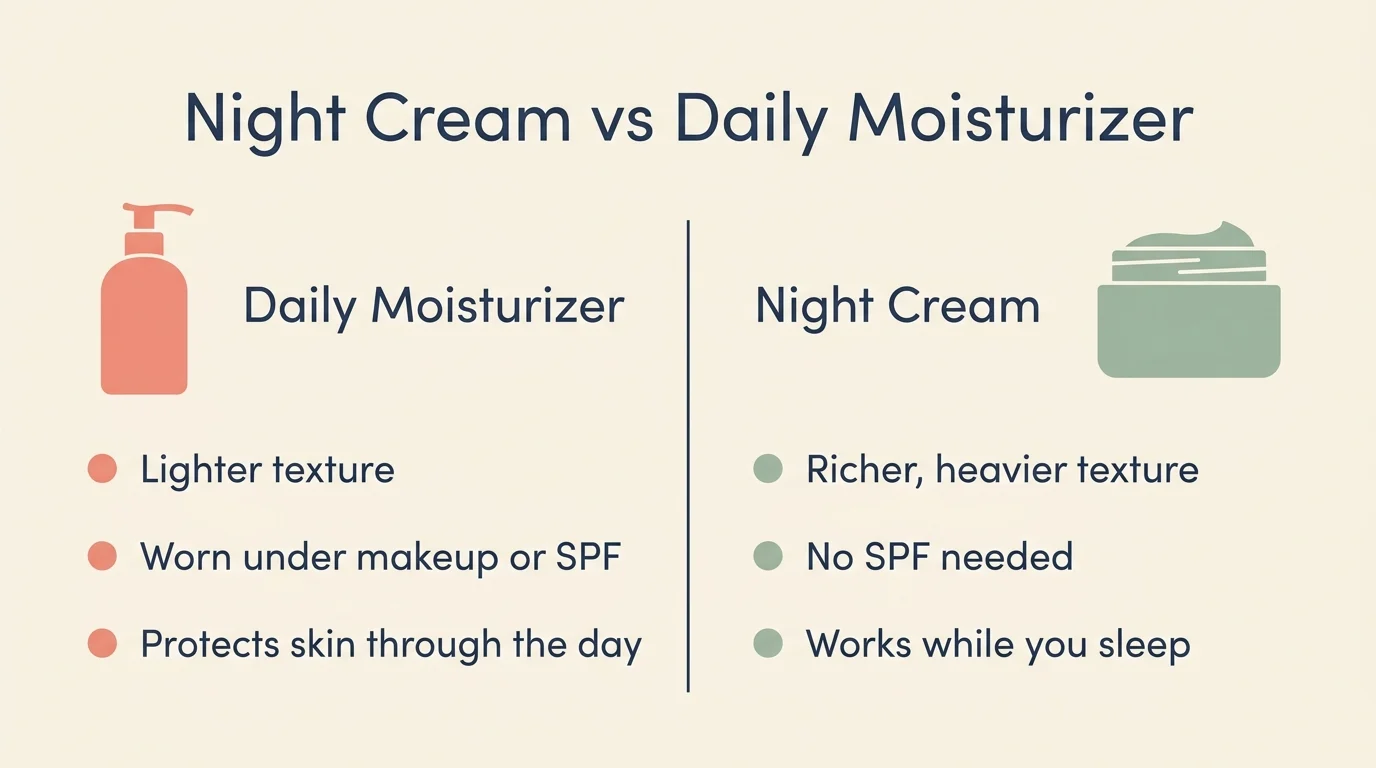
A typical daily moisturizer favors a lighter, faster-absorbing texture, since it needs to sit comfortably under sunscreen, primer or makeup without feeling greasy. A typical night cream favors a heavier, richer texture built around occlusive ingredients, ingredients like shea butter or petroleum jelly that seal moisture in, because there is no makeup to plan around and the goal is a stronger overnight seal.
Night creams also skip sunscreen entirely, since there is no sun exposure to protect against after dark, while a well-designed daytime moisturizer often includes SPF or is meant to be paired with a separate sunscreen. If your skin is oily, our guide to choosing a sunscreen for oily skin covers lighter gel and matte options. Some night creams add ingredients meant to support skin’s natural overnight recovery, such as retinol or peptides, though how much difference these make depends heavily on the specific formula and concentration used, not just the words printed on the jar.
The core differences between a daily moisturizer and a night cream.
Do You Actually Need Both?
The honest answer depends on how your skin behaves right now, not on what a routine is supposed to include.
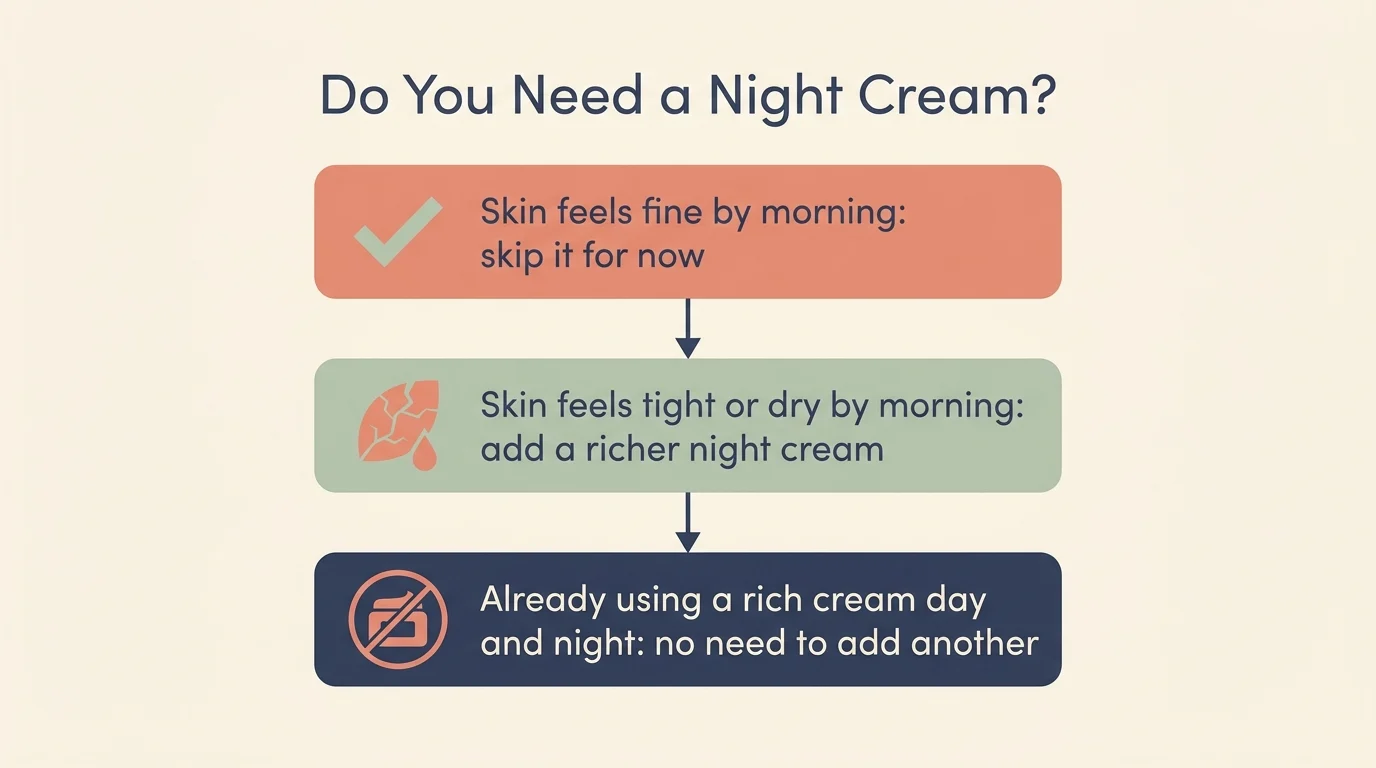
If your regular moisturizer already keeps your skin comfortable when you wake up, you likely do not need a separate night cream yet.
If your skin feels tight, flaky or dull by morning even though it looks fine during the day, a richer night formula is usually the first thing worth adding.
If you live somewhere the air turns noticeably drier for part of the year, our guide to winter skincare for dry skin covers why this happens, you may only need the richer cream seasonally, not all year.
If you already use a rich, heavy moisturizer both day and night, adding a separate night cream on top usually does not add much, since your skin is already getting that stronger seal.
Night Cream vs Daily Moisturizer, Side by Side
Best for: a daily moisturizer suits everyday hydration and protection during waking hours. A night cream suits skin that needs a stronger moisture seal than the daytime routine provides.
Texture: daily moisturizers are usually lighter and absorb faster. Night creams are usually thicker and sit on the skin longer.
Main advantage: a daily moisturizer layers easily under sunscreen and makeup. A night cream holds moisture in for longer stretches without needing to be reapplied.
Main limitation: a daily moisturizer alone may not be rich enough once the air turns dry. A night cream alone can feel too heavy to wear during the day.
A simple way to decide if you actually need a night cream.
If you decide your skin needs the richer option, look for a formula built around occlusive and barrier-supporting ingredients rather than one that simply calls itself a “night cream” on the label.
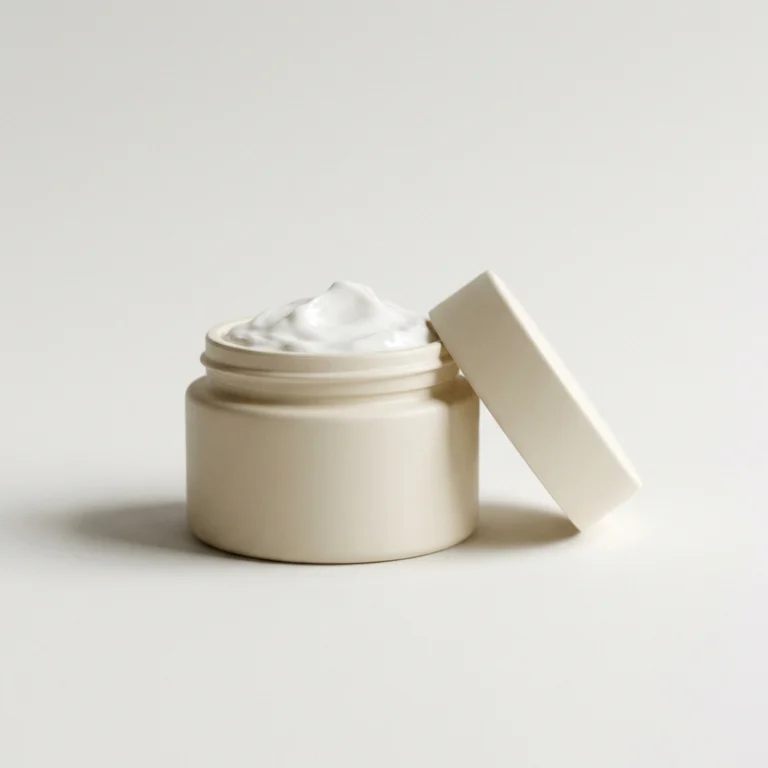
Representative editorial image, not official Amazon product photography.
Research-based evaluation
Ceramide Barrier Repair Cream
Why we picked it: A dedicated barrier cream gives dry or stressed skin a stronger moisture seal than a daily lightweight moisturizer can provide on its own, without needing to replace the lighter product you already use.
Best for
Someone whose usual moisturizer stops feeling like enough once the weather turns dry.
Strength
Stronger, longer-lasting moisture seal than a typical daytime moisturizer
Watch out for
Can feel heavy under makeup or sunscreen, so better suited to nighttime use
If your current daily moisturizer is the one you are not sure about, our guide to choosing a daily moisturizer walks through what to look for before you replace it, rather than assuming the problem is your daytime product at all.
Representative editorial image, not official Amazon product photography.
Research-based evaluation
Daily Hydrating Face Moisturizer
Why we picked it: A basic, well-formulated daily moisturizer is the foundation of most skincare routines before anything more targeted is added.
Best for
Someone building or simplifying a daily skincare routine.
Strength
Simple enough for sensitive or reactive skin to trial
Watch out for
Not a substitute for a dedicated night cream or treatment product
Your skin looks and feels comfortable both morning and evening with your current moisturizer.
You have naturally oily or combination skin and rarely feel dryness, even in cooler months.
You already use a rich, heavier moisturizer year-round, day and night.
Who Usually Benefits From Using Both
Your skin is naturally dry or sensitive and tends to feel tight by morning.
You live somewhere with genuinely cold, dry winters, or you rely on AC or a heater indoors most of the day.
You are already using targeted actives like retinol or exfoliants, which can leave skin more prone to dryness and benefit from a stronger overnight moisture seal.
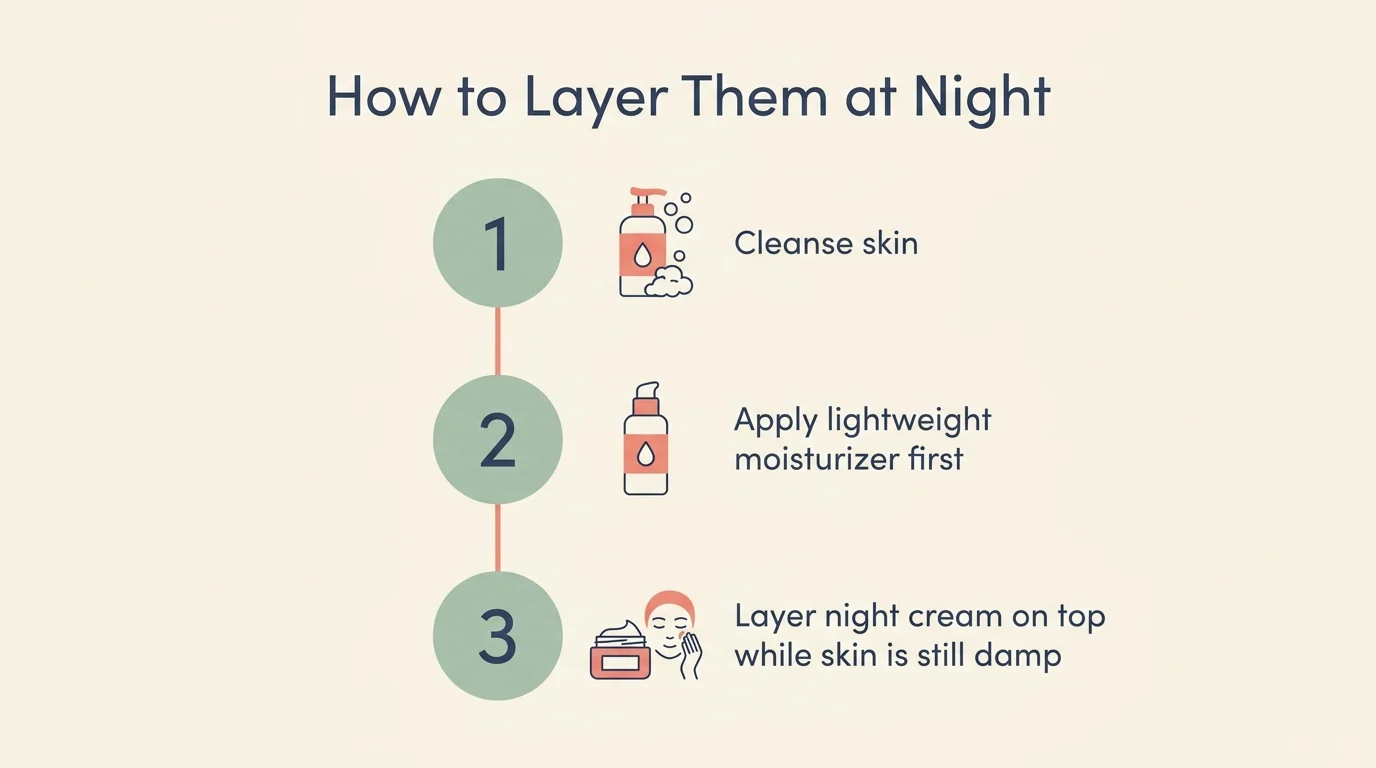
If You Do Use Both, How to Layer Them
The order matters more than most people expect. Apply the lighter product first and the heavier one on top, not the other way around, since a heavy layer applied first can block a lighter product from absorbing at all. Our guide to layering skincare products without wasting half of them covers this in more detail for a full routine, not just moisturizer and night cream.
If you use both, apply your lighter moisturizer first and layer the night cream on top.
Final Verdict
You do not need a night cream just because it exists as a category. You need one if your regular moisturizer stops being enough by morning, if your climate turns noticeably drier for part of the year, or if actives you are using leave your skin more prone to dryness. If none of that describes you, keep using what already works and save the extra step and the extra cost. If it does describe you, add a richer formula at night rather than replacing your daytime moisturizer, and apply the lighter product first when you layer them.
Don't Miss the Next Guide
Get seasonal skincare tips, honest product guides and comparisons from FIND N FORM, sent straight to your inbox.
This comparison is based on general dermatological understanding of moisturizer formulation, ingredient research and comparative analysis of skincare guidance. It is not based on personal testing of any single product.
You can, but it is usually not the best choice. Night creams are not built with SPF, and their heavier texture can feel greasy under makeup or sunscreen. If you like the richness, apply sunscreen over it and expect a heavier finish than a regular daytime moisturizer.
Is a thicker moisturizer automatically a night cream?
Not necessarily. Some daily moisturizers, especially ones made for very dry skin, are already thick enough to work well at night too. What makes something a night cream is usually the absence of SPF and a formula built for overnight use, not thickness alone.
Do oily skin types need a night cream?
Usually not a heavy one. Oily skin still loses some hydration overnight, but a lightweight gel moisturizer used at night is often enough. A rich, occlusive night cream can feel unnecessary or even encourage more oiliness for this skin type.
Can a night cream replace sunscreen the next morning?
No. A night cream is meant to be worn while you sleep and washed off or layered under your morning routine, not left on through the day as sun protection. Apply a proper sunscreen separately each morning regardless of what you used overnight.
This article may contain Amazon affiliate links. As an Amazon Associate, FIND N FORM earns from qualifying purchases, at no extra cost to you. Our recommendations are never determined by commission.







Leave a Reply